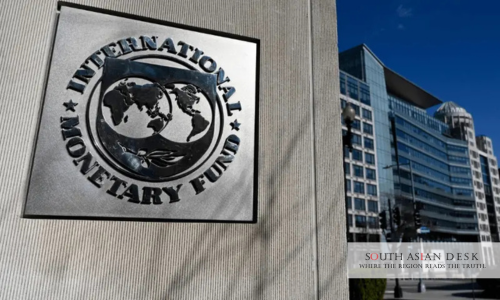
IMF slams Pakistan’s fiscal mismanagement for 2025 in a new report released Tuesday, November 25, 2025, in Islamabad. The Governance and Corruption Diagnostic Assessment identifies weak budget controls and corruption risks. It calls for urgent fixes under the $7 billion Extended Fund Facility. Publication meets a key program benchmark.
Fiscal Vulnerabilities Exposed in IMF Slams Pakistan’s Fiscal Mismanagement 2025
The report details persistent gaps in fiscal governance. Weak budget credibility fuels macro-critical issues. Public investment management shows significant shortcomings. Funding for approved projects fails over their life cycle: delays and cost overruns plague initiatives.
The Single Treasury Account framework lacks firm coverage. This undermines cash balance controls. Inefficiencies breed idle funds and lost interest revenue. Fragmented holdings across accounts weaken oversight. Debt management involves overlapping roles. Coordination suffers as a result.
Asset management lacks monitoring. State-owned enterprises evade accountability. Institutions outside fiscal constraints heighten corruption risks. Gaps between policy and practice enable private gain from public authority. Parliamentary oversight weakens amid spending variances.
The assessment notes some progress in two years. Yet challenges endure. It focuses on federal functions like fiscal governance and anti-corruption. Field missions occurred in February and April 2025.
Pakistan IMF Governance Corruption Diagnostic Highlights Risks
Pakistan’s IMF governance corruption diagnostic covers five core areas. Fiscal governance tops concerns. Market regulation shows intrusive rules. Financial oversight needs independence. AML/CFT frameworks improve post-FATF grey list exit. The rule of law lags with judicial delays.
Corruption erodes trust and investment. Elite capture diverts funds. Opaque procurement distorts markets. Tax exemptions favour insiders. The diagnostic estimates a 5-6.5% GDP gain over five years from reforms. This could add billions to output.
Quotes from the report underscore urgency. “Despite some improvement in the last two years, Pakistan has consistently struggled with weak budget credibility, which has generated several macro-critical governance weaknesses.” Another states, “Institutions that use budgetary resources but are designed to operate outside of standard fiscal accountability constraints undermine other state institutions and increase corruption risks.”
Expenditure overruns hit Rs9.4 trillion in 2024-25. This marks five times the prior year. The National Assembly approved the excess. Constituency funds under legislator control skew investments. Oversight complicates things as a result.
IMF Pakistan Immediate Fiscal Reforms: 15-Point Agenda
IMF Pakistan immediate fiscal reforms demand action in three to six months. Strengthen TSA with sectorisation. Unify decision-making on flows. Boost analytical tools for forecasting. Operationalise the Cash Forecasting Unit at the Finance Ministry. Staff it fully.
The Cash Coordination Committee must meet monthly. Currently, intervals stretch long. Review cash buffers regularly. Consolidate borrowing functions via legal changes. Reduce discretion in cash, debt, and asset handling.
The 15-point plan targets procurement transparency. End SOE preferences in contracts. Mandate e-procurement for all state buys within 12 months. Publish tax simplification strategy by May 2026. Report progress annually.
Anti-corruption steps include NAB independence. Reform appointment processes. Expand investigative capacity. Build internal checks. Publish asset declarations of top officials in 2026. Introduce risk-based verification. The Finance Ministry released the report as a structural benchmark. This clears the path for $1.2 billion tranche next month. The government welcomes technical aid. Reforms aim for transparency and capacity building.
Pakistan Fiscal Inefficiencies: IMF Report: Tax and Spending Flaws
Pakistan fiscal inefficiencies IMF report flags tax system complexity. Distortions from exemptions and orders abound. Tax-to-GDP ratio declines amid low trust. Frequent rule changes deter compliance. Public spending shows discretionary skews. Allocations favour government districts or bureaucracy. Returns on investment suffer. Procurement lacks competition. SOEs hold assets at half the GDP value. Oversight weakens due to interference.
The diagnostic praises recent stabilisation. Primary surplus hit 2.0% of GDP in H1 FY25. Inflation dipped to 0.3% in April. Reserves rose to $10.3 billion by the end of April from $9.4 billion. Projections reach $13.9 billion by June 2025. Yet structural woes persist. Past programs stabilised but failed institutionalisation. Corruption hinders macro and social development. It diverts funds and erodes trust.
Why IMF Slams Pakistan Fiscal Mismanagement 2025 Matters in South Asia
This critique spotlights shared risks in South Asia. Pakistan’s woes echo in India and Bangladesh with elite capture and weak oversight. Fiscal leaks drain resources amid climate and debt pressures. Reforms here could model regional gains. Neighbours face similar IMF scrutiny. Improved governance boosts FDI and equity. It counters inequality and migration drivers. South Asia’s growth hinges on accountable institutions. Pakistan’s path tests collective resilience.
Background: Pakistan’s IMF Engagement and Governance Struggles
Pakistan joined the IMF in 1950. It marks the 24th program now. The $7 billion EFF started on September 25, 2024. It spans 37 months. Prior bailouts stabilised crises in 2008 and 2019. Governance diagnostics began in January 2025 at the government’s request. The World Bank joined. Scoping in February, primary mission in April. The report covers data to April 2025. It ignores later changes.
Corruption rankings stagnate. Pakistan trails its neighbours in control metrics from 2015 to 2024. FATF exit in 2022 aided AML, but convictions lag. SOEs and customs remain hotspots. Finance Ministry stresses modernisation. NAB empowerment features. Yet implementation gaps endure. Elite influence persists across sectors.
IMF Pakistan Immediate Fiscal Reforms: Short-Term Wins
Immediate actions target cash management. Forward-looking forecasts aid buffers. Monthly CCC meetings ensure reviews. TSA unification cuts idle funds. Procurement e-governance mandates speed. It curbs biases. Tax reforms simplify codes. They cut exemptions. Oversight bodies gain autonomy. The report avoids provincial scope. Federal focus limits breadth. Yet it urges inter-level harmony. Public participation stays low. Trust in the state erodes further.
What’s Next: Tranche Approval and Reform Rollout
Executive Board reviews tranche in December 2025. Approval hinges on benchmarks. Government eyes digitised tax admin. SOE restructuring advances. Long-term, centralised asset authority proposed. Digitise declarations for verification. Multi-stakeholder NAB oversight forms.
International partners monitor. World Bank aids implementation. Success could lift growth projections. Failure risks deeper austerity. IMF slams Pakistan’s fiscal mismanagement, 2025 demands resolution. Reforms promise stability and equity if pursued.
Published in SouthAsianDesk, November 26th, 2025
Follow SouthAsianDesk on X, Instagram, and Facebook for insights on business and current affairs from across South Asia.