India and the League of Arab States committed to doubling bilateral India Arab League trade to $500 billion by 2030 from the current $240 billion during the second India Arab Foreign Ministers meeting in New Delhi on 31 January 2026.
India, Arab League Commit to Double Trade to $500 Billion by 2030
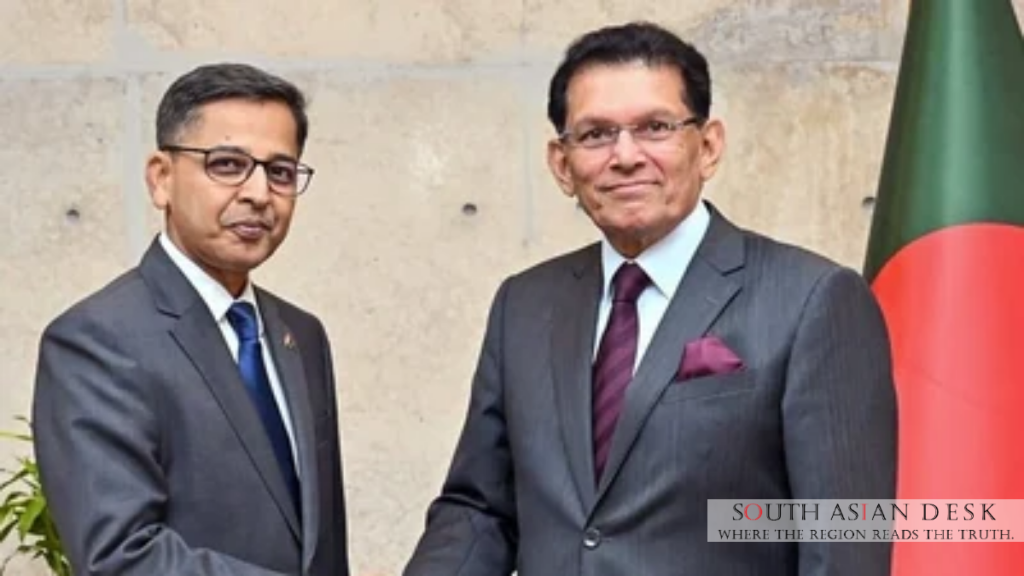
India and the League of Arab States (LAS) have set an ambitious target to double India Arab League trade to $500 billion by 2030, up from the current level of $240 billion. This commitment emerged from the second India Arab Foreign Ministers meeting held in New Delhi on Saturday, 31 January 2026. External Affairs Minister S Jaishankar co-chaired the session with his UAE counterpart, representing the first such ministerial gathering since the inaugural forum in Bahrain in 2016.
The meeting resulted in the adoption of the Executive Programme of the India-Arab Cooperation Forum (2026-2028) and the Delhi Declaration. These documents outline a comprehensive roadmap for enhanced cooperation in diverse sectors, with the trade doubling goal serving as a central economic pillar.
Jaishankar Arab League Engagement Stresses Regional Changes and Cooperation
S Jaishankar, in his opening remarks, highlighted the transformative shifts in the global order and particularly in West Asia. He stated: “Nowhere is this more apparent than in West Asia or the Middle East, where the landscape itself has undergone a dramatic change in the last year. This obviously impacts all of us, and India as a proximate region.”
He pointed to ongoing regional challenges, including the situation in Gaza following the Sharm-el-Sheikh Peace Summit in October 2025 and UN Security Council Resolution 2803 of November 2025, as well as conflicts in Sudan, Yemen, Lebanon, Libya, and Syria. Jaishankar stressed the need to strengthen forces of stability, peace, and prosperity while condemning terrorism in all forms, including cross-border variants, and advocating zero tolerance as a universal norm.
On cooperation, Jaishankar noted existing strong partnerships with LAS nations, rooted in historical ties and contemporary exchanges in energy, expatriate communities, trade, technology, food security, and health security. He welcomed the recent launch of the India-Arab Chamber of Commerce, Industry and Agriculture and expressed India’s interest in expanding the agenda to include digital technologies, space, startups, and innovation, alongside traditional areas like energy, environment, agriculture, tourism, human resource development, culture, and education.
India Arab Trade 500 Billion Ambition Drives Sectoral Roadmap
The Executive Programme explicitly commits “to double trade between India and LAS to US$500 billion by 2030, from the current trade of US$240 billion.” This builds on robust existing ties, with measures to intensify trade and investment through mechanisms such as the India-Arab Partnership Conference, held every two years alternately in India and Arab states. The 7th session is planned for 2026 in an Arab country.
Key sectors include energy security, with focus on hydrocarbons, renewables, green hydrogen, clean technologies, and energy efficiency. Commitments involve reciprocal investments in the oil and gas value chain, joint ventures in solar and wind projects, and collaboration on green hydrogen supply chains. The third India-Arab Energy Forum is scheduled for 2027 in an Arab state.
In startups and innovation, an India-Arab Startup and Innovation Partnership Platform will facilitate joint programs, investment access, and capacity building in health tech, fintech, agritech, and green technologies.
Space cooperation features the establishment of an India–Arab Space Cooperation Working Group, with its first meeting in India in 2027, to explore joint remote-sensing missions for climate, agriculture, urban planning, and disaster management.
Additional areas cover food and water security, environmental security, entrepreneurship, technological innovations, educational and cultural exchanges, and youth engagement. The programme also proposes technical consultations on local currency settlements and digital payment integration.
South Asia Relevance Amid Strengthened India Arab League Trade
In South Asia, where nations like Pakistan maintain extensive economic, energy, and labour ties with the Gulf region, the India Arab League trade push holds notable implications. The Arab world remains a primary source of energy imports and remittances for the subcontinent. Heightened India-Arab collaboration in renewables, technology, and investments may shape competitive dynamics in Gulf markets and influence regional energy security and economic flows.
The Delhi Declaration reaffirmed shared priorities, including support for a sovereign, independent, and viable Palestinian state on 1967 borders, implementation of UN resolutions, and efforts toward Middle East peace. It condemned terrorism, including the Pahalgam attack on Indian tourists, and called for dismantling terrorist infrastructures. Both sides advocated UN Security Council reforms to better reflect contemporary realities and enhance roles for troop-contributing countries.
Background
The India-Arab Cooperation Forum, launched in March 2002, acts as the principal platform for collective dialogue between India and the 22-member League of Arab States. The first ministerial meeting took place in Bahrain in 2016. The New Delhi revival after nearly a decade signals renewed momentum to elevate relations from energy-focused exchanges to a broader strategic partnership encompassing economic, technological, and security dimensions.
What’s Next
Implementation of the 2026-2028 Executive Programme will advance the India Arab League trade target and related initiatives. Upcoming events include the India–Arab Space Cooperation Working Group meeting in 2027, the India-Arab Partnership Conference in 2026, and various sectoral consultations. Ongoing dialogues will track progress toward the $500 billion India Arab trade 500 billion objective by 2030 while reinforcing stability in a changing regional landscape.
Published in SouthAsianDesk, February 2nd, 2026
Follow SouthAsianDesk on X, Instagram and Facebook for insights on business and current affairs from across South Asia.