New Delhi, India – India arrested Delhi blast suspects on Wednesday, including two doctors from Kashmir, following a car explosion that killed 13 people near the historic Red Fort on Monday. The probe, now classified as a terror attack, targets anti-national forces backed by Pakistan-based groups. How far does this network extend?
The blast occurred at 6:45 PM on 10 November 2025, when a red sedan detonated in Delhi’s Chandni Chowk area, close to the Red Fort. It injured 25 others. Police identified the driver as a suicide bomber. The incident prompted immediate security sweeps across the capital and Kashmir.
India Arrests Delhi Blast Suspects Amid Rising Tensions
Authorities acted swiftly after the Delhi car explosion. The Cabinet Committee on Security met on 12 November. It labelled the event a “heinous terror incident perpetrated by antinational forces”. Prime Minister Narendra Modi vowed that those responsible “will not be spared”. This marks the first formal terror designation for the blast.
Seven men now face charges under the Unlawful Activities (Prevention) Act. India arrests Delhi blast suspects in a bid to dismantle the plot. The group includes professionals from Jammu and Kashmir. Two stand out: doctors accused of funding and logistics. One, Dr. Ayesha Nabi, a 32-year-old gynaecologist from Srinagar, allegedly wired funds abroad. Her colleague, Dr. Faisal Ahmed, 35, handled explosives procurement.
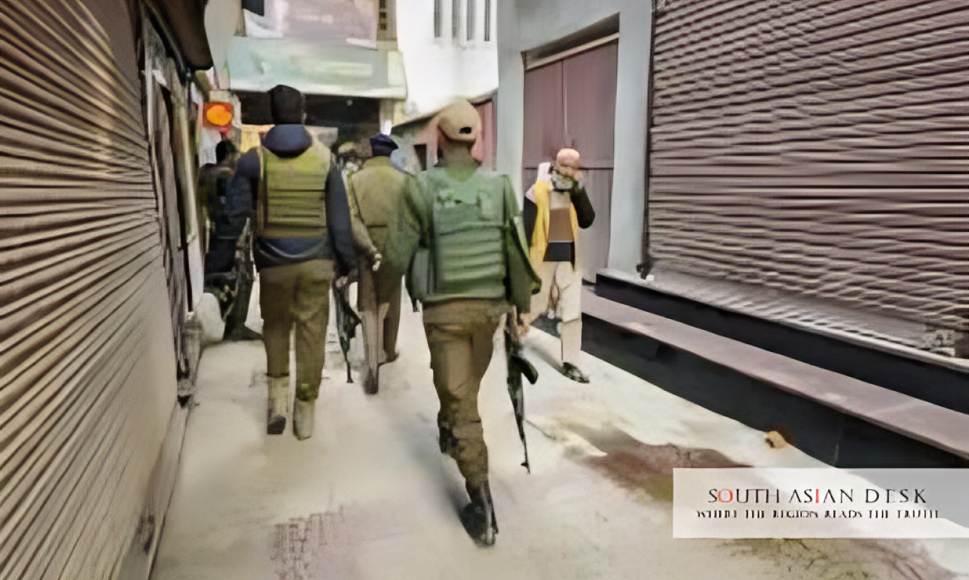
Kashmir police led the raids. They targeted 300 sites in the Valley overnight on 11-12 November. This resulted in 500 detentions. Most received release after questioning. The operation yielded 2,900 kg of explosives and digital devices with encrypted chats. Sources link the cell to Jaish-e-Mohammed (JeM) and Ansar Ghazwat-ul-Hind.
Delhi Police Special Cell coordinated with national agencies. They traced the car’s registration to a Kashmir-based shell firm. The vehicle carried 50 kg of RDX. Forensic teams confirmed remote detonation signals from across the border.
Kashmir Arrests in Delhi Red Fort Bomb Investigation
The probe reveals deeper roots. Kashmir arrests Delhi Red Fort bomb planners in a separate but linked case. Jammu and Kashmir Police issued a statement on 12 November. It detailed the module’s structure: “A white-collar terror ecosystem exploiting educated youth for logistics and finance.”
Dr. Nabi’s family expressed shock. A relative told media: “She focused on studies and cricket. This cannot be true.” Yet, intercepts show her meetings with JeM handlers in Turkiye last year. Dr. Ahmed visited the same country for “medical conferences”. Intelligence reports confirm these as cover for training.
The Red Fort site holds symbolic weight. Built in the 17th century by Mughal emperors, it symbolises India’s heritage. Past attacks, like the 2021 flag-hoisting clash, heightened vigilance. This blast coincides with Diwali preparations, amplifying public fear.
Broader Delhi car explosion terror probe arrests followed. National Investigation Agency (NIA) joined on 13 November. They seized laptops from suspects’ homes in Srinagar and Anantnag. Files reveal plans for strikes in Mumbai and Lucknow. One document outlines “Operation Saffron”, targeting festivals.
India detains Kashmiri doctors Delhi blast links intensify scrutiny on professionals. Security experts note a shift. Militants now recruit via social media and remittances. This contrasts with 1990s gunfights. Over 200 such modules busted since 2020, per government data.
Background: Kashmir’s Enduring Militancy Challenge
Kashmir’s conflict dates to 1947 partition. India controls the region amid disputes with Pakistan. Insurgency peaked in the 1990s, killing thousands. Recent years saw a decline in violence. Yet, cross-border infiltration persists.
The 2019 revocation of Article 370 stripped special status. It aimed to integrate Kashmir fully. Critics call it a rights erosion. Supporters point to development gains. Blast casualties include tourists from Punjab and locals. This underscores tourism’s vulnerability, a key economic driver.
Government data from the Ministry of Home Affairs shows 150 terror incidents in 2024. Fatalities dropped 40% from 2023. But urban attacks like this signal adaptation. Pakistan denies involvement. It terms Kashmir a “disputed territory”. UN reports urge dialogue.
In South Asia, this matters. India-Pakistan ties strain under terror shadows. Past crises, like 2019 Pulwama, risked war. Modi’s May 2025 speech warned: future attacks equal “acts of war”. Regional stability hinges on de-escalation.
Delhi Car Explosion Terror Probe Arrests Unfold
Investigators pore over CCTV footage. It captures the sedan weaving through traffic before the 6:45 PM blast. Eyewitnesses describe a fireball engulfing stalls. Rescue teams pulled survivors from debris. Hospitals treated burns and shrapnel wounds.
Forensic analysis points to military-grade explosives. Traces match those in prior JeM operations. The driver’s identity: 28-year-old Omar Farooq from Baramulla. His family disowns him. “He vanished six months ago,” said his brother.
India arrests Delhi blast suspects extend to finance trails. Banks flagged suspicious transfers totalling INR 5 crore (USD 600,000). Routes lead to Dubai and Lahore. NIA seeks extradition of two fugitives.
Public reaction mixes outrage and resolve. Protests erupted outside Red Fort on 12 November. Chants demanded justice. Security beefed up at 50 monuments nationwide. Airports screened Kashmir-bound flights.
What’s Next for India Detains Kashmiri Doctors Delhi Blast Case
The NIA files charges within 48 hours. Courts may approve custody extensions. Interrogations focus on sponsor identities. International cooperation with Turkiye and UAE is underway.
Analysts predict tighter border surveillance. Drone patrols along the Line of Control increase. Community outreach in Kashmir aims to counter radicalisation. Schools resume awareness programmes.
This crackdown tests India’s counter-terror framework. Success could deter copycats. Failure risks escalation. As probes deepen, India arrests Delhi blast suspects signal zero tolerance. The nation watches for closure.
In the end, India arrests Delhi blast suspects remind South Asia of fragility. Justice demands vigilance. The Red Fort stands resilient, a beacon against shadows.
Published in SouthAsianDesk, November 13th, 2025
Follow SouthAsianDesk on X, Instagram, and Facebook for insights on business and current affairs from across South Asia.