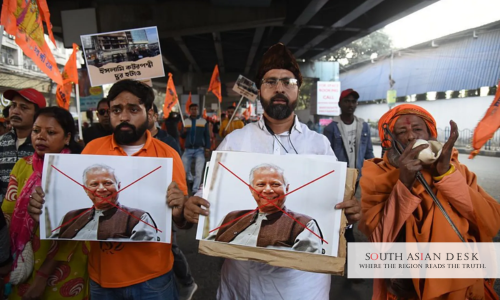
The India Bangladesh crisis escalated sharply on Wednesday, December 24, 2025, with mutual suspensions of visa services disrupting travel between the neighbors. Bangladesh has halted consular and visa operations at its High Commission in New Delhi and at its assistant missions in Agartala and other locations.
India had earlier suspended services at several visa application centres in Bangladesh, including Chittagong, Khulna, and Rajshahi, citing security concerns. These actions followed a wave of violent protests triggered by the lynching of Hindu garment worker Dipu Chandra Das and the assassination of student leader Sharif Osman Hadi.
Protests erupted after the mob killing of 27-year-old Dipu Chandra Das in Mymensingh on December 18. Accused of blasphemy in a factory dispute, Das was beaten to death, his body tied to a tree and set on fire. Videos circulated widely. Bangladesh’s interim government condemned the act, stating there was “no place for such violence in the new Bangladesh.” Authorities arrested over a dozen suspects, but investigations found no evidence of blasphemy remarks.
In parallel, unrest intensified after Sharif Osman Hadi, a prominent anti-India student activist, died on December 18 from gunshot wounds sustained on December 12. His supporters alleged that the suspects fled to India and targeted Indian missions and pro-India media outlets. Mobs vandalised the newspaper offices of Prothom Alo and The Daily Star, and cultural institutions seen as Indian-influenced.
Both sides summoned envoys multiple times. India expressed concern over the safety of minorities and the security of its missions. Bangladesh protested demonstrations outside its Delhi mission and vandalism at visa centres.
Bangladesh-India Relations Reach New Low
Bangladesh-India relations deteriorated rapidly since Sheikh Hasina’s ousting in August 2024. Hasina fled to India, drawing accusations of Indian interference. The Yunus-led interim government faces criticism for failing to curb rising intolerance.
Finance adviser Salehuddin Ahmed stated on Tuesday that Chief Adviser Muhammad Yunus works to improve ties. Bangladesh approved importing 50,000 tonnes of rice from India to separate economics from politics. Yet anti-India protests grew, with crowds chanting slogans near Indian premises in Dhaka, Chittagong, and elsewhere.
India suspended visa operations in affected Bangladeshi cities for the safety of its staff. Bangladesh responded by suspending visa operations in New Delhi, Agartala, and Siliguri in response to protests and vandalism. Travel disruptions affect medical tourists, students, and traders reliant on cross-border movement.
Former diplomats warn of deepening mistrust. India views events as threats to regional stability. Bangladesh rejects narratives portraying it as unstable.
Hindu Minority Bangladesh Under Renewed Pressure
The Hindu minority in Bangladesh, about 8 percent of the population, faces heightened risks amid political turmoil. The killing of Dipu Chandra Das spotlighted vulnerabilities.
Factory colleagues allegedly forced Das to resign over a workplace quarrel mislabelled as blasphemy. A mob dragged him out, leading to his death. The police arrived late due to the crowds and traffic. Rapid Action Battalion arrests followed, but no blasphemy evidence emerged.
Rights groups report increased attacks since Hasina’s departure. Temples vandalised, cultural events curtailed. Protests in India, including Delhi and Kolkata, demanded protection for Hindus.
Bangladesh authorities strengthened security at minority sites. Yunus promised justice and financial aid to Das’s family. Yet concerns persist over radical elements gaining influence.
Bangladesh Protests India on Diplomatic Security
Bangladesh protests India, focused on mission safety after demonstrations in Delhi. Around 20-25 protesters gathered outside the High Commission on December 20, condemning Das’s killing.
Larger protests occurred in Agartala and Siliguri, leading to vandalism. Bangladesh summoned India’s envoy, Pranay Verma, demanding an investigation.
India rejected claims of security lapses, calling the protests brief. It summoned Bangladesh’s envoy over threats to Indian missions and anti-India rhetoric.
Protests in Bangladesh included stone-pelting at Indian assistant commissions. Security forces dispersed crowds with tear gas.
Background
Once close allies under Hasina, Bangladesh and India’s relations thrived on trade, connectivity, and security cooperation. Joint projects advanced infrastructure. The 2024 student uprising shifted dynamics.
Hasina’s exile in India fuels resentment. Accusations of minority persecution strain ties. Yunus seeks a balanced foreign policy, engaging Pakistan and China while addressing internal reforms.
Experts note interdependence. Trade exceeds USD 10 billion annually. Border sharing demands cooperation on migration, water, and terrorism.
Recent events highlight fragility. Parliamentary reports in India term the situation a major strategic challenge since 1971.
What’s Next for India Bangladesh Crisis
Diplomatic channels stay open. Yunus’s economic gestures, such as rice imports, signal potential for de-escalation. Elections slated for February 2026 loom.
Minority protection and mission security remain key. Thorough probes into killings could rebuild trust. The India-Bangladesh crisis underscores neighbourhood challenges. Restoring calm requires dialogue and restraint from radicals.
Resumed visa services would ease people-to-people ties. Stability in Bangladesh-India relations benefits South Asia as a whole. Observers watch for signals from both capitals. The India-Bangladesh crisis continues to test bilateral resilience amid internal upheavals.
Published in SouthAsianDesk, December 24th, 2025
Follow SouthAsianDesk on X, Instagram and Facebook for insights on business and current affairs from across South Asia.