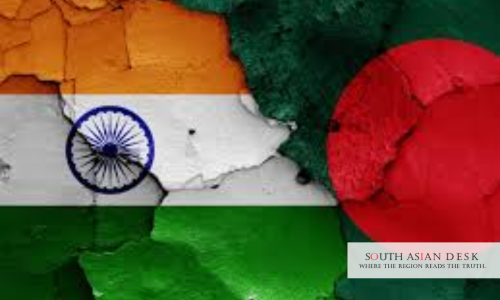
DHAKA: India categorically rejected assertions from Bangladesh’s interim government on Sunday, December 14, 2025, denying any use of its territory for activities harmful to its neighbour. The Ministry of External Affairs (MEA) issued the statement hours after Bangladesh summoned Indian High Commissioner Pranay Verma to protest former Prime Minister Sheikh Hasina‘s alleged incendiary remarks from India. This India Bangladesh tensions centres on extradition calls and fears of election disruptions, with both sides stressing commitment to peaceful polls.
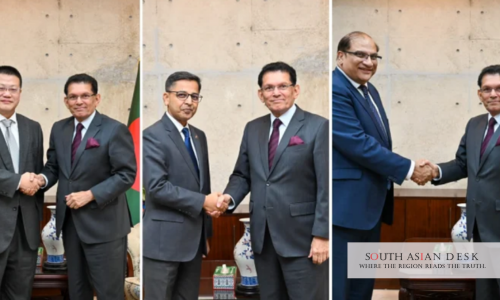
The summons took place at the State Guest House Padma in Dhaka, where Bangladesh’s Foreign Secretary Asad Alam Siam met Verma. Bangladesh accused India of harbouring Awami League fugitives, including Hasina, who face judicial sentences in Dhaka. Officials urged swift action to curb what they termed “terrorist activities” aimed at derailing upcoming national elections.
India’s response came swiftly through an MEA media release. “India has never allowed its territory to be used for activities inimical to the interests of the friendly people of Bangladesh,” the statement read. It added that New Delhi expects Dhaka’s interim administration “to take all necessary measures for ensuring internal law and order, including for the purpose of holding peaceful elections.” India reiterated its longstanding call for “free, fair, inclusive and credible” polls in a stable environment.
This exchange amplifies India Bangladesh tensions that have simmered since Hasina’s ouster in August 2024. The former leader, who fled to India amid student-led protests, now resides in New Delhi under protection. Her recent video statements urging supporters to resist the interim government have fuelled accusations of meddling. Bangladesh views these as direct threats to its democratic transition, especially with elections slated for early 2026.
Escalating India Bangladesh Tensions Over Extradition Demands
The core of the Bangladesh India diplomatic row lies in Bangladesh’s repeated pleas for Sheikh Hasina extradition. During the meeting with Verma, Dhaka formally requested the handover of Hasina and former Home Minister Asaduzzaman Khan Kamal. Both face death sentences from Bangladesh’s International Crimes Tribunal for alleged crimes during the 2024 uprising. Bangladesh argues the 2013 extradition treaty between the two nations obliges India to comply.
India has not publicly addressed the extradition specifics in this instance. However, past MEA statements provide context. In August 2025, Official Spokesperson Randhir Jaiswal responded to similar Dhaka complaints, stating: “The Government of India is not aware of any anti-Bangladesh activities by purported members of the Awami League in India or of any action that is contrary to Indian law.” He emphasised that India prohibits political activities against foreign states from its soil, deeming such assertions “misplaced.”
Verma, during the summons, reaffirmed India’s support for Bangladesh’s electoral process. “India looks forward to peaceful elections in Bangladesh and expresses its country’s readiness to extend all cooperation in this regard,” a senior Bangladeshi official quoted him as saying to the United News of Bangladesh (UNB). This aligns with New Delhi’s broader policy of engaging stakeholders for stability, as noted in a November 2025 MEA statement on Hasina’s tribunal verdict: “As a close neighbour, India remains committed to the best interests of the people of Bangladesh, including in peace, democracy, inclusion and stability.”
Bangladesh’s Ministry of Foreign Affairs (MoFA) detailed its grievances in the protest note. It highlighted Hasina’s calls for her followers to “engage in terrorist activities” to sabotage polls. The note also flagged activities by other Awami League exiles in India, accusing them of planning attacks to hinder the vote. Dhaka further sought India’s aid in apprehending suspects linked to an attempted assassination of political leader Sharif Osman Hadi last month. “As a neighbour, India is expected to stand with the people of Bangladesh in upholding justice and safeguarding democratic processes,” the MoFA urged.
These demands reflect deeper India Bangladesh tensions rooted in shifting alliances post-Hasina. Dhaka perceives New Delhi’s reluctance on extradition as tacit support for her faction, potentially empowering opposition to the interim setup led by Chief Adviser Muhammad Yunus. Analysts note that unresolved extradition could embolden hardliners on both sides, risking cross-border incidents.
Historical Context of Sheikh Hasina Extradition Saga
Sheikh Hasina extradition has loomed large since her arrival in India on August 5, 2024, following mass protests that toppled her regime. The Awami League leader, once a key Indian ally, now symbolises the rift. Bangladesh submitted its first formal extradition request in September 2024, citing the bilateral treaty. India acknowledged receipt but has cited due process, including treaty clauses on political offences.
The 2013 pact, signed during Hasina’s tenure, mandates extradition for serious crimes unless they qualify as political. Dhaka insists Hasina’s charges, genocide, crimes against humanity fall outside this exemption. New Delhi has extradited lower-profile fugitives in the past, such as Anup Chetia of ULFA in 2018, but Hasina’s case carries geopolitical weight.
India Bangladesh tensions predate this episode. Border disputes, water-sharing rows over the Teesta River, and trade imbalances have strained ties. Yet, economic interdependence with bilateral trade hitting USD 14.3 billion in 2024 provides a buffer. India’s investments in Bangladesh’s power sector, worth over USD 5 billion, underscore mutual stakes.
In November 2025, MEA noted Hasina’s verdict without endorsing it, focusing instead on democratic inclusion. This measured tone mirrors India’s strategy: balance support for minorities (Hindus faced attacks post-uprising) with non-interference. Bangladesh counters that India’s sheltering of Hasina undermines its sovereignty.
Bangladesh India Diplomatic Row: Broader Implications
The latest flare-up in the Bangladesh India diplomatic row arrives at a pivotal moment. Bangladesh’s interim government, installed after Hasina’s fall, faces pressure to deliver elections by mid-2026. Delays could invite instability, drawing in regional powers like China, which has ramped up infrastructure loans in Dhaka.
India rejects Hasina claims of bias, but the optics fuel narratives in Bangladesh media. Protests outside the Indian High Commission in Dhaka on Monday drew hundreds, chanting against “interference.” Security forces dispersed the crowd without arrests.
Economically, India Bangladesh tensions could disrupt supply chains. Bangladesh sources 70% of its yarn from India; any visa curbs or trade halts would hit garment exports, a USD 45 billion industry. Diplomats on both sides signal de-escalation efforts, with backchannel talks planned for next week.
Background: From Uprising to Interim Rule
Hasina’s 15-year rule ended in chaos last August, with over 300 deaths in clashes. Yunus’s administration, backed by students and military, prioritised reforms. It dissolved parliament, banned Awami League temporarily, and pursued trials against Hasina loyalists. India initially welcomed the transition but grew wary of anti-Indian rhetoric from Dhaka.
What’s Next for India Bangladesh Tensions
Resolution hinges on extradition progress and election security. Bangladesh eyes a UN-supervised poll framework, inviting Indian observers. New Delhi may offer technical aid, as in 2018 elections. Yet, if Sheikh Hasina extradition stalls, India Bangladesh tensions risk spilling into public domain, testing neighbourhood first policy.
Both nations share 4,096 km of border, home to millions. Sustained dialogue could avert escalation, ensuring South Asia’s stability amid global shifts.
Published in SouthAsianDesk, December 15th, 2025
Follow SouthAsianDesk on X, Instagram, and Facebook for insights on business and current affairs from across South Asia.