Chinese President Xi Jinping’s Republic Day message to India signals a positive shift in bilateral ties amid ongoing border talks.
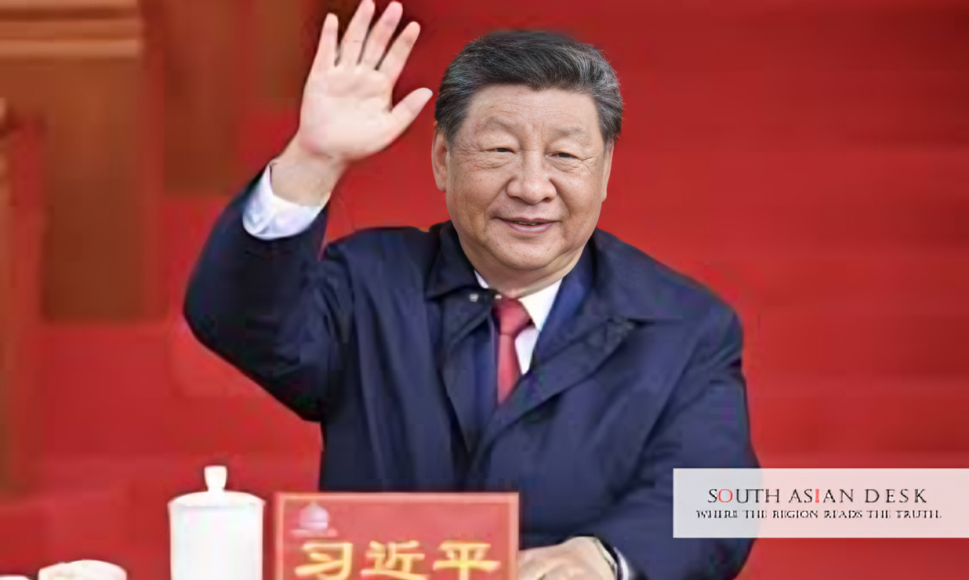
Chinese President Xi Jinping extended congratulations to Indian President Droupadi Murmu on India’s 77th Republic Day on Monday, January 26, 2026. In his message, Xi described China and India as good neighbours, friends and partners. The statement comes as both nations work to stabilise relations following the 2020 border clash.
The Xi Jinping India message underscores the importance of improved China India relations for global peace. It highlights progress over the past year and expresses hope for expanded cooperation. This development holds significance for South Asia, where India China relations influence regional stability, trade dynamics and geopolitical balances involving countries like Pakistan and Nepal.
Xi Jinping India Message Details
In the Xi Republic Day India communication, reported by state media, Xi stated that China India relations have continued to improve. He noted that such progress aligns with the fundamental interests of both countries and their peoples. Xi emphasised that maintaining healthy ties is crucial for world prosperity.
The message included a vivid metaphor: the dragon and the elephant dancing together. This refers to China and India collaborating harmoniously. Xi hoped both sides would strengthen strategic communication, expand exchanges and address concerns to promote stable development.
On the same day, Chinese Premier Li Qiang sent a similar congratulatory note to Indian Prime Minister Narendra Modi. This dual outreach from top Chinese leadership indicates a concerted effort to bolster diplomatic engagement.
Context of China India Friends Partners Statement
The Xi Jinping India message arrives against a backdrop of evolving bilateral dynamics. Ties between the nuclear-armed neighbours were strained after a deadly clash in June 2020 along the Line of Actual Control in Ladakh. That incident resulted in 20 Indian soldiers and 4 Chinese soldiers losing their lives in hand-to-hand combat.
Following the clash, both sides deployed tens of thousands of troops and heavy weaponry along the 3800 km disputed border. The frontier, poorly demarcated since the 1950s, has been a flashpoint for decades. Multiple rounds of military and diplomatic talks ensued, leading to partial disengagements in areas like Galwan Valley and Pangong Lake.
In 2025, relations showed signs of thaw. High-level bilateral visits resumed, including meetings between foreign ministers. Direct flights between the two countries restarted in August 2025, facilitating increased trade and people-to-people ties. This occurred amid broader global shifts, such as US President Donald Trump’s foreign policy approach, which encouraged Asian powers to enhance economic links.
Trade volumes have surged despite tensions. Bilateral trade reached USD 136 billion in 2025, with India exporting iron ore and agricultural products while importing electronics and machinery from China. However, India maintains restrictions on Chinese investments in sensitive sectors due to security concerns.
The China India friends partners narrative from Xi builds on recent consensus. At the BRICS summit in October 2025, Prime Minister Modi and President Xi met briefly, agreeing to expedite border talks. Military commanders have held 21 rounds of discussions, with the latest in December 2025 focusing on remaining friction points like Depsang and Demchok.
Background
India China relations trace back to ancient civilisations, with cultural exchanges via the Silk Road. Modern ties were established in 1950, but soured after the 1962 war over border disputes. The 1988 visit by Indian Prime Minister Rajiv Gandhi marked a turning point, leading to confidence-building measures.
In recent years, economic interdependence has grown. China is India’s second-largest trading partner, while India provides a vast market for Chinese goods. However, strategic rivalries persist. China’s Belt and Road Initiative, including the China-Pakistan Economic Corridor through disputed Kashmir territory, has raised concerns in New Delhi.
South Asian nations monitor India China relations closely. For Pakistan, a close ally of China, improved ties could ease regional tensions but complicate its position. Nepal and Bhutan, sandwiched between the giants, benefit from stable borders. Broader implications include influence over Indian Ocean trade routes and multilateral forums like the Shanghai Cooperation Organisation.
Data from the Stockholm International Peace Research Institute shows both countries rank among the top global military spenders. India allocated USD 81 billion to defence in 2025, while China spent USD 296 billion. These figures underscore the stakes in maintaining peace along the Himalayan frontier.
Impact on South Asia
The Xi Republic Day India message resonates in South Asia, where India China relations shape security architectures. Tensions in Ladakh had spillover effects, prompting India to strengthen alliances like the Quadrilateral Security Dialogue with the US, Japan and Australia.
A positive trajectory could boost regional economic integration. The South Asian Association for Regional Cooperation has stalled partly due to India-Pakistan issues, but better India China relations might encourage cross-border infrastructure projects. For instance, revived talks on the Bangladesh-China-India-Myanmar corridor could enhance connectivity.
However, challenges remain. India has accused China of altering the status quo through infrastructure builds in border areas. China denies this, claiming sovereignty over regions like Arunachal Pradesh, which it calls South Tibet. Ongoing patrols and buffer zones require vigilant diplomacy.
Experts note that while the China India friends partners rhetoric is encouraging, tangible outcomes depend on resolving core disputes. The Xi Jinping India message may pave the way for a potential leader-level summit in 2026.
What’s Next
Looking ahead, both sides plan further military talks in February 2026. Diplomatic channels will focus on visa easing for business travellers and journalists. Potential areas for cooperation include climate change initiatives under the Paris Agreement and joint manufacturing in renewable energy.
India aims to reduce its trade deficit with China, targeting USD 100 billion in exports by 2030. China has expressed interest in investing in India’s electric vehicle sector, subject to regulatory approvals.
The trajectory of India China relations will influence global supply chains, especially in semiconductors and pharmaceuticals. As both nations pursue development goals, India’s Viksit Bharat by 2047 and China’s centenary targets mutual accommodation could yield dividends.
In conclusion, the Xi Jinping India message reinforces the potential for constructive India China relations, essential for a multipolar world order.
Published in SouthAsianDesk, January 26th, 2026
Follow SouthAsianDesk on X, Instagram and Facebook for insights on business and current affairs from across South Asia.