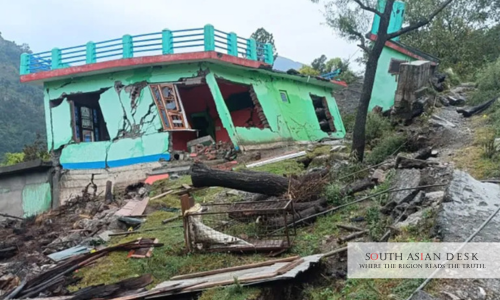
India’s Environment Minister Bhupender Yadav urged COP30 to prioritise climate adaptation on Monday in Belem, Brazil. The India COP30 adaptation fund hypocrisy emerges as New Delhi calls for 15-fold finance hikes abroad yet allocates zero to its National Adaptation Fund for Climate Change (NAFCC) since 2023. Yadav addressed delegates on finance shortfalls. The summit opened November 10. Over 160,000 Indians faced displacement in early 2025 floods alone. This stance highlights tensions in Global South pleas for equity.
The India COP30 adaptation fund hypocrisy matters in South Asia where nations like Pakistan and Bangladesh endure floods costing $30bn yearly. India leads demands for adaptation aid yet cuts expose vulnerabilities. Regional trade in resilient crops and shared rivers suffer without funds. Disasters displaced 45m across subcontinent by 2050 per estimates. COP30 outcomes could unlock $1tn new climate finance. South Asia’s 1.9bn people bear 75% of global heatwave deaths. Pragmatic finance bridges mitigation-adaptation divide for stability.
India Cuts Climate Adaptation Funding: NAFCC’s Decline
India launched NAFCC in 2015 with Rs 350 crore ($42m) initial outlay. The fund targets agriculture, water and coastal resilience via NABARD. It supported 30 projects across 27 states worth Rs 847 crore ($101m). Early allocations averaged $13.3m yearly. By 2022-23, spending fell to $2.47m. From FY 2023-24, budget hit zero. Reclassification to “non-scheme” in November 2022 ended dedicated funds.
A former NAFCC official noted stalled projects in flood zones. “The fund was created to help vulnerable communities adapt before disasters struck, and to reduce the kind of repeated displacement we are now witnessing. Once the allocations stopped, states lost a key channel to protect people living on the front lines of floods, landslides, and droughts. Now, these families are left to rebuild on their own, again and again.” Environment Ministry channels resources to broader initiatives, per an official.
Data shows impacts. India recorded 32m displacements from 2015-2024 climate events. 2024 saw 5.4m, highest in 12 years. Bihar floods affected 1.7m in 2025 monsoon, killing dozens. Odisha’s Sundarbans erode, displacing coastal hamlets. Tamil Nadu faces saltwater intrusion ruining paddy. Himachal Pradesh cloudbursts destroyed roads and farms. Without NAFCC, states seek alternative grants, delaying action.
India cuts climate adaptation funding amid rising needs. UNEP estimates $359bn annual adaptation costs for developing nations by 2030. India requires $679bn by 2030 for its share. Budget 2025 omitted “climate adaptation” mentions. Rs 20.94 crore ($2.5m) released in 2022-23 for six states. Zero followed. 127 districts in 27 states relied on NAFCC for resilience plans.
COP30 Climate Finance Demands: India’s Global Push
Yadav called COP30 the “COP of adaptation” in October 2024 roundtable. “The focus must be on transforming climate commitments into real-world actions that accelerate implementation and directly improve people’s lives. There is a need to strengthen and intensify the flow of public finance towards adaptation.” Post-opening statement on November 11 stressed: “Climate adaptation financing needs to exceed nearly 15 times current flows, and significant gaps remain in doubling international public finance for adaptation by 2025. Adaptation is an urgent priority for billions of vulnerable people in developing countries who have contributed the least to global warming but stand to suffer the most from its impacts.”
India, via LMDCs and BASIC, reaffirmed Common But Differentiated Responsibilities. Negotiator Suman Chandra accused developed nations of stalling green transitions. “Without adequate financing, something developed nations are supposed to help provide, climate adaptation or mitigation will remain out of reach.” Demands include grant-based flows, technology without IP barriers and Article 9.1 compliance.
COP30 climate finance demands target $1tn by 2025, unmet at $100bn. India seeks clear definitions and multi-year pledges. Yadav arrived November 17 for talks on finance, adaptation and equity. “India expressed full and unwavering support for multilateralism and international cooperation on climate change.” Over 80 nations push fossil fuel phase-out roadmaps, tying to finance.
The India COP30 adaptation fund hypocrisy draws criticism. Activist Raja Muzaffar Bhat said: “Announcing lofty adaptation goals abroad while starving the fund that safeguards our own citizens is misleading and a moral failure. People are losing homes, farms, and livelihoods, and the government has left them entirely to their fate. If this continues, the next generation will inherit a country where climate refugees are a daily reality. This is climate injustice at its most blatant.”
Global Goal on Adaptation draft reveals equity fault lines. India prioritises people-centered measures like crop insurance for smallholders. Negotiations cover indicators and finance links. Yadav co-chaired LeadIT roundtable on industrial decarbonisation. “Countries must now move from goal-setting to implementation as the Paris Agreement marks a decade.”
South Asia amplifies calls. Pakistan’s $30bn annual losses from floods underscore needs. Bangladesh seeks sea walls. Regional pacts like SAARC climate centre lag without funds.
Background of COP30 Adaptation
India’s climate pledges include 45% emissions intensity cut by 2030, 50% non-fossil capacity and net-zero by 2070. NAFCC filled gaps pre-2023. Post-reclassification, broader budgets rose to Rs 35,000 crore ($4.2bn) for energy transitions. Yet adaptation-specific aid shrank. COP29 Baku set finance baselines; COP30 tests delivery. Disasters hit South Asia hardest, with 75% under-5 deaths from heat.
What’s Next
Ministers eye “Mutirão” package by November 21 on finance, trade and ambition. India pushes GGA outcomes with measurable targets. Potential $1tn pledge could revive domestic funds. Watch Yadav’s bilateral meets. The India COP30 adaptation fund hypocrisy tests credibility. Resolutions demand action over words.
India’s stance at COP30 spotlights adaptation urgency. Domestic cuts hinder progress, but global demands rally Global South. Equity drives future resilience.
Published in SouthAsianDesk, November 20th, 2025
Follow SouthAsianDesk on X, Instagram, and Facebook for insights on business and current affairs from across South Asia.