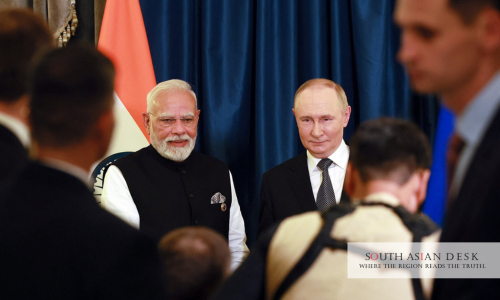
India cuts Russian oil purchases for December arrivals, pausing orders from suppliers tied to sanctioned firms Rosneft and Lukoil. This affects 65% of India’s Russian crude intake. The decision follows US sanctions effective November 21. Discounts on Urals crude now stand at $4 per barrel below Brent, the steepest in Asia for a year. Traders report the shift threatens unsold Russian barrels.
Russian Oil Discounts Widen as India Sanctions Pressure Mounts
Major Indian refiners including Hindustan Petroleum Corp, Bharat Petroleum Corp, Mangalore Refinery and Petrochemicals, HPCL-Mittal Energy, and Reliance Industries halted December orders. These firms handle about 65% of India’s Russian oil imports. The pause stems from US sanctions on Rosneft and Lukoil, Russia’s top producers. Treasury designated both under Executive Order 14024 for operating in Russia’s energy sector. The measures block assets and prohibit US persons from dealings.
Wind-down periods allow transactions until 12:01 a.m. EST on November 21, 2025. Foreign buyers like Indian refiners face secondary sanctions risks. This pushes them to review contracts. Overall demand for Russian crude in India fell sharply. December imports could drop significantly from October’s 1.6 million barrels per day. Russia supplied 34% of India’s total crude in October, up slightly from September.
Chinese state majors also suspended seaborne Russian oil buys. This divides Asia’s market. Non-sanctioned Russian barrels fetch premiums. Sanction-linked cargoes trade at deep discounts. Urals widened $2 this week to $4 below Brent for December. The gap recalls 2022 peaks of $8 but signals fresh revenue strain for Moscow.
Trump India Halt Russian Crude Imports: Tariff Leverage in Play
US President Donald Trump linked the cuts to his tariff regime. In August, he imposed 25% additional duties on Indian exports, totalling 50%. Half targets Russia’s oil purchases to curb funding for Ukraine war efforts. Trump told reporters India “largely stopped” buying Russian crude. He praised Prime Minister Narendra Modi as “a great man” and a friend. Modi invited Trump for a 2026 visit. Talks aim to boost bilateral trade from $191 billion to $500 billion by 2030.
Commerce Secretary defended the tariffs before the Supreme Court. “We told India to stop buying Russian oil,” he said. The levies pressure New Delhi amid stalled trade deal. India negotiates tariff reductions in exchange for lower Russian imports. Yet official data shows no full halt.
Trump’s team views tariffs as tools to end the war. They cite India’s compliance as progress. New Delhi stresses energy security. Russian oil saved $10 billion in import bills since 2022 through discounts.
Impact US Tariffs Indian Refiners Russian Oil: Costs and Shifts
Tariffs hit Indian exporters hard. Textiles, pharmaceuticals, and gems face 50% duties. Refiners absorb higher crude costs without discounts. Urals at $4 below Brent still offers value over Brent at $75 per barrel. But paused orders raise spot buys from Middle East suppliers.
Indian refining capacity stands at 252 million tonnes yearly. Russian crude suits complex units at Reliance and Nayara. Sanctions force diversification. Iraq and Saudi Arabia ramp supplies. October imports from Iraq hit 1 million barrels per day.
Global prices may rise if Russian surplus floods markets. Analysts predict $2-3 per barrel uptick. Moscow loses $1-2 million barrels per day in sales. Russia’s oil revenues fell 30% in October per Finance Ministry data.
In South Asia, the nut graph unfolds: India’s pivot disrupts regional energy flows. Pakistan, Bangladesh, and Sri Lanka rely on Indian refineries for fuels. Higher costs pass through, fuelling inflation. New Delhi’s $100 billion annual oil bill swells, straining forex reserves at $650 billion. Yet diversified sources bolster security against Middle East volatility.
Background: Escalating US-Russia Tensions
Sanctions build on 2022 measures. Initial Western bans drove Urals to $8 discounts. Trump escalated in August with penalty tariffs. He aims for zero Russian exports to allies. India, buying 2 million barrels daily peak, cut to 1.6 million by October. Trade talks near deal on tariff cuts for reduced volumes.
Rosneft and Lukoil produce 40% of Russia’s crude. Their block leaves 1 million barrels seeking buyers. China shifts to pipelines, avoiding seaborne risks.
What’s Next when India Cuts Russian Oil Purchases
India eyes US LNG imports to offset oil cuts. Negotiations target year-end pact. Russian discounts may deepen to $6 per barrel if sales stall. Refiners explore shadow fleet alternatives, but compliance fears persist.
India cuts Russian oil purchases signal a geopolitical recalibration. As sanctions enforce compliance, New Delhi balances ties with Washington and energy needs from Moscow. The shift could stabilise global prices long-term but challenges short-term affordability in South Asia.
Published in SouthAsianDesk, November 7th, 2025
Follow SouthAsianDesk on X, Instagram, and Facebook for insights on business and current affairs from across South Asia.