Thousands of migrant workers in Delhi’s slums risk losing their votes as the Election Commission launches a nationwide Special Intensive India electoral roll revision 2025.
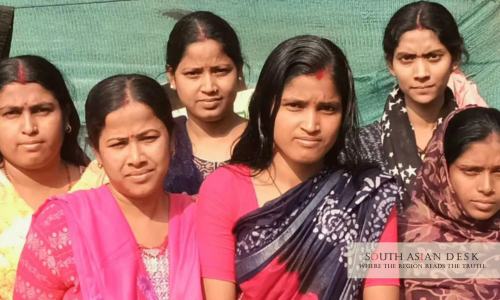
Migrant labourers from West Bengal and Uttar Pradesh living in Delhi’s Rangpuri Pahari slum now face a stark choice: lose several days’ wages to travel home and update voter records, or stay and risk removal from the electoral rolls.
With 510 million voters across 12 states under review, the India electoral roll revision 2025 directly affects millions of internal migrants who form the backbone of urban construction and informal economies. Failure to verify documents could strip them of voting rights and access to welfare schemes linked to voter IDs.
In Rangpuri Pahari, a dusty settlement near Delhi’s international airport, most residents break stones or load trucks from dawn to dusk. Their voter cards still carry village addresses left behind years ago. The sudden demand for proof of current residence has triggered widespread alarm.
Migrant Workers Voter Verification: Practical Barriers
A return trip to a district in West Bengal costs at least three days’ wages plus train fare, totalling around ₹2,000–₹3,000 for many labourers. Most earn ₹500–₹700 daily. Missing work is not an option when families depend on every rupee.
Local verification teams visit slums, but labourers are usually at construction sites when officials arrive. Those absent during the visit receive no second chance before names are flagged for deletion.
One worker explained that even if he reaches his village, the local booth-level officer may demand documents he no longer possesses. Birth certificates, school records, and old ration cards were either lost during repeated moves or never issued in the first place.
SIR Electoral Rolls Delhi: Life in the Margins
Delhi hosts an estimated 10–12 million migrant workers in unauthorised colonies and slums. The capital’s administration opened help camps, yet attendance remains low. Long queues, confusion over acceptable documents, and fear of authority keep many away.
Similar difficulties have surfaced in Chennai, Hyderabad, and Bengaluru. In Chennai, small protests broke out on 10 November after workers claimed officials rejected electricity bills as residence proof because the bills were in landlords’ names.
Women migrants face additional complications. Many transferred to their husband’s voter record after marriage but never updated the address. Without formal rental agreements, they struggle to prove they now live in Delhi.
Children born in the city often lack birth certificates registered in the parents’ home state. This breaks the family linkage required for verification, placing entire households at risk.
The Election Commission of India voter update allows some alternative documents such as bank passbooks or Aadhaar cards, but awareness is low. Many workers possess Aadhaar with old addresses and believe it will not be accepted.
Community leaders in Rangpuri Pahari report rising tension. Residents now hesitate to open doors to anyone carrying forms, unsure whether the visitor is from the Election Commission or another agency.
Election Commission India Voter Update: Official Position
Election Commission officials maintain the revision targets duplicate entries and bogus voters, not migrants. They have extended deadlines in some areas and deployed mobile units to industrial zones and slums.
Yet the scale of internal migration – estimated at 139 million people by the 2011 Census, with numbers significantly higher now – makes outreach challenging. Most workers live in informal settlements without postal addresses or utility connections in their own names.
Labour organisations have urged the Commission to accept workplace certificates or co-worker affidavits as temporary proof. So far, no such relaxation has been announced uniformly across states.
In previous revisions, thousands of genuine voters were removed because they could not respond in time. Activists fear a repeat on a larger scale during the current exercise.
Need for India Electoral Roll Revision 2025
The Special Intensive Revision began on 4 November 2025 in 12 states and Union Territories, including Delhi. It follows complaints of inflated voter lists and mismatched data. The process continues in phases until early 2026, with multiple cut-off dates for document submission and objection filing.
What’s Next
The Election Commission has promised intensified door-to-door campaigns and additional camps before final lists are published in January 2026. Civil society groups plan voter awareness drives in major migrant pockets. The outcome of the India electoral roll revision 2025 will determine whether millions of internal migrants retain their constitutional voting rights.
Published in SouthAsianDesk, November 24th, 2025
Follow SouthAsianDesk on X, Instagram, and Facebook for insights on business and current affairs from across South Asia.