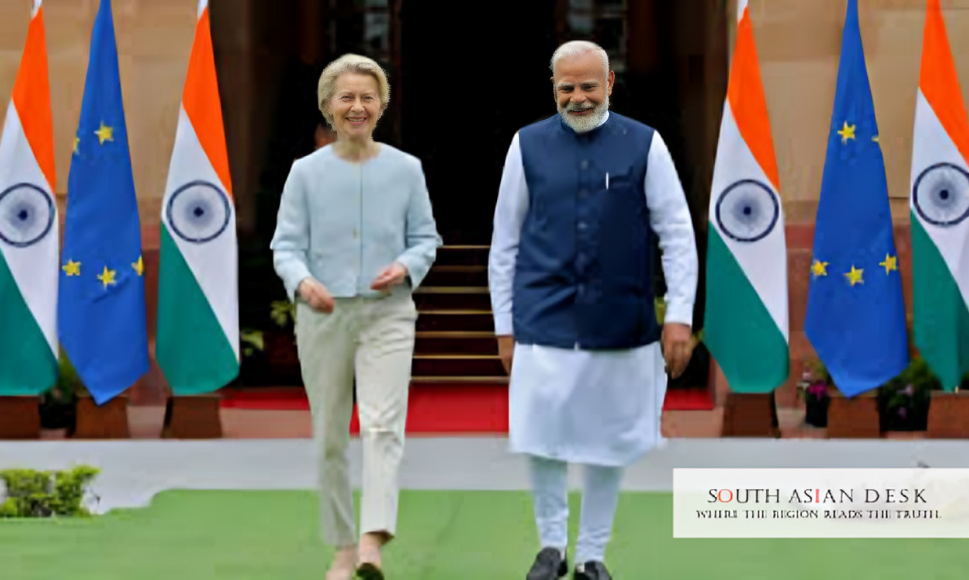
India and the European Union intensify efforts to seal the India EU FTA before year-end. Commerce Minister Piyush Goyal met EU Trade Commissioner Maroš Šefčovič on December 8-9. Talks focused on outstanding issues. Both sides aim for a balanced pact. This follows technical rounds in early December.
India and the European Union view the India EU FTA as a cornerstone for deeper economic ties. The agreement could boost bilateral trade, now at €124 billion in goods for 2023. It targets services trade at €59.7 billion. Negotiations restarted in June 2022 after a pause since 2013. Progress includes closed chapters on intellectual property and customs. For South Asia, the deal promises market access for textiles and pharmaceuticals. It supports regional supply chains amid global shifts. Pakistan and Bangladesh stand to gain indirectly through diversified exports. The pact aligns with India’s 2047 goals as a global partner.
Piyush Goyal EU Negotiations Advance Key Chapters
Piyush Goyal EU negotiations gained momentum during the December 8-9 meetings. Goyal and Šefčovič reviewed progress across FTA pillars. These include market access for goods and rules of origin. Services and technical barriers to trade featured prominently. Trade and sustainable development also saw discussions.
The talks built on a technical round from December 3-9 in New Delhi. Commerce Secretary Rajesh Agrawal met EU Director-General Sabine Weyand on December 7. They emphasised intensified dialogue. Both sides seek a timely conclusion. “We discussed the progress on the India-EU FTA and explored ways to resolve the issues to further advance the negotiations,” Goyal stated on X.
Šefčovič echoed this resolve. “In India for a two-day marathon of meetings with @PiyushGoyal to advance our trade and investment negotiations. EU-India ties are growing fast. A commercially meaningful FTA would unlock enormous potential,” he posted on X.
Outstanding gaps remain in steel tariffs and carbon border adjustments. Automobiles and non-tariff barriers pose challenges. India pushes for equal focus on non-tariff measures alongside tariffs. The EU seeks streamlined certification under India’s Quality Control Orders.
Data underscores the stakes. EU accounts for 17% of India’s exports. Key sectors include readymade garments and pharmaceuticals. Post-FTA, tariffs on chemicals could drop from 54%. This would enhance competitiveness.
India EU Trade Deal Deadline Looms with 2025 Target
The India EU trade deal deadline of end-2025 drives urgency. Both reaffirm commitment from May 2025 talks. Then, Goyal and Šefčovič agreed to monthly rounds. The next was set for May 12-16 in New Delhi.
By November 2025, stocktake meetings narrowed divergences. Common ground emerged on many issues. Technical engagements continue to bridge gaps.
External Affairs Minister S Jaishankar reinforced feasibility in late 2025. “The India-European Union Free Trade Agreement is feasible by the end of 2025,” he said at a Brussels forum. He noted good progress in talks with EU officials.
The EU’s official stance aligns. Negotiations aim for an ambitious pact. It covers digital transition and resilient supply chains. Five chapters closed in May: transparency, good regulatory practices, customs facilitation, intellectual property, and mutual assistance. Bilateral trade volumes highlight potential. Goods trade hit €124 billion in 2023, up from prior years. Services added €59.7 billion. India ranks as EU’s ninth partner. The FTA could add billions in market access.
For South Asia, implications extend beyond India. Enhanced EU-India flows could stabilise regional exports. Neighbours benefit from shared innovation in renewables and life sciences.
Modi von der Leyen Trade Talks Set Strategic Tone
Modi von der Leyen trade talks in February 2025 laid groundwork. Prime Minister Narendra Modi hosted the EU College of Commissioners in New Delhi. President Ursula von der Leyen joined. They outlined direction for the India EU FTA.
The summit stressed mutual respect and pragmatism. India highlighted non-tariff barriers. Regulatory frameworks must stay inclusive. This avoids trade restrictions. Follow-up in October 2025 saw Goyal in Brussels. He met Šefčovič on outstanding issues. Both reaffirmed the 2025 end-goal. Discussions covered India’s non-tariff concerns and new EU rules.
Preferential treatment for labour-intensive sectors topped India’s asks. Textiles and gems could see gains. The EU pushes for sustainability standards.
These high-level inputs guide negotiators. The December push reflects sustained political will. Goyal’s Doha remarks in October added optimism. “We are hoping to work together in a spirit of deep understanding… to conclude a very equitable, fair and balanced trade agreement,” he said.
Background: Resumed Talks and Early Wins
Negotiations for the India EU FTA relaunched in June 2022. A parallel investment protection agreement and geographical indications pact started then. Early rounds focused on goods and services.
Round one occurred in June-July 2022. Round two followed in October. By December 2022, round three advanced basics. March 2023’s round four built on that. June 2023 marked round five. October 2025’s round six intensified efforts. The tenth round in Brussels, March 2025, agreed to accelerate for year-end close.
Eleventh round in May closed key chapters. Twelfth in July targeted market access packages. September’s thirteenth achieved convergence in select areas. An “early harvest” deal eyes year-end. India’s broader strategy includes the EFTA pact, effective October 1, 2025. It commits USD 100 billion in investments and 1 million jobs over 15 years. This complements EU ambitions.
Trade data shows asymmetry. EU surplus with India persists. The FTA seeks balance through diversified access. South Asian context adds layers. India’s deals influence regional dynamics. Enhanced EU ties could spur intra-South Asia trade under frameworks like SAFTA.
What’s Next: Final Rounds and Potential Close
Upcoming rounds target resolution. Virtual engagements supplement in-person meets. Focus stays on goods, services, and sustainability. A successful India EU FTA could transform bilateral flows. Estimates suggest 20-30% export growth for India. Sectors like IT and auto parts lead. Both sides prepare for ratification if closed. Implementation timelines follow. Monitoring mechanisms ensure compliance.
The pact positions South Asia in global commerce. It fosters innovation hubs and green transitions. Regional players watch for spillover benefits. India eyes similar pacts with UK and others. The EU deal sets a template.
In conclusion, the India EU FTA stands at a pivotal juncture. With deadline pressure, negotiators press for breakthroughs.
Published in SouthAsianDesk, December 10th, 2025
Follow SouthAsianDesk on X, Instagram, and Facebook for insights on business and current affairs from across South Asia.