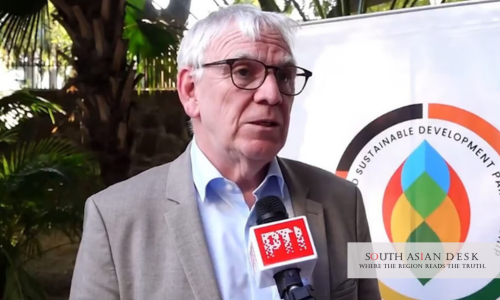
India-EU FTA: The recently concluded Free Trade Agreement between India and the European Union will uphold the EU’s Carbon Border Adjustment Mechanism (CBAM) without any exceptions, according to Jochen Flasbarth, State Secretary in the German Federal Ministry for the Environment, Nature Conservation, Nuclear Safety and Consumer Protection. The announcement came during Flasbarth’s visit to India on February 26, 2026, where he engaged in discussions with Indian officials from various ministries.
Flasbarth emphasized that the CBAM is not aimed at any particular country but is a necessary measure to protect EU industries once carbon pricing is introduced domestically. ‘CBAM is not against anyone. Once you introduce carbon pricing, you need to have some kind of protection,’ he stated. The mechanism, which began its financial phase in January 2026, imposes charges on carbon emissions embedded in imports from sectors like iron, steel, and cement.
The decision has raised concerns in India, especially for carbon-intensive exports such as steel, which may incur additional costs, potentially offsetting tariff benefits from the free trade agreement. Despite these concerns, both sides have agreed to engage in technical discussions to find a balanced approach going forward.
Flasbarth also highlighted the importance of the FTA amid rising global trade barriers and geopolitical tensions. He noted that while environmental and climate issues are not the core focus of the agreement, they remain central due to the EU’s commitment to climate neutrality. Additionally, he announced that India and Germany are set to ratify a pact on critical minerals during the upcoming inter-governmental commission meeting in June 2026.
Published in SouthAsianDesk, February 26th, 2026
Follow SouthAsianDesk on X, Instagram and Facebook for insights on business and current affairs from across South Asia.