Will India EU trade talks bridge gaps to seal a historic pact by 2025? India and the European Union have entered a critical stage in their free trade agreement (FTA) negotiations, aiming to finalise a deal by the end of 2025, as both sides intensify efforts to boost trade and counter global economic challenges, officials confirmed in New Delhi on Thursday, September 11, 2025.
Why It Matters in South Asia
A successful India-EU FTA could reshape South Asia’s economic landscape, enhancing India’s global trade footprint and providing a buffer against rising geopolitical tensions and tariffs, particularly from the United States. The agreement promises to deepen economic ties, fostering investment and technology transfers critical for the region’s growth.
India EU Trade Talks: Progress and Challenges
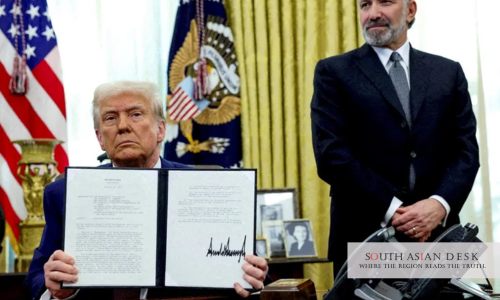
Negotiations, relaunched in June 2022, have gained momentum following the re-election of U.S. President Donald Trump, whose tariff policies have pushed both India and the EU to accelerate trade alliances. According to the European Commission, the EU is India’s largest trading partner, with bilateral trade in goods reaching USD 137.5 billion in the 2023/24 fiscal year, a nearly 90% increase over the past decade. The talks aim to unlock investment, reduce trade barriers, and enhance supply chains, benefiting both economies.
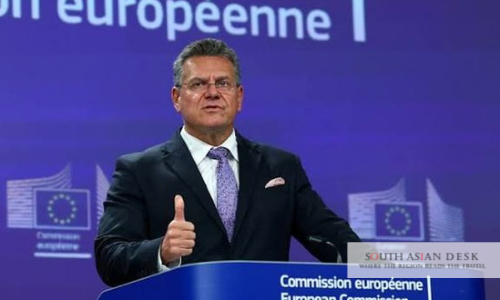
EU Trade Commissioner Maros Sefcovic, speaking at an event in New Delhi on Thursday, September 11, 2025, at 11:55 AM, said, “We are now maximising our efforts to finalise negotiations by the end of the year.” He highlighted the deal’s potential to expand market access and strengthen economic cooperation. India’s Commerce Minister Piyush Goyal echoed this optimism, stating, “Negotiators are working hard for a balanced and mutually beneficial deal that will unlock opportunities in trade, investment, and technology transfer.”
The 13th round of talks, held in New Delhi from Monday, September 8, to Friday, September 12, 2025, focused on resolving contentious issues. European Agriculture Commissioner Christophe Hansen joined Sefcovic to address differences over agriculture, dairy, and non-tariff barriers. The EU is pushing for steep duty cuts on vehicles, medical devices, wine, spirits, and dairy products, while India seeks greater market access for its textiles, pharmaceuticals, steel, and petroleum products.
Key Sticking Points in India EU Trade Talks
Despite progress, several challenges remain. India has firmly resisted concessions on agriculture and dairy, citing the livelihoods of millions of farmers. According to India’s Commerce Ministry, these sectors are critical for rural economies, making tariff reductions politically sensitive. The EU, however, is pressing for India to lower tariffs exceeding 100% on imported cars, whiskey, and wine.
Non-tariff barriers, including India’s quality control orders, are another hurdle. An EU official noted that these measures are perceived as restrictive, complicating market access. According to the European Commission, differences also persist on rules of origin, food safety standards, and labour and environmental obligations. India is also seeking exemptions for its steel and aluminium exports from the EU’s Carbon Border Adjustment Mechanism (CBAM), set to take effect in January 2026.
So far, 11 of the 23 chapters under negotiation have been finalised, covering customs, digital trade, intellectual property, competition, subsidies, dispute settlement, and anti-fraud measures. The 14th round, scheduled for Brussels from Tuesday, October 7, to Saturday, October 11, 2025, will tackle unresolved issues like rules of origin and market access.
Geopolitical Context Driving Urgency
The urgency to conclude the India EU trade talks crucial phase stems from global trade uncertainties. The U.S. imposed a 50% tariff on Indian goods in August 2025, including a 25% penalty for India’s oil trade with Russia, prompting New Delhi to seek alternative markets. The EU, facing similar tariff threats from the U.S., has sealed deals with Mexico and Mercosur countries and is now prioritising India, Indonesia, and the UAE.
According to India’s Ministry of External Affairs, External Affairs Minister S Jaishankar, speaking at the German Marshall Fund Forum in Brussels on Wednesday, June 11, 2025, expressed confidence that the year-end timeline is “feasible.” He emphasised the broader scope of India-EU relations, including defence, security, and talent mobility, underscoring the strategic importance of the FTA.
Background
India and the EU began FTA negotiations in 2007, covering trade in goods, services, investment, and intellectual property. After 15 rounds, talks stalled in 2013 due to disagreements over tariffs and market access. The relaunch in 2022, spurred by the EU-India Summit in May 2021, reflects a shared commitment to counter global trade fragmentation. The establishment of the EU-India Trade and Technology Council in 2022 further strengthened ties, focusing on digital transformation and green technologies.
What’s Next
The outcome of the ongoing India EU trade talks crucial phase will determine whether both sides can bridge gaps on sensitive issues like agriculture and tariffs. The October 2025 round in Brussels will be pivotal, with negotiators aiming to finalise the remaining chapters. A successful deal could position India and the EU as key players in a rules-based global trade order, enhancing South Asia’s economic resilience.
Published in SouthAsianDesk, September 13th, 2025
Follow SouthAsianDesk on X, Instagram, and Facebook for insights on business and current affairs from across South Asia.