What happens when district-level officers can order social media takedowns?
New Delhi, India, Monday, September 8, 2025 – India’s new censorship laws 2025, launched via the Sahyog platform in October 2024, empower district-level officials and police to demand social media content removal, raising concerns about unchecked censorship and free speech erosion.
The expansion of India’s censorship powers under the new laws signals a deepening control over online discourse, impacting South Asia’s largest democracy. With lower-tier officials now wielding takedown authority, the move could stifle dissent and affect regional digital freedom, setting a precedent for neighbouring nations.
Expanded Censorship Through Sahyog Platform
India’s new censorship laws 2025, enacted through the Sahyog platform, mark a significant shift in how content is regulated online. Previously, only the Ministry of Electronics and Information Technology (IT) and the Ministry of Information and Broadcasting (I&B) could issue takedown notices under Section 69A of the Information Technology Act, 2000. This section allows blocking online content deemed a threat to national security or public order. However, the Supreme Court, in rulings in 2015 and 2020, mandated that such orders be narrowly tailored with procedural safeguards.
The Sahyog platform, launched in October 2024, extends this power to federal, state, and district-level officials, including police, under Section 79(3)(b) of the IT Act. This provision, untested by courts, allows intermediaries to lose immunity if they fail to remove unlawful content upon government notification. Since its launch, 294 takedown requests targeting 3,465 URLs have been issued, with 25 orders covering 87 URLs in the last three months of 2024, and 269 orders for 3,276 URLs by June 2025.
Legal Concerns and Free Speech after New Censorship Laws 2025
The reliance on Section 79(3)(b) has drawn criticism for bypassing Supreme Court safeguards on Section 69A. Tanmay Singh, a Supreme Court lawyer, highlighted the lack of checks on Section 79, warning of a “parallel censorship mechanism.” Mishi Choudhary of the Software Freedom Law Center called Sahyog a “censorship portal,” accusing platforms of complicity in restricting free speech.
Elon Musk’s X has refused to join Sahyog and filed a lawsuit against the government, arguing that empowering “thousands of unnamed officers” to block content unilaterally violates free speech. X’s filings note instances like a Bihar police officer demanding the removal of a post alleging local corruption, which remained online as X did not comply.
Regional Impact: Kashmir and Beyond
The new censorship laws 2025 have intensified scrutiny in Indian-administered Kashmir, where tensions with Pakistan escalated in April 2025 after an attack killed 26 civilians. The government issued 130 takedown orders through Sahyog by April 8, 2025, and 164 more by June 30, targeting Pakistani and Indian journalists, including Maktoob’s Aslah Kayyalakkath and Kashmir Times’ Anuradha Bhasin. According to X’s statement on May 8, 2025, over 8,000 accounts were blocked, often without justification.
In opposition-governed states like West Bengal, police have used Sahyog to target critics. A March 2025 order sought to block a post by Koustav Bagchi mocking Chief Minister Mamata Banerjee, citing “risks to public safety.” X did not comply, and Bagchi was unaware until contacted by reporters.
Background
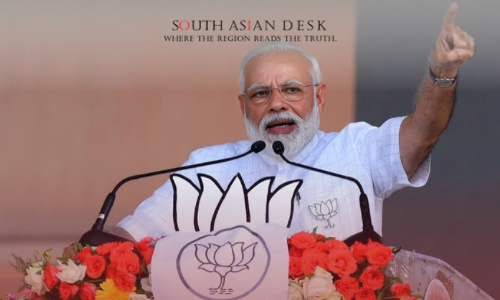
India’s new censorship laws 2025 landscape has evolved under Prime Minister Narendra Modi since 2014. Takedown orders under Section 69A rose from 471 in 2014 to 6,775 in 2022, with post-2022 data withheld for national security reasons. The Sahyog platform, managed by the Indian Cybercrime Coordination Centre (I4C), has onboarded 72 companies, including Meta, Google, and Telegram, but X’s resistance highlights growing tensions.
What’s Next
The ongoing lawsuit by X and the Software Freedom Law Center in the Delhi High Court, set for further hearing on Thursday, March 27, 2025, will test the legality of India’s new censorship laws 2025. The outcome could reshape online speech in India and influence digital policies across South Asia.
Published in SouthAsianDesk, September 8th, 2025
Follow SouthAsianDesk on X, Instagram, and Facebook for insights on business and current affairs from across South Asia.