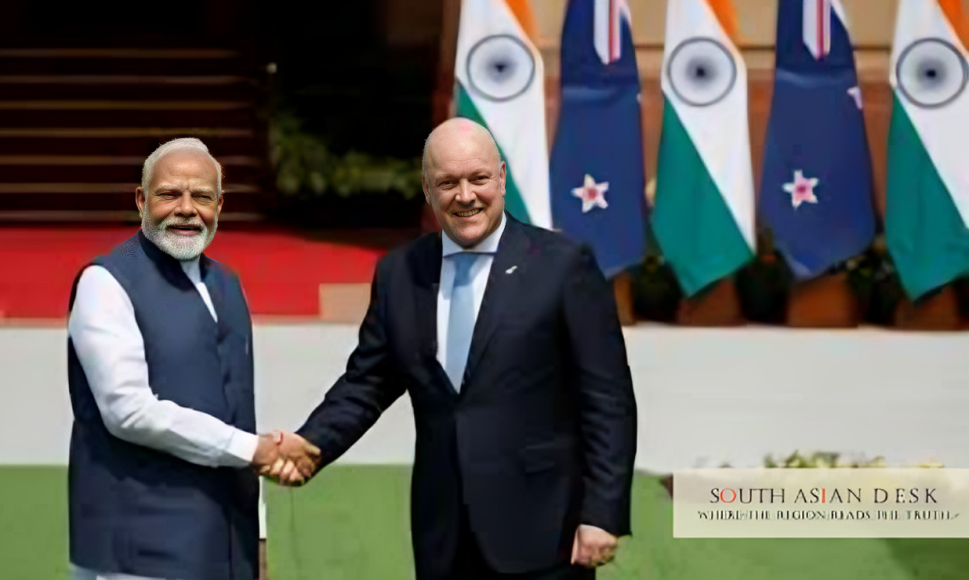
New Zealand and India finalised a landmark free trade agreement on Monday, 22 December 2025, unlocking market access for Kiwi exporters to 1.4 billion consumers while India eyes USD 20 billion in investments.
New Delhi and Wellington have sealed the India New Zealand FTA after nine months of negotiations. The deal promises to double bilateral trade within five years. It targets sectors from agriculture to technology. This move strengthens economic ties amid global uncertainties.
Details of the New Zealand India Trade Deal
Officials from both nations announced the conclusion of the India NZ free trade agreement today. New Zealand Prime Minister Christopher Luxon hailed it as a historic milestone. Indian Prime Minister Narendra Modi echoed the sentiment in a phone call with Luxon.
The agreement covers trade in goods, services, and investments. It eliminates tariffs on 90% of New Zealand exports to India over seven years. Key benefits include easier access for Kiwi dairy, forestry, and horticulture products. India gains from reduced barriers on pharmaceuticals, IT services, and engineering goods.
Bilateral trade stood at USD 1.8 billion in 2024. The India New Zealand trade pact aims to push this to USD 3.6 billion by 2030. Investments form a core part. India welcomes over USD 20 billion from New Zealand in sectors like renewable energy, infrastructure, and food processing.
Modi stated in his announcement: “An important moment for India-New Zealand relations, with a strong push to bilateral trade and investment.” He added: “This historic milestone reflects a strong political will and shared ambition to deepen economic ties between our two countries.”
Luxon responded: “The conclusion of an India-New Zealand Free Trade Agreement is a landmark moment for New Zealand.” The deal includes provisions for intellectual property, e-commerce, and sustainable development.
Negotiations began in March 2025. Rounds covered virtual and in-person meetings. The swift timeline highlights mutual urgency.
Economic Impact on South Asia
The India New Zealand FTA holds significance for South Asia. India serves as a gateway for New Zealand into the region. Enhanced supply chains could benefit neighbouring countries like Pakistan, Bangladesh, and Sri Lanka through spillover effects.
For instance, increased Indian exports of textiles and apparel might integrate regional value chains. New Zealand’s expertise in agriculture could foster joint ventures. This aligns with India’s Act East policy, extending to Pacific partners.
Data from the New Zealand Ministry of Foreign Affairs and Trade shows India’s economy grew 7.2% in 2024. As the fifth-largest global economy, it offers vast potential. South Asian nations watch closely for similar pacts.
The deal also addresses non-tariff barriers. Standards harmonisation will ease trade flows. MSMEs in both countries stand to gain from simplified customs procedures.
Background on India NZ Free Trade Agreement Negotiations
Talks for a comprehensive economic cooperation agreement date back to 2010. Early efforts stalled due to differences on dairy and services. A joint study in 2009 identified complementarities.
Renewed momentum came in 2025. Ministers Todd McClay and Piyush Goyal launched formal negotiations in March. Virtual rounds in May and July progressed key chapters. An in-person meeting in New Delhi in November resolved sticking points.
The India New Zealand trade pact builds on existing frameworks. Both are members of the Commonwealth. Cultural ties, including cricket and education exchanges, supported the process.
Current trade skews towards New Zealand exports like wool and logs. India sends machinery and gems. The FTA balances this asymmetry.
Opportunities for Businesses and People
Under the New Zealand India trade deal, entrepreneurs find new avenues. Farmers in New Zealand access India’s growing middle class. Indian startups tap Kiwi innovation hubs.
The agreement includes mobility for professionals. Students and skilled workers benefit from visa facilitations. Youth exchanges promote cultural understanding.
Sectors like renewable energy see joint investments. New Zealand’s clean tech complements India’s green goals. Food security gains from agricultural tech transfers.
MSMEs receive special focus. Capacity building programmes aim to integrate them into global chains. Women-led enterprises get incentives.
The India NZ free trade agreement also covers digital trade. Rules on data flows support e-commerce growth. This aids South Asian digital economies.
Challenges and Mitigations
Despite positives, concerns exist. New Zealand farmers worried about competition. India protected sensitive sectors like dairy.
The deal includes safeguards. Phase-in periods allow adjustments. Dispute resolution mechanisms ensure fair play.
Environmental standards are embedded. Both commit to sustainable practices. This addresses climate concerns in South Asia.
What’s Next for the India New Zealand FTA
Ratification processes begin in early 2026. Parliaments in both countries will review the text. Entry into force is expected by mid-2026.
Implementation committees will monitor progress. Annual reviews track trade targets. Business forums plan to convene in Auckland next year.
The India New Zealand FTA sets a template for future deals. It paves the way for deeper Indo-Pacific integration. As both nations implement the India New Zealand FTA, economic ties will strengthen further
Published in SouthAsianDesk, December 22nd, 2025
Follow SouthAsianDesk on X, Instagram and Facebook for insights on business and current affairs from across South Asia.