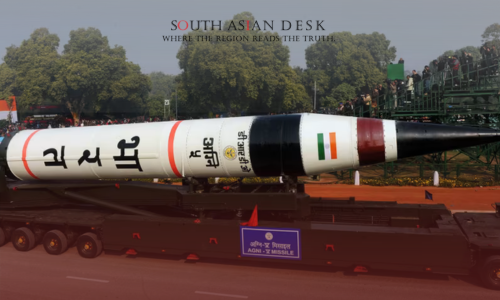
India’s successful test of the nuclear-capable Agni-5 missile, with a range exceeding 5,000 kilometres, has reaffirmed its strategic deterrence, capable of reaching deep into China and beyond. Conducted on Wednesday in Odisha, the launch validated advanced technologies, including multiple independently targetable re-entry vehicles (MIRVs). For communities near India’s borders, where past conflicts linger in collective memory, this achievement offers reassurance of national strength.
However, the test has elicited less favourable sentiments in some quarters, particularly in Europe, where views of India have grown more critical in recent years. Surveys indicate a decline in positive perceptions, with countries like France reporting a drop from 70 per cent favourability in 2008 to just 39 per cent in 2023. This shift, coupled with concerns over India’s nuclear advancements, reflects unease among global audiences who fear escalation in an already volatile region.
Timing of Nuclear Test Before Modi’s China Visit
The test’s timing, just a week before Modi’s nuclear China visit for the Shanghai Cooperation Organisation (SCO) summit in Tianjin, has amplified scrutiny. Modi’s first trip to China since 2018 follows recent steps towards warmer ties, including resumed commercial flights and reopened pilgrimage routes in Tibet. For Indian citizens, these diplomatic efforts evoke hope for peace, yet the missile test signals a commitment to maintaining a robust defence posture.
The nuclear China visit aims to balance engagement with caution, as India navigates its complex relationship with China. Recent border agreements, such as disengagement at friction points like Demchok and Depsang, suggest progress, but the test underscores India’s resolve to negotiate from strength. For families affected by the 2020 Himalayan clashes, this duality reflects their desire for both security and reconciliation.
India’s Balanced Approach to Diplomacy and Defence
India’s foreign policy, under Modi, seeks a balanced approach, blending assertive defence strategies with diplomatic outreach. The Agni-5 test aligns with India’s pursuit of self-reliance in defence, a response to regional challenges and external pressures, such as potential US tariffs over Russian oil imports. For workers in India’s defence sector, this focus promises job opportunities, tying national security to personal livelihoods.
At the SCO summit, Modi will engage with Chinese and Pakistani leaders, including Prime Minister Shehbaz Sharif, amid a backdrop of regional rivalries. India’s nuclear capabilities, estimated at 180 warheads compared to China’s 600, reinforce its credible minimum deterrence strategy. For citizens in border regions, where the threat of conflict looms, this strength offers a sense of protection, even as global criticism grows.
Regional and Global Implications
The test has broader implications for South Asia’s security dynamics, particularly India’s rivalry with Pakistan, which faced a brief conflict earlier this year. The Agni-5’s range and capabilities position India as a key player in the region, but they also fuel concerns among neighbours and global powers. For communities hoping for stability, the test is a double-edged sword, symbolising both strength and the risk of heightened tensions.
Globally, India’s actions are viewed through a lens of growing scepticism. While nations like Kenya and Nigeria hold positive views, with over 60 per cent favourability, European countries and others express reservations, particularly over India’s nuclear advancements and perceived assertiveness. This divergence complicates India’s efforts to maintain a balanced approach during the China visit, as it seeks to strengthen ties without alienating key partners.
A Nation’s Aspirations Amid Global Tensions
For ordinary Indians, from farmers in Odisha to traders in Delhi, the Agni-5 test is more than a technical feat; it embodies resilience and the hope of a secure future. The nuclear China visit offers a chance to build bridges, but the test ensures India negotiates with confidence. For families yearning for peace, this balance reflects their dreams of a nation that stands strong yet seeks harmony.
As India navigates global scrutiny, its commitment to a balanced approach remains steadfast. The nuclear China visit, set against the backdrop of the Agni-5 test, underscores the nation’s determination to protect its people while pursuing diplomacy. This moment captures the aspirations of millions, who hope for a future where strength and peace coexist, free from the shadows of conflict.
Published in SouthAsianDesk, August 21st, 2025
Follow SouthAsianDesk on X, Instagram and Facebook for insights on business and current affairs from across South Asia.