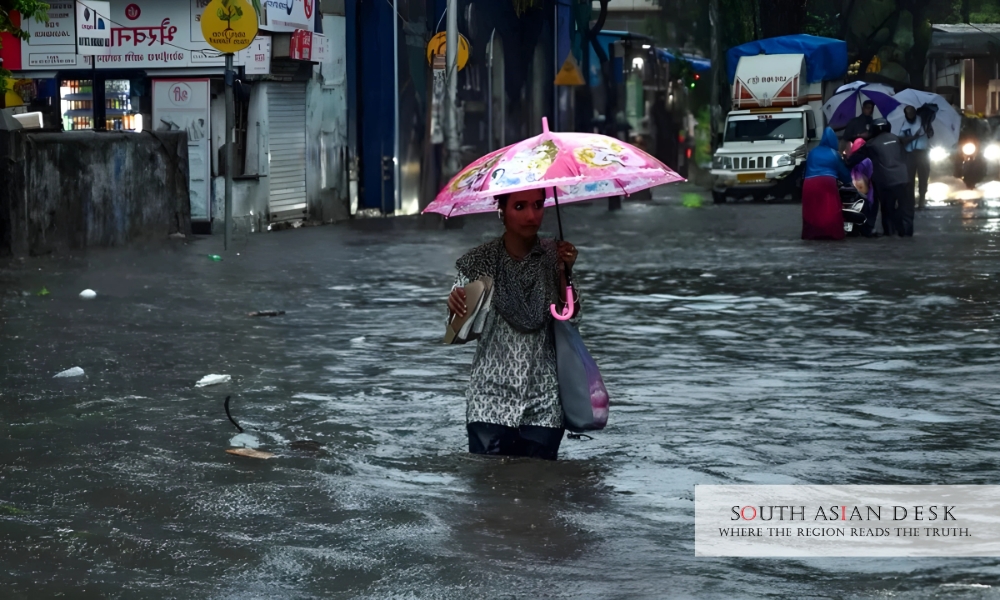
The India Meteorological Department (IMD) issued a red alert for India rains 2025 across Mumbai, Thane, and Raigad on Monday, September 15, 2025, forecasting extremely heavy rainfall until 11:15 AM, driven by intense thunderstorms and gusty winds of 30-40 kmph that could trigger flooding and transport halts.
In South Asia’s most populous urban hub, the Mumbai red alert underscores the perennial threat of India rains 2025 to infrastructure and livelihoods, where even brief deluges can paralyse economic activity worth billions, exacerbate inequality in low-lying areas, and strain emergency services amid climate-amplified weather patterns.
Forecast Details Amid India Rains 2025
The IMD’s escalation from an orange to a red alert reflects the severity of ongoing India rains, with predictions of very heavy falls over the Konkan and Goa region, including Mumbai, on September 15. Officials anticipate intense to very intense spells of rain accompanied by lightning, prompting heightened vigilance in coastal districts.
According to the India Meteorological Department, light to moderate rain with isolated heavy downpours is likely over Madhya Maharashtra and Marathwada on September 16, following the peak of the current system. This forecast aligns with broader patterns of India rains, where monsoon troughs have lingered longer than usual, contributing to above-average precipitation in western India.
An orange alert covers Pune, Ahmednagar, Beed, Palghar, and Latur, signalling heavy rain possibilities, while a yellow alert blankets the rest of Maharashtra for lighter showers. These tiered warnings aim to guide preparedness, with the Mumbai red alert emphasising immediate action for residents and authorities.
Transportation Disruptions Under Mumbai Red Alert
Early Monday morning, the India rains intensified, already impacting Mumbai’s vital commute networks under the red alert. Local trains continued operations despite the downpours, but suburban rail services faced delays due to water accumulation on tracks.
A technical snag halted a monorail service in Wadala around 8:00 AM, stranding passengers amid the lashing rains. Fire brigade teams responded swiftly, transferring commuters to alternative services. This incident echoes vulnerabilities exposed by previous India rains episodes, where power supply failures compounded travel woes.
According to the Brihanmumbai Municipal Corporation, residents should dial 1916 for assistance during the Mumbai red alert period, as intense rain and thunderstorms pose risks to mobility. Aviation too felt the ripple effects, with IndiGo issuing advisories for potential flight disruptions at Mumbai’s Chhatrapati Shivaji Maharaj International Airport.
Regional Alerts in the Wake of India Rains 2025
Beyond the Mumbai red alert, India rains have prompted widespread cautions across Maharashtra. Pune experienced severe waterlogging overnight on Sunday, September 14, flooding low-lying areas and prompting online appeals for school and office closures. The orange alert there forecasts continued heavy spells, potentially mirroring disruptions seen in the Mumbai red alert zone.
In Thane and Raigad, adjacent to Mumbai, the red alert warns of similar hazards, including landslides in hilly terrains. The IMD’s subdivision-wise bulletin highlights very heavy rain for the Konkan division on September 15, tapering to heavy falls the following day. These developments in India rains emphasise coordinated response efforts among district administrations.
Civic Preparations for Mumbai Red Alert
The Brihanmumbai Municipal Corporation (BMC) has mobilised pumping stations and drainage teams in anticipation of the Mumbai red alert’s impacts from India rains. An official advisory urges private firms to enable work-from-home options, echoing measures from prior monsoon surges.
Emergency shelters stand ready, and traffic police have flagged alternate routes to mitigate jams. According to the Brihanmumbai Municipal Corporation, gusty winds of 30-40 kmph could further complicate road travel during the intense phase of the Mumbai red alert. Such proactive steps aim to minimise casualties, drawing lessons from past India rains 2025 events where flooding claimed lives and property.
Background
Indian rains have marked an unusually prolonged monsoon season, with cumulative rainfall in Maharashtra exceeding seasonal norms by 20 per cent as of mid-September. Last month, a similar Mumbai red alert in August led to monorail breakdowns and the rescue of nearly 800 passengers over three hours, highlighting systemic issues in rain-resilient transport.
Historical data from the IMD shows that red alerts in Mumbai correlate with peak urban flooding risks, often resulting in economic losses upwards of INR 5,000 crore annually from disrupted commerce and infrastructure repairs. This backdrop amplifies the urgency of the current Mumbai red alert within the broader Indian rains narrative.
What’s Next
Authorities will reassess the situation post-11:15 AM on Monday, September 15, 2025, with potential extensions to the Mumbai red alert if India rains 2025 persist. The IMD plans hourly updates, while BMC teams monitor reservoirs to avert overflows.
As India rains 2025 evolve into the season’s final throes, enhanced forecasting and urban resilience measures could define Mumbai’s ability to weather future red alerts with fewer scars.
Published in SouthAsianDesk, September 15th, 2025
Follow SouthAsianDesk on X, Instagram, and Facebook for insights on business and current affairs from across South Asia.