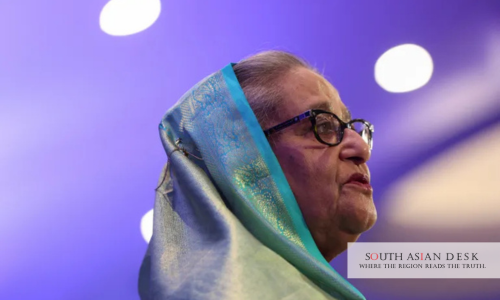
India refuses Hasina extradition to Bangladesh following her death penalty for crimes against humanity, as Dhaka invokes a bilateral treaty to demand her immediate return. The Ministry of External Affairs, on Monday, November 17, 2025, noted the verdict but reaffirmed its commitment to Bangladesh’s stability without directly addressing the request. Hasina, in exile in New Delhi since August 2024, faces execution in absentia. This development, unfolding at 4:35 PM on Monday, August 25, 2025, underscores a diplomatic standoff between the neighbours.
The International Crimes Tribunal in Dhaka convicted Hasina and former Home Minister Asaduzzaman Khan Kamal of genocide during the 2024 student protests that led to her ouster. The tribunal sentenced both to death by hanging. Bangladesh’s Foreign Ministry immediately wrote to New Delhi, citing the 2013 extradition treaty as creating an “obligatory responsibility” for India to hand her over. Officials in Dhaka described continued refuge for Hasina as a “highly unfriendly act and a disregard for justice.”
India’s response came swiftly through its Ministry of External Affairs. Spokesperson Randhir Jaiswal posted the official statement on X, stating: “India has noted the verdict announced by the ‘International Crimes Tribunal of Bangladesh’ concerning former Prime Minister Sheikh Hasina. As a close neighbour, India remains committed to the best interests of the people of Bangladesh, including those related to peace, democracy, inclusion, and stability in that country. We will always engage constructively with all stakeholders to that end.” This measured tone avoids any mention of extradition, signalling India’s reluctance to comply.
Hasina Death Penalty: India’s Stance Rooted in Legal Exceptions
India refuses to extradite Hasina primarily due to provisions in the bilateral treaty that exempt “offences of a political character.” Analysts argue the charges against Hasina qualify under this clause, viewing the trial as driven by political motives rather than pure judicial process. Former Indian High Commissioner to Bangladesh Pinak Ranjan Chakravarty told Al Jazeera: “How can New Delhi push her towards her death? She was a friendly person to India, and India has to take a moral stand.”
The 2013 extradition treaty, signed during Hasina’s tenure, allows refusal if the request lacks good faith or serves political ends. Article 6 of the treaty permits denial in cases of a politically motivated nature, while Article 8 adds safeguards against prejudice based on race, religion, or opinion. Indian experts, including Sanjay Bhardwaj from Jawaharlal Nehru University, described the verdict as “political vindictiveness of the ruling political forces in Bangladesh, ruled by anti-India forces.” Handing over Hasina, they say, would legitimise those opponents and undermine India’s strategic interests.
Hasina’s history with India bolsters this stance. She first fled to New Delhi in 1975 after her father, Sheikh Mujibur Rahman, was assassinated, and was granted asylum by then-Prime Minister Indira Gandhi. She resided there for six years before returning. In August 2024, amid deadly protests that killed over 300 people, Hasina landed in India, greeted by National Security Adviser Ajit Doval. Chakravarty noted, “We did not invite Hasina this time. India allowed her to stay because what other option was there?”
Data from the protests highlights the charges’ gravity. The tribunal documented 1,400 deaths, thousands injured, and widespread arrests during the July-August 2024 unrest. Hasina’s government faced accusations of deploying security forces excessively, leading to her flight on August 5, 2024. Yet, India’s Ministry of External Affairs emphasises broader goals: fostering peace and democracy in Bangladesh, where Hasina’s Awami League remains a key ally despite her fall.
Bangladesh Demands Hasina Return: Treaty Invocation Escalates Pressure
Bangladesh demands Hasina’s return with growing urgency following the verdict. The Foreign Ministry’s letter on November 17, 2025, stated: “The Government of India must immediately hand over these two convicted individuals to the Bangladesh authorities. According to the existing extradition treaty between the two countries, this is also a mandatory duty for India.” It warned that sheltering convicts of crimes against humanity equates to disregarding justice.
Interim leader Muhammad Yunus’s administration, installed after Hasina’s ouster, views the extradition as essential for accountability. Law, Justice, and Parliamentary Affairs Adviser Asif Nazrul announced plans for a formal follow-up letter to New Delhi. Protesters in Dhaka echoed this, with student activist Shima Akhter telling Al Jazeera: “She must be hanged here in Dhaka to achieve justice for the victims.”
Dhaka’s push aligns with domestic politics. The tribunal, established in 2009, has convicted dozens in similar cases; however, Hasina’s trial—conducted in absentia—has drawn international scrutiny. Bangladesh reports over 10,000 arrests related to the 2024 events, with the Yunus government prioritising trials to consolidate power. Yet, critics, including Hasina’s supporters, call the process “rigged” and biased against the Awami League.
India’s non-committal response has further strained ties. Bilateral trade, valued at USD 16 billion in 2024, faces risks from this impasse. Connectivity projects like the Akhaura-Agartala rail link and Maitree power plant, inaugurated in 2023, symbolise past cooperation but now appear overshadowed. Bangladesh’s overtures to China and Pakistan add layers, as New Delhi worries about shifting regional alignments.
Historical Ties and Exile Precedent
Hasina’s bond with India dates to Bangladesh’s 1971 independence war, where Indian forces aided the liberation from Pakistan. Her father, Mujibur Rahman, forged early alliances. With over 15 years in power, Hasina has strengthened economic ties, resolved border disputes, and increased energy imports. India provided USD 8 billion in lines of credit for infrastructure.
Her 2024 exile revives this pattern. Unlike 1975, current geopolitics complicate matters. India’s “Neighbourhood First” policy prioritises stable partners, and extraditing Hasina could alienate Awami League remnants, seen as a counter to Islamist influences in Dhaka.
Why Hasina Extradition Matters
India refuses to extradite Hasina to Bangladesh in a context that reverberates across South Asia. The row tests post-colonial bonds, with Bangladesh’s instability risking refugee flows and militancy spillover into India’s northeast. Dhaka’s pivot towards Beijing—evident in renewed port deals—challenges India’s regional dominance. For the 1.8 billion people in the subcontinent, unresolved tensions could disrupt USD 100 billion in annual trade and shared river waters, such as the Teesta.
The death penalty amplifies human rights debates. Amnesty International documented 600 extrajudicial killings in the 2024 protests, pressuring both governments. India’s stance protects an ally but invites accusations of harbouring fugitives, echoing global extradition disputes like Julian Assange’s. In a nuclear-armed neighbourhood, this divide erodes trust, which is vital for counter-terrorism and climate resilience amid the increasing frequency of cyclones in the Bay of Bengal.
Broader implications include democratic backsliding fears. Allegations of election rigging marred Hasina’s 15-year rule, but her ouster through street protests raises concerns about vigilantism. Yunus’s interim setup, backed by students, promises reforms but delays elections until 2026, fuelling uncertainty.
Background: From Protests to Verdict
The saga began in July 2024 with quota reform protests over job reservations for the kin of freedom fighters. Escalating into anti-Hasina fury, it claimed 1,400 lives by August. Hasina resigned and fled, marking the end of her Awami League era. Yunus, a Nobel laureate, assumed charge on August 8, 2024, vowing to conduct trials.
The tribunal, under the ICT Act 1973, fast-tracked Hasina’s case. Witnesses testified to security forces’ atrocities, including mass shootings. Hasina, from India, dismissed it as “the murderous intent of extremist elements,” claiming bias to erase her legacy.
India hosted Hasina discreetly, providing security amid the unrest in Dhaka. Bilateral summits in 2023-2024 masked brewing frictions over water-sharing and Hasina’s authoritarianism.
What’s Next: Diplomatic Manoeuvres Ahead
Future talks hinge on quiet diplomacy. India may offer economic aid—USD 500 million in fresh loans—to ease demands, while Bangladesh pushes UN involvement. Hasina’s appeal, expected within 30 days, could prolong the limbo. Analysts predict no swift resolution, with extradition off the table unless Dhaka drops the political label.
India refuses to extradite Hasina to Bangladesh, prioritising long-term stability over immediate compliance, as the subcontinent watches for ripples in the fragile peace.
Published in SouthAsianDesk, November 18th, 2025
Follow SouthAsianDesk on X, Instagram, and Facebook for insights on business and current affairs from across South Asia.