India’s state-run ONGC Videsh edges towards retaining its 20% share in Russia’s Sakhalin-1 project through a rouble-based payment mechanism, leveraging frozen dividends amid Western sanctions. The India Russia oil deal bolsters bilateral energy ties ahead of President Putin’s visit.
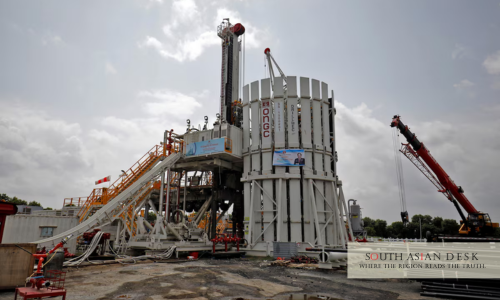
India’s Oil and Natural Gas Corporation (ONGC) Videsh has agreed to contribute to the Sakhalin-1 abandonment fund in roubles, using frozen dividends from Indian firms, to secure its 20% stake in the Russian oil and gas project. The deal, finalised on Thursday ahead of Russian President Vladimir Putin’s visit to New Delhi, navigates Western sanctions imposed since Russia’s 2022 invasion of Ukraine. Sources close to the matter confirmed the arrangement on 5 December 2025, at 4:35 PM IST. ONGC Videsh, the overseas arm of ONGC, holds a stake in the Sakhalin-1 consortium, which Rosneft’s subsidiary operates.
This India-Russia oil deal marks a key step in maintaining access to one of Russia’s largest offshore fields. The project, located off Sakhalin Island, produces substantial crude and gas volumes that are critical for India’s import needs.
ONGC Sakhalin Project: Navigating Sanctions for Stake Retention
The ONGC Sakhalin project, part of the broader Sakhalin-1 consortium, is subject to decommissioning requirements under Russian regulations. The abandonment fund ensures environmental safeguards during well shutdowns. ONGC Videsh’s contribution, estimated to cover its proportional share, will be sourced from a loan of approximately $800 million in stuck dividends owed to Indian state-run companies from Russian energy assets.
Two sources with direct knowledge said Russia approved the rouble payment using pending dividends. They spoke on condition of anonymity as they lack media authorisation. Dollar transfers remain blocked by sanctions, forcing the use of creative financing mechanisms, such as this internal loan.
ONGC Videsh has pursued stake retention since October 2022, when Putin decreed the project’s seizure, empowering the Russian government to redistribute foreign ownership. In August 2024, Putin issued a further decree allowing reinstatement for compliant investors. Conditions include pledging support to lift Western sanctions, securing foreign equipment contracts, and funding project accounts.
ONGC Russia Stake: Frozen Dividends as Lifeline
The ONGC Russia stake in Sakhalin-1 totals 20%, acquired in 2009 as part of India’s diversification strategy. Production halted briefly in April 2022 after ExxonMobil invoked force majeure, but resumed under Rosneft’s oversight. The current output stabilises at levels that support Russia’s Far East exports.
Indian firms, including ONGC Videsh, GAIL, and Indian Oil, hold combined stakes yielding $800 million in unrepatriated dividends. The loan from these funds circumvents sanction hurdles, as Russian authorities have approved for rouble conversion.
This arrangement highlights the resilience of the ONGC Russia stake amid geopolitical strains. ONGC’s annual report for FY 2023-24 confirms a 20% holding, noting that “business as usual” post-reinstatement efforts are underway.
India Energy Russia Ties: Broader Implications for South Asia
The India energy partnership extends beyond Sakhalin-1. Bilateral trade in crude oil hit record highs in 2024, with Russia supplying over 40% of India’s seaborne imports. This India-Russia oil deal aligns with New Delhi’s push for affordable energy, shielding consumers from the volatility of global prices.
For South Asia, the pact stabilises supply chains. India’s imports underpin refinery operations that refine Russian Urals crude into fuels exported regionally, including to Pakistan and Bangladesh via spot deals. Disruptions could spike prices, exacerbating inflation in energy-dependent economies, such as Sri Lanka’s post-2022 crisis.
Official data from India’s Ministry of Petroleum and Natural Gas show that Russian crude imports rose 25% year-over-year in the first half of 2025, totaling 1.8 million barrels per day. The Press Information Bureau (PIB) highlighted energy cooperation in a 2024 release, stating it “enhances India’s strategic autonomy.”
In the context of the ONGC Sakhalin project, retained access ensures long-term gas flows. Sakhalin-1’s reserves exceed 2.3 billion barrels of oil equivalent, with gas potential aiding India’s LNG diversification.
Historical Context of the ONGC Sakhalin Project
ONGC entered the Sakhalin-1 consortium in January 2009, paying $1.7 billion for the 20% stake. The project spans three fields: Chayvo, Odoptu, and Arkutun-Dagi. Production peaked at 400,000 barrels per day in 2019, routed via the De-Kastri terminal.
Sanctions imposed after the Ukraine invasion froze assets, prompting Exxon’s exit and Rosneft’s takeover. ONGC Videsh applied for reinstatement by the November 2022 deadline, as per Russian mandates. An ONGC media interaction in May 2023 affirmed: “We have got back our 20% stake from the new Russian operator. It is business as usual as far as the dividend is concerned.”
The Ministry of External Affairs (MEA) bilateral brief from December 2022 emphasised “uninterrupted energy supplies” in India-Russia talks. No specific Sakhalin press release emerged in December 2025 searches; however, ongoing consultations, such as the March 2025 Foreign Office meeting, covered energy resilience.
This history frames the current India-Russia oil deal as a continuity measure, not a reversal.
Impact on South Asian Energy Security
South Asia relies on India as a transit hub for Russian energy. The ONGC Russia stake retention prevents supply gaps that could affect 300 million regional consumers. Bangladesh’s Petrobangla imported 2 million tonnes of Russian oil in 2024 through Indian refineries, according to government data.
Pakistan’s imports, though smaller at 500,000 tonnes, face similar risks. The deal mitigates the risk of escalation from Ukraine-related volatility, as Brent crude hovered at $75 per barrel on December 5, 2025.
Environmentally, the abandonment fund safeguards Arctic ecosystems, aligning with India’s goal to achieve net-zero emissions by 2070. ONGC’s 2038 net-zero target for operations encompasses overseas assets, such as Sakhalin-1.
Economically, the India energy framework supports rupee-rouble trade, reducing dollar dependency. A 2025 MEA update noted that trade had doubled the $30 billion target, with energy comprising 60%.
Challenges persist. Russian approval for rouble transfers remains conditional, and future sanctions could freeze further funds. Yet, the ONGC Sakhalin project demonstrates adaptive diplomacy.
Background of India Russia Oil Deal
Sakhalin-1, discovered in 1977, is Russia’s most significant integrated oil and gas venture. The consortium originally included Exxon Mobil (30%), Rosneft (20%), SODECO (9.4%), and ONGC Videsh (20%). Following the sanctions, Rosneft consolidated its control while allowing foreign buybacks.
India’s reliance on the Middle East has diversified, now accounting for 60% of imports. The ONGC Russia stake accounts for 15% of Videsh’s overseas portfolio, producing approximately 3 million tonnes of oil equivalent annually.
What’s Next
ONGC Videsh eyes full dividend repatriation post-Putin’s visit, potentially unlocking $100 million immediately. Further India-Russia oil deals may target LNG swaps and joint ventures in Arctic fields. Russian Energy Minister Sergey Tsivilyov, who met India’s Hardeep Singh Puri in February 2025, signalled expanded cooperation at the India Energy Week.
This forward momentum in India’s energy and Russia’s space could feature in the annual summit outcomes, fortifying South Asian energy corridors against global shocks. The India-Russia oil deal positions ONGC for sustained output from Sakhalin-1, anchoring bilateral ties in a sanction-laden world.
Published in SouthAsianDesk, December 5th, 2025
Follow SouthAsianDesk on X, Instagram, and Facebook for insights on business and current affairs from across South Asia.