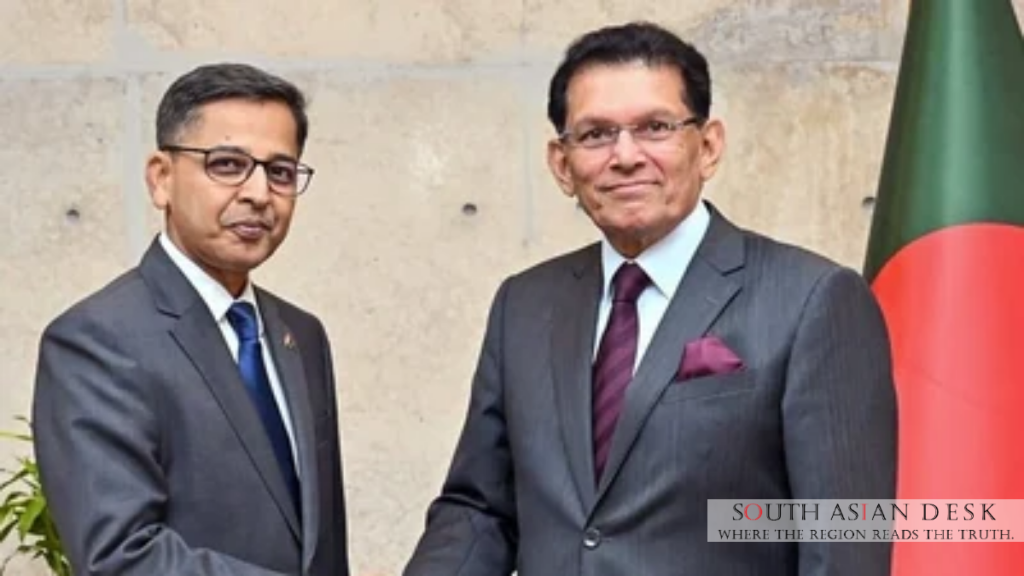
India and Sri Lanka held virtual talks on Monday, August 25, 2025, to advance their power grid talks for interconnection project. Led by India’s Ministry of Power Secretary Pankaj Agarwal and Sri Lanka’s Energy Secretary Prof. K.T.M. Udayanga Hemapala, the India Sri Lanka power grid talks focused on a 1,000 MW High Voltage Direct Current (HVDC) link. The discussions built on technical parameters confirmed in June 2025, aiming to finalise financial and legal frameworks. This virtual meeting underscores bilateral efforts to bolster energy resilience amid regional challenges.
Why India Sri Lanka Power Grid Talks Matter for South Asia
The India Sri Lanka power grid talks hold strategic weight in South Asia. Sri Lanka faces chronic energy shortages, with imports covering up to 25% of its needs during peaks. This HVDC interconnection could enable seamless power flows, allowing Sri Lanka to import during deficits and export surplus renewables like wind power. For India, it expands its grid influence, fostering a South Asian energy market. Regional integration reduces reliance on fossil fuels, supports net-zero goals, and stabilises prices. As climate risks rise, such links prevent blackouts and drive economic growth, potentially saving Sri Lanka USD 100 million annually in import costs. Broader implications include trilateral ties with UAE for Trincomalee energy hubs, redrawing power dynamics in the Indian Ocean.
Details of India Sri Lanka HVDC Interconnection Virtual Meeting
The August 25 virtual meeting marked a pivotal step in the Sri Lanka India energy grid agreement. Delegations reviewed modalities for the proposed link between New Madurai in India and Mannar in Sri Lanka. Technical consensus from prior consultations guided talks on operational protocols. India’s team, including experts from Power Grid Corporation of India (PGCIL), emphasised grid stability enhancements. Sri Lanka highlighted integration with its renewable targets, aiming for 70% clean energy by 2030.
No formal pact emerged, but both sides pledged swift follow-ups. The session lasted two hours, covering risk mitigation and tariff structures. This builds momentum post the June 16, 2025, New Delhi meeting, where a 10-member Sri Lankan delegation confirmed project viability. Official records note the link’s design as a ±320 kV overhead HVDC line with 500 MW Voltage Source Converter (VSC) terminals at each end, ensuring bidirectional flow.
Technical Backbone of the Sri Lanka India Energy Grid Agreement
The core of these India Sri Lanka power grid talks is a robust HVDC system. Unlike alternating current grids, HVDC minimises losses over sea distances, ideal for the 50 km Palk Strait crossing. Capacity stands at 1,000 MW, scalable for future needs. India’s Ministry of Power has prepared a Detailed Project Report (DPR), outlining costs estimated at USD 1.2 billion. Funding models blend grants, loans, and private investment, with India offering line-of-Credit support.
Sri Lanka’s Ceylon Electricity Board (CEB) leads local execution, aligning with its grid modernisation. The project incorporates smart tech for real-time monitoring, reducing outage risks by 30%. Data from India’s National Electricity Plan projects inter-regional capacity to hit 143 GW by 2027, with cross-border links like this accelerating renewables evacuation. For Sri Lanka, it means exporting 200 MW of wind power yearly, generating foreign exchange.
Historical context traces to a 2018 Memorandum of Understanding (MoU) on feasibility studies, signed by governments, CEB, and PGCIL. Progress accelerated in 2024’s 5th Joint Working Group meeting in Colombo, where DPR outlines were drafted. The Eastern Regional Power Committee (ERPC) agenda details the bipole configuration, ensuring redundancy.
Broader Energy Cooperation Between India and Sri Lanka
Beyond the grid, India Sri Lanka power grid talks fit into wider ties. India has invested USD 780 million in Sri Lankan development, including INR 300 crore for digital identity aiding energy access. Renewable projects like solar electrification of Jaffna islands and Buddhist sites advance under grants. A Trincomalee hybrid renewable park, backed by Adani Green, targets 500 MW capacity.
Bilateral trade hit USD 5.5 billion in 2024, with energy as a growth pillar. India’s exports of 1,200 MW to Sri Lanka via ad-hoc deals highlight urgency. The virtual meeting addressed regulatory hurdles, including environmental clearances under Sri Lanka’s Wildlife Act.
Challenges persist: submarine cable alternatives were weighed but overhead lines favoured for cost. Geopolitical factors, like maritime boundaries, require joint patrols. Yet, optimism prevails, with PGCIL’s expertise from Bangladesh links offering blueprints.
Background on India Sri Lanka Power Grid Talks
Roots of the Sri Lanka India energy grid agreement date to 2011 discussions. A 2022 joint statement prioritised HVDC feasibility. By 2023, surveys confirmed the route. The 2024 annual report from India’s Ministry of Power notes DPR completion, positioning implementation as next. Sri Lanka’s energy ministry reports 15% renewable penetration, needing imports for baseload.
Global parallels include Europe’s North Sea Link. In South Asia, India-Bhutan ties export 2,000 MW hydro. This project could inspire Maldives or Bangladesh extensions, forming a 10 GW regional pool by 2030.
What’s Next for India Sri Lanka HVDC Interconnection Virtual Meeting Outcomes
Upcoming in-person talks in Colombo by Q4 2025 will tackle financing. Target commissioning remains 2028, pending approvals. Both nations eye pilot flows by 2027. Success hinges on aligned policies, with India committing technical aid.
The India Sri Lanka power grid talks signal a resilient future, knitting economies through electrons across the strait.
Published in SouthAsianDesk, October 31st, 2025
Follow SouthAsianDesk on X, Instagram, and Facebook for insights on business and current affairs from across South Asia.