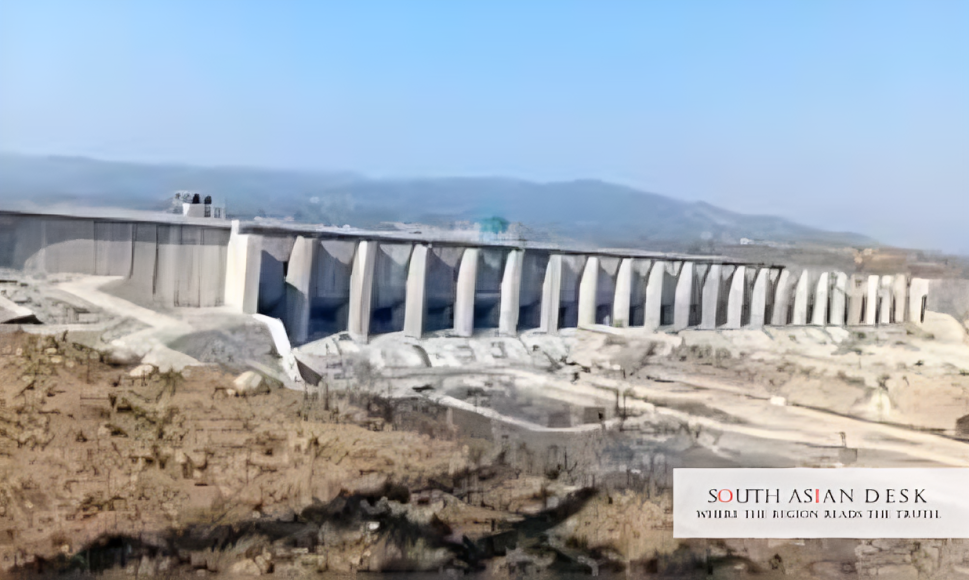
India will stop surplus Ravi river water flowing into Pakistan once the Shahpur Kandi dam on the Punjab-Jammu and Kashmir border becomes operational by March 31, Jammu and Kashmir Water Resources Minister Javed Ahmed Rana announced on Monday, February 17, 2026.
The decision follows the completion of a long-delayed national project and builds on India’s suspension of the Indus Waters Treaty last year. It marks a shift in how India utilises its full rights over the eastern rivers.
India stops Ravi water to Pakistan through the Shahpur Kandi dam project, which will redirect surplus flows previously lost downstream via Madhopur headworks. The move addresses chronic drought in Kathua and Samba districts while optimising irrigation and storage on the Indian side.
Javed Ahmed Rana stated clearly: “Excess water to Pakistan will be stopped. It has to be stopped. Kathua and Samba districts are drought-hit areas, and this project, which is our priority, is being constructed for the Kandi area.”
The Shahpur Kandi dam, 55.5 metres high with a 7.7-kilometre hydel channel, stands at the Punjab-Jammu and Kashmir border. Once complete, it will irrigate approximately 5,000 hectares in Punjab and more than 32,173 hectares in Kathua and Samba districts of Jammu and Kashmir. It will also support efficient management of 1.18 lakh hectares under the Upper Bari Doab Canal system in Punjab.
Shahpur Kandi dam Pakistan impact stems from the project’s location and purpose. Surplus Ravi water that has flowed unused into Pakistan for decades due to inadequate upstream storage will now be retained. India holds exclusive rights over the Ravi under the 1960 Indus Waters Treaty framework for eastern rivers (Ravi, Beas and Sutlej), even as the treaty remains in abeyance.
Surplus Ravi water India Pakistan previously went to waste because of delays in the Shahpur Kandi project, first envisaged in 1979. The foundation stone was laid by former Prime Minister Indira Gandhi in 1982. Construction halted for years amid inter-state disputes between Punjab and Jammu and Kashmir. The project was declared a national project in 2008.
A 2018 Press Information Bureau release confirmed the agreement between Punjab, Jammu and Kashmir and the Centre to resume work. The Union Cabinet approved central assistance of Rs 485.38 crore for the irrigation component. Total project cost stands at Rs 3,394.49 crore, with Punjab contributing Rs 2,694.02 crore (approximately 80 per cent) and the Government of India providing Rs 700.45 crore (20 per cent).
India cut access Ravi waters as part of broader efforts to fully utilise eastern river allocations after placing the Indus Waters Treaty in abeyance on April 23, 2025. The suspension followed the killing of 26 civilians in a Pakistan-linked terrorist attack in Pahalgam the previous day. India explicitly linked continued water cooperation to an end to cross-border terrorism.
Former Jammu and Kashmir irrigation minister Taj Mohideen noted that the Indus Waters Treaty does not govern operation of the Shahpur Kandi dam because India enjoys exclusive rights over the Ravi.
Background on the Project and Treaty
The Shahpur Kandi dam project forms part of India’s long-term strategy to harness its rightful share of Indus basin waters. Under the original treaty, Pakistan received the western rivers (Indus, Jhelum and Chenab) while India controlled the eastern rivers. However, limited storage infrastructure meant significant surplus Ravi water continued to flow downstream into Pakistan via Madhopur.
Press Information Bureau documents from 2018 explicitly stated the project would help “minimising some of the water of the River Ravi which at present is going waste through the Madhopur Headworks downstream to Pakistan.”
A September 2025 PIB release by Union Minister Dr Jitendra Singh highlighted that the government revived the stalled Shahpur Kandi dam after decades of delay through direct intervention by Prime Minister Narendra Modi. The same release noted parallel progress on related projects to enhance utilisation of eastern river waters.
Pakistan’s agriculture depends heavily on the Indus system, with storage capacity covering barely one month of flow. While the Ravi falls under India’s eastern river allocation and carries no treaty obligation for release to Pakistan, the stopping of surplus flows adds pressure on downstream availability amid existing regional water stress.
No immediate official statement from Pakistani authorities was available at the time of publication.
What’s Next after India Stops Ravi Water
The Shahpur Kandi dam is scheduled for completion by March 31, 2026, just before peak summer demand. Officials expect the structure to become operational shortly thereafter, enabling full diversion of surplus flows.
The development aligns with accelerated work on other hydroelectric and irrigation projects in the Indus basin following the treaty suspension. India continues to prioritise optimal use of its allocated waters for drought-prone areas and agricultural security in Punjab and Jammu and Kashmir.
This step in the India stops Ravi water to Pakistan process underscores a policy of full utilisation of eastern rivers while maintaining focus on domestic water security needs in South Asia.
Published in SouthAsianDesk, February 18th, 2026
Follow SouthAsianDesk on X, Instagram and Facebook for insights on business and current affairs from across South Asia.