Despite trade tensions, can India and the US maintain their strategic partnership?
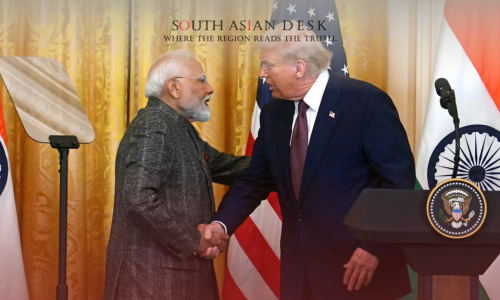
On Saturday, 6 September 2025, Indian Prime Minister Narendra Modi addressed the India US tariffs dispute, asserting positive relations with the US after President Donald Trump imposed 50% tariffs on Indian goods, citing New Delhi’s Russian oil purchases.
Regional Implications
The India US tariffs dispute reverberates across South Asia, where India’s economic stability influences regional trade and geopolitical alignments, particularly as New Delhi balances ties with the US and Russia.
Roots of the India US Tariffs Dispute
The India US tariffs dispute escalated when Trump imposed a 25% tariff on Indian imports in late July 2025, doubling it to 50% on Wednesday, 3 September 2025, as a penalty for India’s continued purchase of Russian oil. According to the Indian Ministry of External Affairs, the tariffs are “unfair, unjustified, and unreasonable,” emphasising India’s energy security needs for its 1.4 billion population. The US move aims to pressure Moscow into a Ukraine ceasefire, targeting India’s $36 billion oil trade with Russia in 2024.
The tariffs threaten India’s $86.5 billion export market to the US, with sectors like textiles, gems, jewellery, and shrimp facing a projected 70% export drop, endangering hundreds of thousands of jobs, per the Global Trade Research Initiative. Modi, speaking at a public rally in New Delhi on Saturday, 6 September 2025, took a defiant stance, urging self-reliance: “We will buy what is made by the sweat of an Indian.”
Modi Affirms Positive US Relations Amid Tensions
Despite the India US tariffs dispute, Modi affirms positive US relations, stressing a “comprehensive and global strategic partnership.” In a statement posted on X on Saturday, 6 September 2025, Modi said, “I deeply appreciate and fully reciprocate President Trump’s sentiments and positive assessment of our ties.” This followed Trump’s remarks in the Oval Office, where he described Modi as a “great Prime Minister” and affirmed their friendship, despite trade frictions.
Trump’s comments came after a Truth Social post on Monday, 1 September 2025, where he called India’s trade relationship “one-sided” and claimed New Delhi offered zero tariffs on US goods, a claim India disputes. According to India’s Commerce Ministry, negotiations continue, with concessions offered on industrial goods like car parts but not on agriculture or dairy, which employ nearly half of India’s workforce.
Geopolitical Context and Trade Negotiations
The India US tariffs dispute is layered with geopolitical complexities. Trump’s frustration stems from India’s longstanding defence and energy ties with Russia, which clash with US efforts to isolate Moscow. India’s refusal to halt Russian oil imports, which surged from 0.2% to 36% of its oil needs since 2022, has drawn US ire. Meanwhile, India’s Ministry of External Affairs noted that the US and EU continue trade with Russia, calling out perceived hypocrisy.
Trade talks, ongoing since February 2025, aim to double bilateral trade to $500 billion by 2030. India has lowered duties on US goods like bourbon (from 150% to 100%) and Harley-Davidson motorcycles (from 50% to 40%), but agriculture remains a sticking point. According to Reuters, a US delegation is set to visit India on Monday, 15 September 2025, to advance negotiations, though progress remains uncertain.
Background
The India US tariffs dispute marks a low point in a relationship that has grown since the early 2000s, driven by shared interests in countering China’s rise. Modi and Trump’s personal rapport, evident during joint rallies in Trump’s first term, coined slogans like “MAGA plus MIGA” for mutual prosperity. However, Trump’s recent actions, including hosting Pakistan’s army chief on Tuesday, 10 June 2025, and claiming credit for a May 2025 India-Pakistan ceasefire—denied by India—have strained ties. India’s strategic autonomy, balancing Russia and the US, complicates the dispute.
What’s Next
Both leaders may meet at the UN General Assembly in New York on Tuesday, 23 September 2025, offering a chance to de-escalate the India US tariffs dispute. Kenneth Juster, former US ambassador to India, expressed hope on Friday, 5 September 2025, that dialogue could restore ties. Modi affirms positive US relations, but India’s firm stance on energy security and farmer protections suggests tough negotiations ahead. The outcome will shape the India US tariffs dispute and the broader strategic partnership.
Published in SouthAsianDesk, September 7th, 2025
Follow SouthAsianDesk on X, Instagram, and Facebook for insights on business and current affairs from across South Asia.