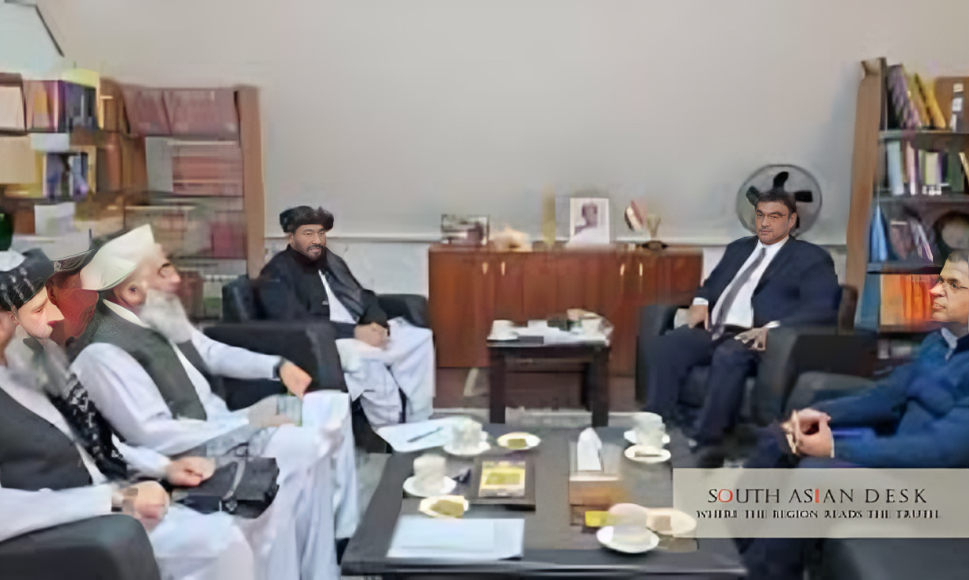
Indian and Afghan envoys convened in Bishkek on Monday to discuss enhanced bilateral cooperation, focusing on trade routes and regional links. The meeting, held at 4:35 PM local time, involved India’s Ambassador Birender Singh Yadav and Afghanistan’s Ambassador Abdul Shakoor Haqqani. It addressed key issues like commerce expansion and connectivity projects.
This encounter underscores India’s pragmatic engagement with Afghanistan’s Taliban administration, prioritising economic stability over political preconditions. In a region strained by isolation and sanctions, such dialogues foster trade corridors that benefit multiple stakeholders, from Kabul’s exports to Delhi’s import security. For South Asia, it signals potential de-escalation in tensions, bolstering supply chains and countering China’s dominance in Central Asian logistics.
Taliban India Trade Talks Gain Momentum in Bishkek
The meeting marked a significant step in ongoing Taliban India trade talks in Bishkek. Both envoys exchanged views on accelerating commercial exchanges, with Afghanistan urging India to ramp up investments in its nascent economy. Official statements from the Afghan Embassy in Kyrgyzstan highlighted the discussions as “constructive and forward-oriented.”
Ambassador Haqqani emphasised the need for direct trade channels, citing Afghanistan’s mineral wealth and agricultural surplus as untapped opportunities for Indian firms. “We seek partnerships that deliver mutual prosperity,” he stated in a press release issued post-meeting. Ambassador Yadav, representing India’s Ministry of External Affairs, reaffirmed commitment to humanitarian aid while exploring business avenues. Data from India’s Commerce Ministry shows bilateral trade dipped to USD 1.2 billion in 2024, down from USD 1.5 billion pre-2021, underscoring the urgency for revival.
The talks built on the recent five-day visit by Afghanistan’s Commerce Minister Nooruddin Azizi to New Delhi in early August. Azizi met senior Indian officials, including those from the External Affairs Ministry, to pitch incentives for Indian exporters. Agreements in principle covered tariff reductions on Afghan dry fruits and carpets entering India, potentially boosting volumes by 20 per cent within a year, per preliminary estimates.
Chabahar Port Emerges as Focal Point for Diplomats
Chabahar port Afghanistan India diplomats zeroed in on the Iranian-operated facility as a linchpin for future exchanges. The envoys reviewed progress on cargo shipments through Chabahar, which bypasses Pakistan and offers Afghanistan sea access. India has invested USD 85 million in the port’s development since 2016, with operations scaling to handle 2.5 million tonnes annually by 2025.
A joint communique noted plans for dedicated Afghan cargo hubs at Chabahar, easing transit for perishables like pomegranates and saffron. “This port is vital for our non-aligned trade strategy,” Haqqani remarked. Indian data indicates Chabahar handled 500,000 tonnes of Afghan wheat exports last fiscal year, a figure envoys aim to double via streamlined customs protocols.
The dialogue also touched on trilateral mechanisms involving Iran, with follow-up technical teams slated for Tehran in September. This aligns with India’s SAGAR vision, enhancing maritime security while supporting Afghanistan’s integration into global markets.
Afghanistan India Regional Connectivity Takes Centre Stage in Kyrgyzstan
Afghanistan India regional connectivity Kyrgyzstan featured prominently, with proposals for upgraded road and rail links via Central Asia. The envoys advocated extending the International North-South Transport Corridor (INSTC) to include Afghan routes, potentially slashing delivery times from Mumbai to Kabul by 40 per cent.
Kyrgyzstan’s neutral venue facilitated frank exchanges, leveraging its position in the Eurasian Economic Union. Discussions referenced the Ashgabat Agreement, where India and Afghanistan co-lead efforts for multimodal transport. “Connectivity is the bridge to peace and progress,” Yadav noted in embassy remarks.
Supporting data from the Asian Development Bank projects USD 10 billion in regional infrastructure by 2030, with India pledging USD 500 million for Afghan highway upgrades. The meeting resolved to convene a working group in Bishkek next quarter to map digital trade platforms, integrating blockchain for cross-border payments.
Environmental concerns surfaced too, with envoys committing to green corridors. Afghanistan’s renewable energy potential, estimated at 100,000 MW by the World Bank, drew Indian interest in solar joint ventures. This could power border outposts and reduce reliance on fossil fuels, per a preliminary feasibility study.
Challenges Persist Amid Optimism
Despite progress, hurdles remain. Sanctions on the Taliban limit banking access, forcing reliance on barter systems. Indian exports, dominated by pharmaceuticals (40 per cent share), face quality certification delays at Afghan borders. Envoys agreed to pilot digital ledgers for compliance tracking.
Geopolitical frictions, including Pakistan’s border closures, complicate overland routes. Yet, the Bishkek platform offers a low-stakes arena for de-risking investments. Afghanistan’s GDP contracted 6 per cent in 2024, per IMF figures, making Indian capital a lifeline.
Background
India’s ties with Afghanistan span decades, with New Delhi providing over USD 3 billion in aid since 2001. Post-2021, engagement shifted to technical and humanitarian realms, avoiding formal recognition of the Taliban. Chabahar’s operationalisation in 2018 marked a pivot, enabling 1 million tonnes of aid delivery without Pakistani interference. Recent Taliban overtures, including Azizi’s Delhi trip, reflect Kabul’s pivot towards Delhi for economic ballast against isolation.
What’s Next in Indian and Afghan Envoys Meeting
Upcoming trilateral talks in Tehran could formalise Chabahar protocols, while a Delhi-Kabul business summit in October may ink memoranda on 10 sectors. Monitor for Indian parliamentary nods on trade pacts, potentially unlocking USD 2 billion in annual flows.
Indian Afghan envoys meet Kyrgyzstan again in Q4 to review milestones, eyeing a stable trade ecosystem.
Published in SouthAsianDesk, November 22nd, 2025
Follow SouthAsianDesk on X, Instagram, and Facebook for insights on business and current affairs from across South Asia.