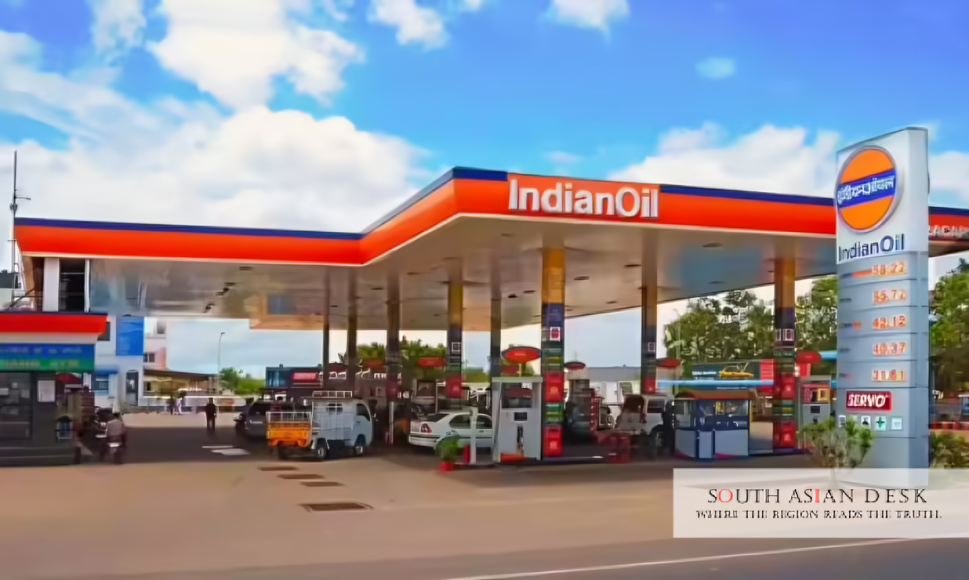
Indian Oil Corporation (IOC) announced plans on Wednesday to form a joint venture with global trader Vitol in Singapore, set for launch in early 2026, amid tightening US sanctions on Russian oil imports. The move targets expanded crude and fuel trading to cut costs and access new markets. IOC holds a 51 per cent stake, with Vitol at 49 per cent. The partnership runs five to seven years with exit options. This development occurs as India reviews Russian crude contracts following US actions on October 22, 2025.
Why This Indian Oil Vitol Partnership Amid US Sanctions Matters for South Asia
The Indian Oil Vitol partnership amid US sanctions arrives at a critical juncture for South Asia’s energy security. India, the world’s third-largest oil importer, relies on stable supplies to fuel economic growth. Recent US sanctions on Russian entities like Rosneft and Lukoil threaten to disrupt discounted crude flows, which made up 21 per cent of IOC’s imports from April to September 2025. This alliance equips IOC with Vitol’s vast network to diversify sources, stabilise prices, and enhance refining margins. For South Asia, it signals a shift towards resilient supply chains, potentially lowering fuel costs across the region and bolstering India’s role as a refining hub. With India’s capacity eyed to hit 6.2 million barrels per day (bpd) by 2030, such partnerships could prevent shortages and support neighbours like Pakistan and Bangladesh dependent on Indian exports.
Indian Oil Teams Up with Vitol on Russian Oil Challenges
Indian Oil teams up with Vitol to navigate Russian oil complexities under US sanctions. IOC, controlling 31 per cent of India’s 5.17 million bpd refining capacity via its facilities and subsidiary Chennai Petroleum, imports most crude for its 1.62 million bpd operations. Historically, Russian Urals grade offered discounts, aiding margins. Yet, post-2022 Ukraine invasion, India emerged as the top buyer of seaborne Russian crude at 1.9 million bpd in early 2025.
US sanctions escalated on October 22, 2025, targeting Rosneft and Lukoil to curb Moscow’s revenues. The EU followed with bans on October 23, 2025, focusing on shadow fleet tankers. Indian refiners now pause new orders. IOC Chairman Arvinder Singh Sahney stated on October 27, 2025: “We will abide by all sanctions imposed by the international community.” This reflects compliance amid risks to shipping and banking.
The Indian Oil Vitol partnership amid US sanctions addresses these risks. Vitol, the world’s largest independent trader, brings market intelligence and logistics expertise. Sources indicate the JV will slash spot market procurement costs and open export channels for refined products. IOC previously explored ties with BP, Trafigura, and TotalEnergies but selected Vitol for its India focus.
Oil Minister Hardeep Singh Puri remarked on October 28, 2025, that India aims to raise refining to 6.2 million bpd by 2030, with long-term goals of 8-9 million bpd. He noted 20 per cent of global capacity around 100 refineries may close by 2035, positioning India as a top hub. This context underscores the IOC Vitol global trading amid sanctions as a strategic pivot.
IOC Vitol Global Trading Amid Sanctions: Operational Details
IOC Vitol global trading amid sanctions will centre on Singapore, a key Asian hub. The JV targets crude sourcing and fuel exports, leveraging Vitol’s distribution. IOC currently trades mainly for internal needs but seeks global scale, akin to ExxonMobil or Shell.
Data shows Russian crude’s role: September 2025 imports hit 1.6 million bpd, per trade analytics. Yet, sanctions prompt recalibration. Reliance Industries aligns with government guidelines, while Mangalore Refinery halts Russian buys. Chennai Petroleum halved October imports.
The Indian Oil teams up Vitol Russian oil strategy indirectly aids diversification. Vitol, reducing Russian exposure due to Western curbs, gains from India’s market. The partnership could stabilise IOC’s 21 per cent Russian reliance, projected to drop sharply. Government data from the Petroleum Planning & Analysis Cell indicates total crude imports at 5.1 million bpd in September 2025, with Russia at 35 per cent share.
Experts view this as timely. The JV includes risk management tools, vital amid volatile prices. Brent crude hovered at USD 75 per barrel on October 29, 2025, down from peaks due to sanction fears.
Background: US Sanctions and India’s Russian Oil Dependence
US sanctions trace to 2022, intensifying post-Ukraine escalation. October 2025 measures hit entities evading price caps, with secondary risks for buyers. India imported USD 50 billion in Russian oil last fiscal year, saving USD 5 billion in discounts.
IOC, a Maharatna PSU, processed 80 million tonnes in 2024-25. Russian grades suited its refineries, yielding high diesel output. Now, alternatives like US WTI or Middle East sour crudes rise in cost.
Government urges compliance. Prime Minister’s Office directives emphasise lawful sourcing. Puri’s vision integrates green energy, but fossil fuels dominate 80 per cent of India’s needs. Past IOC-Vitol friction exists: In 2023, IOC barred Vitol from tenders over pricing disputes. This JV marks reconciliation.
Indian Oil Vitol Partnership Amid US Sanctions: Economic Impact
The alliance projects USD 200 million annual savings for IOC via better pricing, per estimates. It boosts forex earnings from exports, targeting 10 per cent volume growth. For Vitol, India offers 1,500 million tonnes annual demand. The 49 per cent stake secures foothold amid its Russian cutback.
South Asian ripple: Stable Indian supplies aid Sri Lanka’s recovery and Nepal’s imports. Regional GDP could gain 0.5 per cent from lower energy costs. Challenges persist. Geopolitical tensions may hike insurance premiums 20 per cent for non-sanctioned trades.
What’s Next for IOC Vitol Global Trading Amid Sanctions
The JV signs in Q1 2026, with pilots in Q2. IOC eyes USD 1 billion trading volume in year one. Monitoring US policy under potential shifts, India may negotiate waivers. This Indian Oil Vitol partnership amid US sanctions sets a precedent for state firms globalising. As Puri envisions, India could export 2 million bpd refined products by 2030, curbing import bills at USD 150 billion annually.
In conclusion, the Indian Oil Vitol partnership amid US sanctions fortifies India’s energy resilience, blending local might with global savvy for a secure future.
Published in SouthAsianDesk, October 30th, 2025
Follow SouthAsianDesk on X, Instagram, and Facebook for insights on business and current affairs from across South Asia.