India’s rice export sector is facing significant challenges due to escalating military tensions in the Middle East. Exporters have raised concerns about payment delays and shipping disruptions to Iran, Afghanistan, and other Gulf nations.
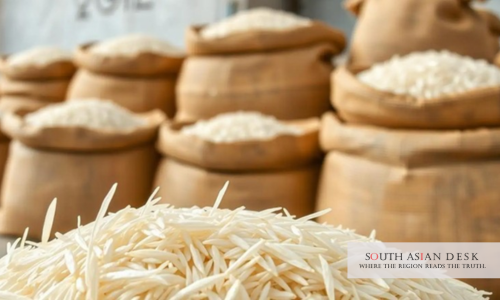
Basmati rice, which constitutes nearly 50% of India’s rice exports to five key Middle Eastern countries, is particularly vulnerable. These countries include Saudi Arabia, Iran, Iraq, the UAE, and Yemen, heightening the trade’s exposure to ongoing instability.
Following a recent attack by the United States and Israel on Iran, fears of wider regional instability and potential shipping restrictions through the Strait of Hormuz have surged. In response, the Indian Rice Exporters Federation (IREF) has advised its members to avoid new ‘cost, insurance, and freight’ (CIF) commitments to Iran and Gulf destinations. Instead, exporters are encouraged to conclude sales on ‘free-on-board’ (FOB) terms to mitigate risks.
The IREF has expressed concerns over immediate impacts on bunker fuel prices and the availability of container and bulk vessels, warning of potential sharp increases in freight costs. Insurance premiums could also rise steeply if geopolitical tensions worsen, prompting exporters to exercise caution in concluding new orders.
India is the world’s leading exporter of basmati rice, accounting for over 70% of global production, according to APEDA data. In 2024-2025, India exported around six million tonnes of basmati rice, valued at nearly ₹50,000 crore, with West Asian countries being the primary market.
Punjab and Haryana, contributing nearly 75% of the total premium aromatic basmati grain exports, are expected to be the hardest hit. With Haryana’s share at approximately 35% and Punjab’s at 40%, the impact of the conflict is substantial.
Ranjit Singh Jossan, vice president of the basmati exporters association in Punjab, noted that halted cargo vessels and stopped shipments could lead to mounting losses and falling basmati prices, affecting growers. Sushil Kumar Jain from the Rice Exporters Association in Haryana echoed these concerns, highlighting shipment delays and payment issues.
APEDA reported basmati exports to West Asian countries between April and December 2025 amounted to ₹27,197 crore, with Iran alone importing premium grain worth ₹6,000 crore. The situation remains uncertain, with exporters urged to remain vigilant.
Published in SouthAsianDesk, March 3rd, 2026
Follow SouthAsianDesk on X, Instagram and Facebook for insights on business and current affairs from across South Asia.