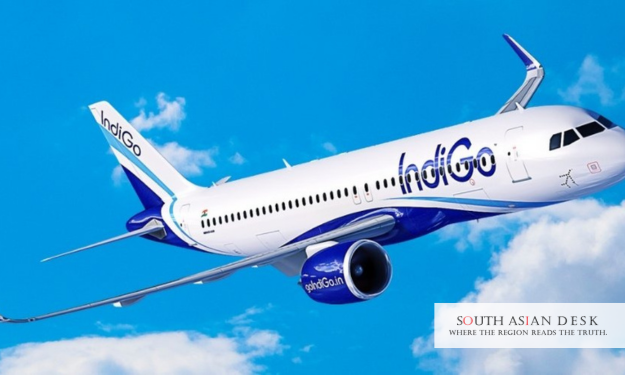
IndiGo faces its worst operational breakdown as over 2,000 flights stand cancelled since Tuesday, stranding tens of thousands of passengers across India. The indigo crisis stems from new pilot rest rules enforced by the Directorate General of Civil Aviation (DGCA). Regulators issued a show-cause notice to CEO Pieter Elbers on Saturday. Operations stabilise slowly, with 650 cancellations reported today.
The indigo crisis disrupts travel in India and ripples into South Asia, where IndiGo serves key routes to Pakistan, Bangladesh, and Sri Lanka. With IndiGo holding 60 per cent of the Indian market, the aviation duopoly India shares with Air India exposes vulnerabilities that could hike regional fares and delay cross-border flights. This breakdown underscores the need for diversified carriers to shield economies reliant on affordable air links, from Karachi traders to Dhaka commuters.
IndiGo Flight Cancellations Surge Amid Pilot Shortage
IndiGo cancelled 1,000 flights on Friday alone, the peak of the indigo crisis. Data from airport sources show 124 cancellations in Bengaluru, 109 in Mumbai, 109 in Delhi, and 115 in Hyderabad today. Since December 3, totals exceed 2,000, affecting 118 million annual passengers who rely on IndiGo’s network.
The trigger: DGCA’s revised Flight Duty Time Limitations (FDTL) rules, phased in from July 1 and fully effective November 1, 2025. These limit night landings to six per pilot weekly and extend rest from 36 to 48 hours. IndiGo cited crew shortages from these changes, compounded by weather and air traffic control issues.
In response, DGCA granted a temporary exemption on December 5 for IndiGo’s A320 fleet, allowing six night landings until February 10, 2026. The regulator formed a four-member committee on Saturday to probe the disruptions. “Such large-scale operational failures indicate significant lapses in planning, oversight, and resource management,” the DGCA stated in its show-cause notice to Elbers, demanding a reply by 6:00 PM today.
IndiGo processed INR 610 crore in refunds by Sunday evening, per Ministry of Civil Aviation directives. All pending refunds must clear by 8:00 PM December 7. The airline waived fees for cancellations and rescheduling on bookings from December 5 to 15, 2025. “Refunds for your cancellations will be processed automatically to your original mode of payment,” IndiGo stated on X.
Passengers report chaos at airports. In Delhi, queues stretch for hours as unclaimed baggage piles up. Mumbai saw 112 cancellations today, forcing travellers to trains or rivals like SpiceJet. The Railways added 89 special trains over three days to ease the strain.
Indian Aviation Risks Amplified by Duopoly Structure
The indigo crisis lays bare Indian aviation risks in a near-duopoly setup. IndiGo and Air India control 91 per cent of domestic seats, leaving little buffer for shocks. Analysts warn this concentration mirrors past failures, like Jet Airways’ 2019 collapse, which spiked fares 20 per cent regionally.
DGCA data highlights the peril: IndiGo’s on-time performance dropped to 8.5 per cent at six metro airports on Thursday, recovering to 75 per cent today. Yet, full restoration lags. CEO Elbers said in a video statement Friday: “Given the carrier’s scale and complexity, restoring full normalcy would take time. We anticipate between the 10th and 15th of December for operations to stabilise.”
The Ministry of Civil Aviation imposed fare caps Saturday: INR 7,500 for flights under 500 km, up to INR 18,000 for over 2,000 km. These hold until normalcy returns, curbing surges like Delhi-Bengaluru tickets hitting INR 40,000. Air India and Air India Express capped economy fares proactively since December 4.
Opposition leaders decry the aviation duopoly India fosters. Nationalist Congress Party MP Supriya Sule called for a parliamentary inquiry, stating: “The government knew this crisis was inevitable in a monopoly setup.” DMK MP Senthil questioned DGCA’s oversight: “What was the Ministry doing, fully aware that a major airline was not prepared?”
In South Asia, the fallout hits hard. IndiGo’s routes to Lahore and Islamabad face delays, stranding Pakistani business travellers. Bangladesh’s Biman airlines reports 15 per cent fare hikes on Dhaka-Kolkata legs as passengers reroute. Sri Lankan carriers like FitsAir add flights, but costs rise 10-12 per cent.
Regulatory Probe Targets IndiGo’s Planning Failures
DGCA summoned IndiGo executives Monday for a roadmap on pilot staffing. The airline must submit fortnightly reports on crew use and gaps. A senior official noted: “Pilot numbers are fine, but we lack buffer.” Recruitment and training could delay full recovery three months.
The show-cause notice cites violations of Rule 42A of the Aircraft Rules, 1937, on fatigue management. DGCA extended Elbers’ response deadline to 6:00 PM today, warning: “No further extensions will be permitted.” Failure risks penalties or suspensions.
IndiGo’s board formed a Crisis Management Group Sunday, led by Chairman Vikram Singh Mehta. It includes directors Gregg Saretsky, Mike Whitaker, and Amitabh Kant. The group monitors recovery, with operations at 1,650 flights today from a 2,300 daily norm.
Travel aggregators like ixigo refund convenience fees for cancellations December 3-8. “We understand how stressful flight disruptions can be,” ixigo stated.
Background: Phased FDTL Rules Sparked the Indigo Crisis
DGCA notified FDTL revisions January 2024, deferring rollout to July 2025 for compliance. Phase one hit July 1; phase two, November 1. Rules redefine night duties from midnight-5 AM to midnight-6 AM, cap weekly night landings at two consecutive shifts, and mandate 48-hour rests.
IndiGo, with 300 aircraft and high-utilisation rosters, underestimated needs. Pre-crisis, it flew 2,300 daily legs across 138 destinations. The indigo crisis erupted December 3 with 170-200 daily cancellations, escalating to 1,000 Friday after a “network reboot.”
Global standards inspired the rules—US FAA and EU EASA enforce similar fatigue curbs. India’s aviation grew 15 per cent yearly, hitting 150 million passengers in 2024, but crew shortages plague carriers.
Past incidents echo this: SpiceJet’s 2022 grounding grounded 50 flights over dues; GoFirst’s 2023 halt cancelled 100 daily legs. The aviation duopoly India entrenches such risks, per industry reports.
What’s Next for the Indigo Crisis
IndiGo eyes stability by December 10-15, but DGCA may order 300 daily cuts until February. Rivals ramp up: Air India adds 50 flights weekly. South Asian regulators watch closely—Pakistan’s CAA eyes similar FDTL for PIA.
The indigo crisis tests India’s aviation resilience. With winter peaks ahead, sustained oversight could prevent repeats, but duopoly reforms lag. Passengers book alternatives now; IndiGo urges status checks on its site.
Published in SouthAsianDesk, December 8th, 2025
Follow SouthAsianDesk on X, Instagram, and Facebook for insights on business and current affairs from across South Asia.