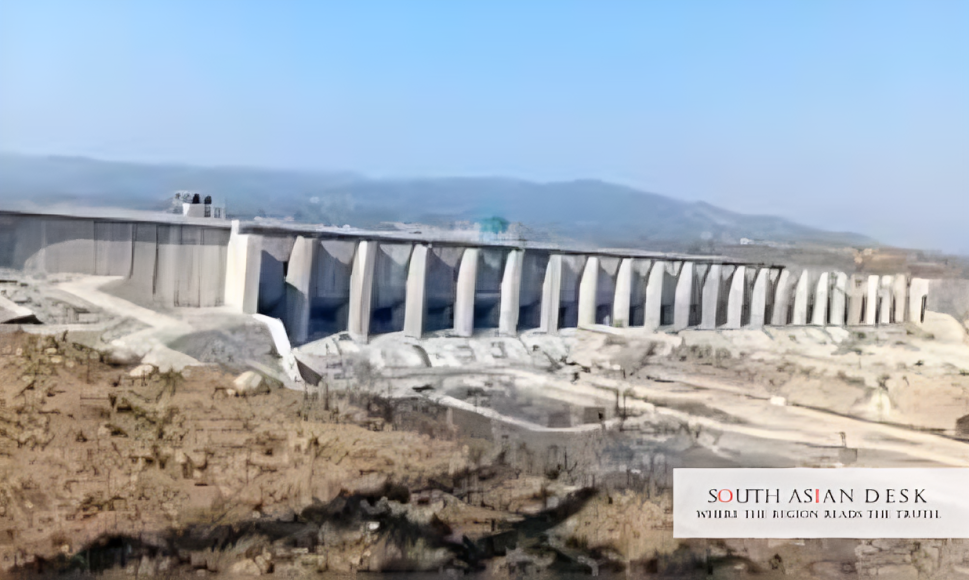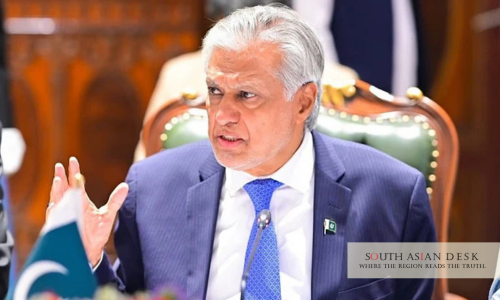
The threat of abeyance to the Indus Waters Treaty emerged prominently on Friday, November 21, 2025, when Deputy Prime Minister Ishaq Dar addressed the Indo-Pacific Ministerial Forum Roundtable in Brussels. He described India’s unilateral suspension as a “real threat” to regional stability. The move followed an April attack in Pahalgam, Kashmir, killing 26. Dar urged reversal, citing violations of international law.
The threat of abeyance to the Indus Waters Treaty underscores South Asia’s water fragility, as shared rivers sustain 1.5 billion people across India, Pakistan, and beyond. Disruptions risk triggering famines, migrations, and conflicts, straining economies that rely on agriculture and hydropower in a climate-stressed region.
Dar’s Brussels Address and Key Warnings
Ishaq Dar Indus Waters EU dialogue centred on cooperation amid global tensions. At the EU-hosted forum, Dar emphasized the role of water in promoting peace. “We believe that water must be a source of cooperation and not weaponised for politics,” he stated. He tied the Indus Waters Treaty abeyance threat to the unresolved Jammu and Kashmir dispute, calling for resolution per UNSC resolutions and Kashmiri aspirations.
Dar highlighted Pakistan’s stakes. The 1960 treaty allocates the western rivers of the Indus, Jhelum, and Chenab to Pakistan for irrigation and power. The Eastern rivers, Sutlej, Beas, and Ravi, flow into India. Suspension halts data sharing and joint mechanisms, per Pakistan’s view.
The event gathered Indo-Pacific ministers. Dar also addressed Afghanistan, urging the Taliban to curb terrorism, and Gaza, commending a Sharm el-Sheikh ceasefire while decrying atrocities. On Ukraine, he praised EU models of inclusivity.
Pakistan water treaty suspension stems from India’s April 23, 2025, announcement post-Pahalgam attack, blamed on Pakistan without evidence. Islamabad rejected it as baseless. The National Security Committee deemed any water cutoff an “act of war.”
Pakistan’s Official Stance and Legal Recourse
Pakistan’s Ministry of Foreign Affairs issued a strong rebuke in April. Spokesperson statements affirmed: “Pakistan vehemently rejects the Indian announcement to hold the Indus Waters Treaty in abeyance. The Treaty is a binding international agreement brokered by the World Bank and contains no provision for unilateral suspension.” Water serves as a lifeline for 240 million Pakistanis, they added.
In UNSC briefings, Ambassador Asim Iftikhar Ahmad echoed concerns. He flagged India’s “provocative actions,” including the abeyance and military posturing. Council members emphasized the importance of adhering to international law. Pakistan is eyeing the Vienna Convention on the Law of Treaties 1969 for remedies, viewing the move as a fundamental breach.
Ishaq Dar’s Indus Waters EU remarks were built on this. He called the suspension “illegal and unilateral,” which he said risked escalation. Pakistan considers court action, potentially at the Permanent Court of Arbitration, where prior disputes, such as Kishenganga, have been ruled in Islamabad’s favour.
Data underscores vulnerabilities. Pakistan draws 80% of its irrigation water from the Indus Basin rivers, supporting 90% of its cotton and 45% of its rice production. Annual flows total 207 billion cubic metres, with Pakistan’s share at 168 billion. Suspension disrupts flood warnings, which are vital after the 2010 deluge that killed 2,000.
India’s Indus Treaty regional stability arguments counter from New Delhi, but official responses remain sparse. MEA documents reaffirm the treaty’s text without 2025 specifics. Analysts note India’s push for hydropower on western rivers, which Pakistan contests.
Impacts on Bilateral Ties and Economy
The suspension of the Pakistan water treaty ripples through diplomacy. The Permanent Indus Commission, intended for annual meetings, stalled after its abeyance. The last session in May 2022 discussed objections to Indian projects, such as Pakal Dul and Ratle, which have remained unresolved since then.
Economically, threats loom large. Pakistan’s agriculture sector employs 42% of the workforce, accounting for 24% of the country’s GDP. Water scarcity could reduce yields by 20%, according to World Bank estimates. Hydropower, which accounts for 30% of energy, faces blackouts without sufficient water flows. India’s Indus Treaty regional stability extends to Afghanistan. Dar noted Kabul’s importance, strained by TTP cross-border attacks. Water links via the Kabul River, outside the IWT, but are tense.
Broader South Asia feels tremors. Bangladesh eyes upstream dams; Nepal shares concerns on Brahmaputra. Climate change cuts flows 10-15% by 2050, per IPCC. Public sentiment surges. Social media buzzes with #SaveIndus, viewed by millions. Farmers in Punjab protest, fearing salinisation.
Diplomatic Pathways and Global Echoes
Ishaq Dar, Indus Waters EU outreach seeks allies. He praised EU’s interdependence model, applying it to South Asia. Pakistan urges multilateral intervention, citing World Bank mediation history.
India maintains the abeyance temporary, tied to security. Yet no reversal signals. Bilateral talks froze; backchannels quiet. UNSC remains seized on Kashmir, oldest agenda item. Recent sessions highlighted IWT risks, with members urging restraint.
Afghanistan ties factor in. Pakistan demands anti-terror action; Taliban denies harbouring. Dar’s address linked stability: “We desire a peaceful, stable, friendly, connected, and prosperous Afghanistan.” Gaza and Ukraine drew parallels. Dar condemned Palestinian occupation, rooted in UN Charter. On Ukraine: “We hope for a peaceful resolution… The model of cooperation adopted by the EU offers many lessons.”
Background: The Treaty’s Fragile Legacy
The Indus Waters Treaty, signed September 19, 1960, by Ayub Khan and Jawaharlal Nehru, resolved partition’s water split. World Bank brokered amid tensions; it endured wars in 1965, 1971, 1999.
Provisions ban unilateral changes. Permanent Commission resolves disputes; neutral experts or arbitration follow. Pakistan won 2013 Kishenganga case, limiting designs. Tensions rose with India’s dam spree, with over 20 dams on western rivers since 2000. Baglihar dispute settled 2007 via World Bank.
April 2025 Pahalgam attack, killing 26 tourists, prompted suspension. India cited terror links; Pakistan denied, offering probes. Historical floods amplify stakes. 2022 deluge cost USD 30 billion, killed 1,700. Data sharing saved lives pre-abeyance.
What’s Next: Arbitration or Escalation?
Pakistan plans Vienna Convention filings by December 2025. World Bank mediation looms; EU forums may host talks. India faces PCA scrutiny; prior rulings favour equity. Monsoon 2026 tests compliance. Bilateral thaw unlikely pre-elections. Yet quiet diplomacy persists via Track II.
Stakeholders eye UNSC winter session. Regional forums like SAARC, dormant, could revive. As rivers run dry, Indus Waters Treaty abeyance threat demands urgent bridge-building. Water’s flow must outpace suspicion.
Published in SouthAsianDesk, November 22nd, 2025
Follow SouthAsianDesk on X, Instagram, and Facebook for insights on business and current affairs from across South Asia.