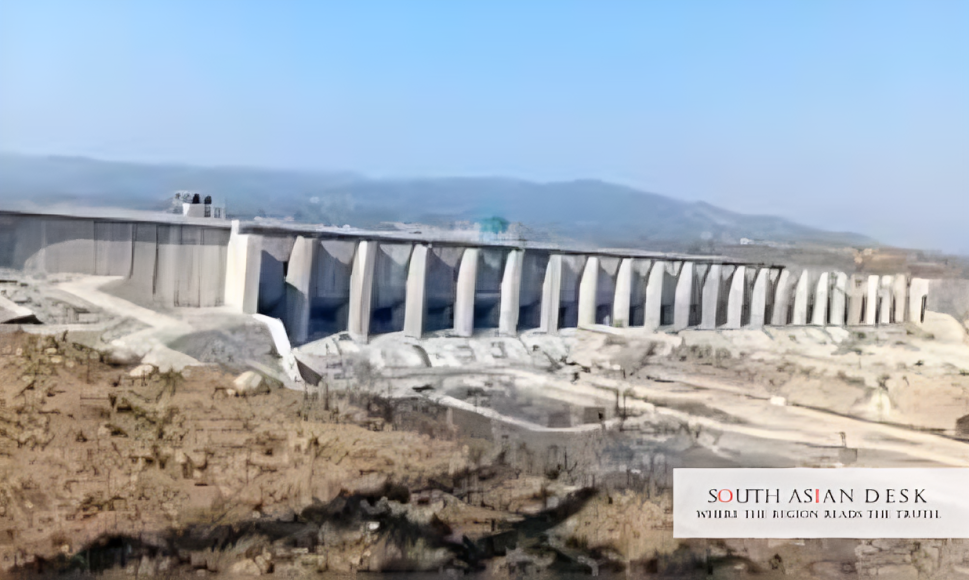
Pakistan has demanded an explanation from India over abrupt drops in Chenab river flows, alleging a Baglihar dam under the Indus Waters Treaty violation. The disruption, recorded from December 10 to 16, affected irrigation across 15 million acres, with officials citing satellite data showing reservoir manipulation.
The incident underscores escalating tensions over shared water resources in South Asia, where the Indus Waters Treaty governs allocation between Pakistan and India. Any breach risks agricultural disruption and broader regional stability, particularly during critical cropping seasons.
Chenab River Flows Disruption
Pakistan’s Ministry of Water Resources reported extraordinary reductions in Chenab river flows between December 10 and 16, 2025. Data from the Punjab Irrigation Department at Marala headworks showed discharges dropping to 870 cusecs, below the 10-year historical minimum of 4,018 to 4,406 cusecs.
Satellite imagery indicated a significant reduction in the Baglihar reservoir surface area on December 8, followed by an increase on December 13. This suggested India emptied and refilled the reservoir, prompting accusations of manipulation.
The Pakistan Commissioner for Indus Waters, Syed Mehr Ali Shah, sent a letter to his Indian counterpart seeking clarification. Flows began recovering on December 17, reaching 6,399 cusecs by 7:00 AM, and stabilised within historical ranges by December 19, with readings at 4,505 and 6,494 cusecs.
A senior irrigation official stated: “It is really serious and alarming as well because around 15 million of the total 25 million acres of agricultural land, which is irrigated through various canals, is either receiving less or no water these days.”
The ministry emphasised continuous monitoring to track future fluctuations in Chenab river flows.
Baglihar Dam Violation Allegations
Under the Indus Waters Treaty signed in 1960, India cannot empty dead storage in run-of-the-river projects like Baglihar dam on western rivers. Pakistan accused India of doing so, violating treaty provisions that allocate Chenab, Jhelum, and Indus rivers to Pakistan.
The Baglihar dam violation coincided with the observed drops in Chenab river flows. Officials noted that such actions without prior notification breach data-sharing requirements.
Deputy Prime Minister Ishaq Dar, in a briefing on December 19, said: “India’s recent action clearly exemplifies the weaponization of water to which Pakistan has been consistently drawing attention of the international community.”
Pakistan urged India to provide detailed data on the mid-December reduction and refrain from unilateral manipulations.
Impact on Jhelum River Inflows
Similar disruptions affected Jhelum river inflows at Mangla Dam. On December 14, inflows stood at 5,000 cusecs with outflows at 33,000 cusecs. Inflows dropped to 3,300 cusecs on December 15 and remained there until December 19, while outflows held steady.
For comparison, last year’s December 19 inflows were 4,400 cusecs with 25,000 cusecs outflows. A Punjab Power Development Board official said: “The data at Kerot is also almost the same, which supports the view that water is being held and released abruptly.”
These changes in Jhelum river inflows impacted irrigation for wheat crops, with canals receiving reduced supplies. The disruptions followed patterns seen in Chenab river flows, raising concerns over coordinated upstream regulation.
Pakistan’s foreign ministry spokesperson, in a December 18 briefing, said: “Any manipulation of river flow by India, especially at a critical time of our agriculture cycle, directly threatens the lives and livelihoods as well as food and economic security of our citizens.”
Background of Indus Waters Treaty Violation
The Indus Waters Treaty, brokered by the World Bank, divides the Indus basin rivers: eastern rivers (Sutlej, Beas, Ravi) to India, western rivers to Pakistan. It allows India limited hydropower on western rivers without storage that depletes flows.
Past disputes include the Kishanganga and Ratle projects, where Pakistan challenged designs. The Baglihar dam, operational since 2008, faced earlier arbitration. Recent events mark another flashpoint, with Pakistan citing repeated breaches.
UN Special Rapporteurs, in a recent report, stated: “Water cannot be used as a tool for political or economic pressure.” They urged India to honor the treaty and avoid interference with transboundary rights.
What’s Next
Pakistan plans to pursue all options under the Indus Waters Treaty, including dispute resolution mechanisms if India fails to respond. Officials will monitor Chenab river flows and Jhelum river inflows closely.
The foreign ministry reiterated commitment to peaceful resolution but firmness on water rights. Dar added: “Pakistan remains committed to peaceful resolution of disputes and issues with India, but will not compromise on the existential water rights of its people.”
International observers may intervene if tensions escalate, given the treaty’s role in regional peace.
The episode highlights vulnerabilities in shared resources, with potential for further diplomatic engagement to prevent future Indus Waters Treaty violations.
Published in SouthAsianDesk, December 20th, 2025
Follow SouthAsianDesk on X, Instagram, and Facebook for insights on business and current affairs from across South Asia.