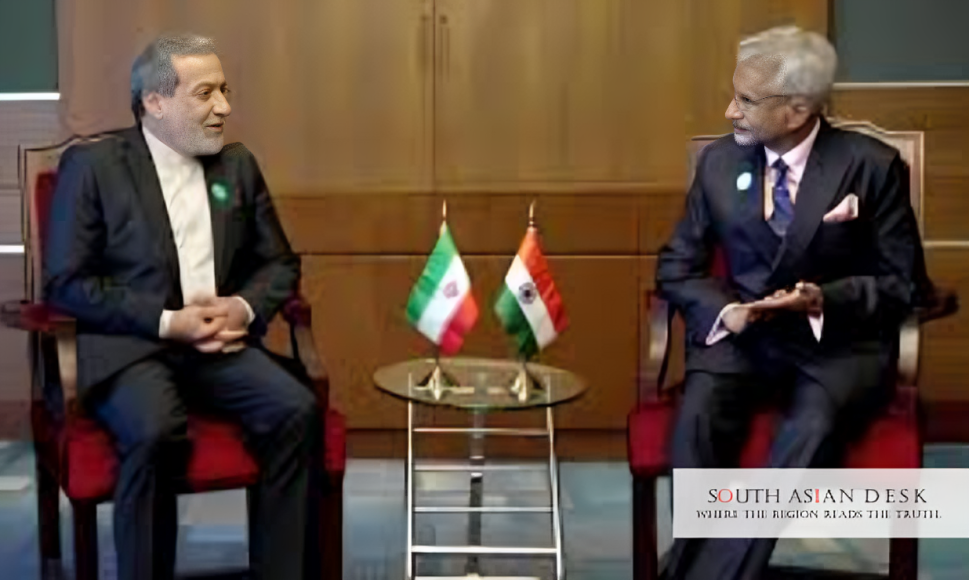
Indian External Affairs Minister S Jaishankar received a call from Iranian FM Seyed Abbas Araghchi on 14 January 2026 to discuss regional tensions as protests grip Iran, prompting India to issue a travel advisory and urge its 10,000 nationals to depart.
The conversation between Araghchi and Jaishankar highlights the strain on diplomatic ties amid escalating violence in Iran, where protests have led to a severe crackdown. This development holds significance for South Asia, given India’s strategic interests in Iran, including energy imports and infrastructure projects that affect regional trade routes connecting to Afghanistan and Central Asia.
Araghchi Dials Jaishankar on Evolving Crisis
Seyed Abbas Araghchi dialled S Jaishankar to address the rapidly changing circumstances in Iran. According to Jaishankar’s statement on social media platform X, the two ministers focused on the evolving situation in and around Iran. The call took place on the afternoon of 14 January 2026, shortly after India updated its travel guidelines for the region.
Araghchi used the opportunity to explain his cancellation of a scheduled visit to New Delhi, set to begin on 15 January 2026. The Iranian FM calls Jaishankar at a time when Tehran faces internal upheaval, with reports of widespread demonstrations turning violent. Official sources indicate that the discussion centred on potential implications for bilateral relations, though no detailed readout has been released by either side.
India’s Ministry of External Affairs has not issued a formal press release on the call, but Jaishankar’s post serves as the primary confirmation. On the Iranian end, government websites remain largely inaccessible due to an internet blackout imposed amid the unrest, limiting access to official perspectives.
Iran Protests India Advisory Issued
India’s advisory stems directly from the intensifying protests in Iran. The Indian Embassy in Tehran urged all nationals, including students and business personnel, to leave via commercial flights. This marks the second such alert in recent months, reflecting heightened concerns over safety.
The protests, described as some of the most severe in Iran’s recent history, began in major cities like Tehran and have spread nationwide. Demonstrators demand political reforms, with clashes resulting in significant casualties. Reports from international observers suggest over 2,000 people have been killed in the crackdown by security forces.
US President Donald Trump has escalated tensions by threatening military action if Iranian forces execute detained protesters. In a statement, Trump warned of very strong measures, including potential intervention, if harm comes to those arrested. This rhetoric has amplified fears of broader regional conflict, influencing diplomatic moves like the Iranian FM calls Jaishankar.
India, with approximately 10,000 citizens in Iran, prioritises their evacuation. The advisory prohibits non-essential travel and recommends monitoring local developments closely. Similar warnings have been echoed by other nations, underscoring the global concern over Iran’s stability.
India Iran Relations Unrest Impacts Ties
The unrest in Iran poses challenges to longstanding India-Iran relations. Historically, the two nations have collaborated on key projects, such as the Chabahar port, which India developed to bypass Pakistan for access to Afghanistan. This port facilitates the International North-South Transport Corridor, linking India to Central Asia and Russia via Iran.
Energy security forms another pillar. Prior to US sanctions in 2019, India imported substantial oil from Iran. Recent US tariffs of 25% on countries trading with Iran have pressured New Delhi to diversify sources, though discussions persist on resuming limited engagements.
The current India Iran relations unrest could delay joint initiatives. For instance, the planned visit by Araghchi aimed to advance talks on trade and connectivity. Its postponement signals immediate disruptions, but both sides express commitment to dialogue. Jaishankar’s engagement with Araghchi underscores India’s balanced approach, maintaining ties while adhering to international norms.
In South Asia, the fallout affects neighbouring countries. Pakistan, sharing a border with Iran, monitors the situation closely, as refugee flows or security spills could impact regional stability. Bangladesh and Sri Lanka, with smaller diaspora communities in Iran, have also issued advisories. The Iranian FM calls Jaishankar thus serves as a conduit for broader South Asian interests in averting escalation.
Economic ramifications extend to remittances and investments. Indian firms involved in Iranian infrastructure projects face uncertainties, potentially stalling USD 500 million worth of commitments in Chabahar alone.
Diplomatic history between the two nations dates back to ancient times, with modern relations formalised in 1950. Over decades, they have navigated global pressures, including the Iran nuclear deal and subsequent sanctions. The current protests, linked to economic grievances and calls for regime change, test this resilience.
Background
Iran’s protests erupted in late 2025, triggered by economic hardships and political discontent. Demonstrations initially peaceful turned confrontational after security interventions. Ayatollah Ali Khamenei, Iran’s Supreme Leader, has labelled the unrest as foreign-instigated, pointing to US and Israeli influences.
India has historically advocated restraint in such crises, promoting dialogue over intervention. The Iranian FM calls Jaishankar aligns with this stance, allowing Tehran to convey its position directly. Previous interactions, such as Jaishankar’s meetings with Araghchi in 2025 at forums like the Shanghai Cooperation Organisation, laid groundwork for ongoing consultations.
Regional dynamics involve multiple actors. Qatar mediated talks between Iran and the US, but progress stalled amid the violence. India’s role as a non-aligned power positions it to facilitate de-escalation, benefiting South Asian stability.
The human cost remains stark. Over 2,000 deaths and thousands arrested have drawn international condemnation. Humanitarian aid channels, including through the United Nations, are strained due to the internet blackout and restricted access.
What’s Next
Looking ahead, the Iranian FM calls Jaishankar may pave the way for rescheduled high-level visits once stability returns. India plans to monitor the situation through its embassy, potentially coordinating with partners like Russia and China for multilateral responses.
If protests persist, India could face decisions on sanctions compliance versus strategic interests. Diplomatic efforts will focus on protecting nationals and preserving economic ties amid India Iran relations unrest.
The call signals continued engagement, with the Iranian FM calls Jaishankar potentially leading to joint statements on regional peace.
Published in SouthAsianDesk, January 15th, 2026
Follow SouthAsianDesk on X, Instagram and Facebook for insights on business and current affairs from across South Asia.