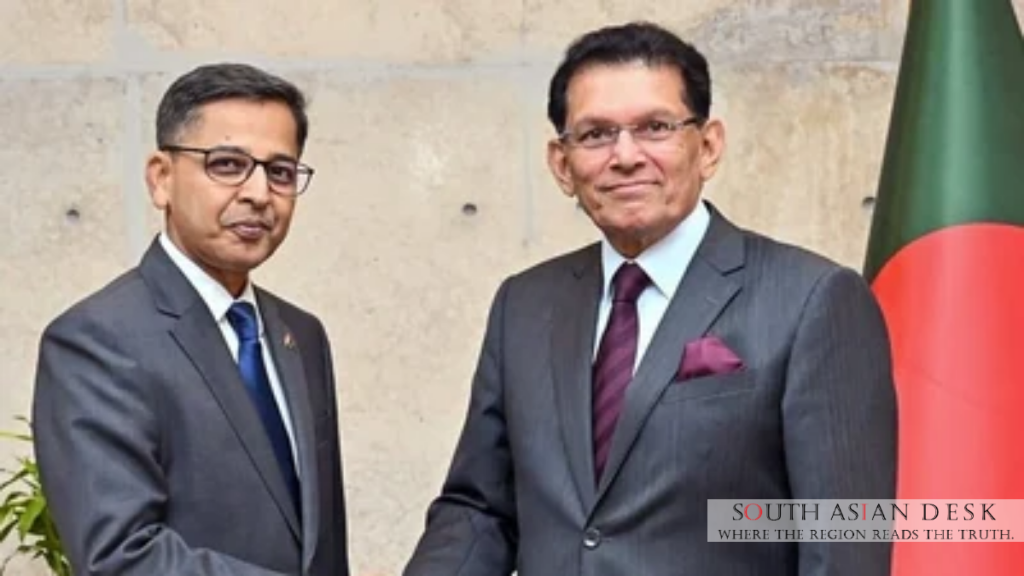
Air Chief Marshal Zaheer Ahmed Baber Sidhu met Lieutenant General Staff Pilot Mohanad Ghalib Mohammed Radi Al-Asadi in Baghdad on Saturday, January 10, 2026. The Iraqi air chief’s PAF discussions centred on the JF-17 interest and potential in Iraq amid broader military cooperation.
The JF-17’s development in Iraq signals growing defence exports for Pakistan. It bolsters economic ties in South Asia and the Middle East. Such collaborations enhance regional security frameworks. Pakistan’s aerospace industry gains from international interest. This strengthens foreign reserves amid fiscal challenges.
Iraqi Air Chief PAF Meeting Details
The meeting took place at the Iraqi Air Force headquarters. Sidhu received a guard of honour. Discussions focused on joint training and capacity-building initiatives. Both sides emphasised operational cooperation.
Sidhu highlighted religious, cultural, and historical bonds between Pakistan and Iraq. He reaffirmed PAF support for Iraqi training needs. Commanders agreed to joint exercises for interoperability.
Al-Asadi commended PAF professionalism and technology. He expressed a desire to benefit from PAF training. The Iraqi air chief’s PAF interaction highlighted interest in the JF-17 Thunder. Al-Asadi also noted Super Mushshak trainers.
He appreciated Pakistan’s role in regional stability. The visit reinforced the resolve for defence collaboration.
JF-17 Interest in Iraq: Aircraft Specifications
The JF-17 Thunder is a multi-role fighter. Pakistan and China co-produce it. It features advanced avionics and weapons. Exports include Myanmar, Nigeria, and Azerbaijan.
Iraq’s interests align with Iraqi modernization. Iraq seeks affordable, capable platforms. The jet costs around USD 25 million per unit. It suits air superiority and ground attack.
Super Mushshak is a basic trainer. It aids pilot development. Iraq could use it for rebuilding its air force cadre.
Pakistan-Iraq jets discussions build on prior ties. In 2025, Pakistan exported trainers to other nations.
Pakistan Iraq Jets: Bilateral Context
Pakistan-Iraq jets talks reflect expanding relations. Trade reached USD 100 million in 2025. Defence forms a key pillar.
Iraq faces security threats from insurgencies. Air power upgrades are a priority. JF-17 Thunder’s interest addresses this.
Pakistan promotes JF-17 at global air shows. Production at Kamra exceeds 150 units. Annual output is 24 aircraft.
The JF-17 Iraq prospect follows the Libyan deal, which is expected to be finalized in 2025. That involved 12 jets worth USD 500 million.
Background on PAF and Iraqi Air Force
PAF traces its roots to 1947. It operates over 800 aircraft. Key assets include the F-16 and JF-17.
Iraqi Air Force reformed post-2003. It has F-16 and Sukhoi jets. Rebuilding focuses on counter-terrorism.
Historical links include Pakistani training for Iraqis in the 1980s. Recent visits revive cooperation.
The JF-17 programme started in 1999. First flight in 2003. Block III variant has AESA radar.
Iraq expressed interest in 2024, but no deals were finalized at that time. Current JF-17 Thunder interest revives prospects.
PAF chief visits abroad to promote exports. Sidhu’s trip to Iraq is part of this.
JF-17 Thunder Interest: Implications
JF-17 Thunder interest could lead to sales. It boosts Pakistan’s defence industry. Employment at Pakistan Aeronautical Complex rises.
For Iraq, it means diversified suppliers, away from US or Russian dominance.
South Asia watches as Pakistan and Iraq jets enhance influence. Neighbours like India monitor exports.
Economic benefits include technology transfer. Joint production is a possible future option.
Regional stability gains from capable forces. Iraq’s role in the Middle East affects global oil markets.
PAF’s world-class training draws interest. Over 10 nations trained pilots in Pakistan.
What’s Next for JF-17 Iraq Collaboration
Follow-up meetings may occur in Islamabad. Technical evaluations of JF-17 could start soon. Contracts might finalise by mid-2026. Deliveries follow in 2027. Monitoring includes US approvals for components. China’s co-production eases issues.
The JF-17 Iraq initiative paves the way for broader alliances. More interest is expected from African and Middle Eastern countries. Joint exercises test interoperability. Training exchanges begin immediately. The JF-17’s focus on Iraq underscores Pakistan’s rising defense export profile.
Published in SouthAsianDesk, January 10th, 2026
Follow SouthAsianDesk on X, Instagram and Facebook for insights on business and current affairs from across South Asia.