Pakistan’s Deputy PM Ishaq Dar to oppose Israel’s Gaza occupation plan at OIC’s Jeddah meeting. Pakistan’s Deputy Prime Minister and Foreign Minister Ishaq Dar will attend the Organisation of Islamic Cooperation (OIC) meeting in Jeddah on Monday, August 25, 2025, to reject Israel’s plan for full military control over Gaza, condemning it as a violation of Palestinian rights.
Why It Matters for South Asia
Pakistan’s stance at the OIC reinforces its role as a vocal advocate for Palestinian rights, aligning with South Asia’s broader interest in promoting regional stability and opposing actions that exacerbate humanitarian crises. This position strengthens Pakistan’s diplomatic influence within the Islamic world, impacting South Asian geopolitics.
Pakistan’s Position on Israel’s Gaza Plan
The Foreign Office of Pakistan announced on Sunday, August 24, 2025, that Dar will participate in the OIC’s Council of Foreign Ministers (OIC-CFM) extraordinary session in Jeddah, Saudi Arabia, from August 25 to 26, 2025. The agenda focuses on Israel’s proposed military takeover of Gaza, which Pakistan deems “outrageous.” The statement emphasised that Dar will “advocate for total withdrawal of Israel from all occupied Palestinian territories” and reject plans for further displacement of Palestinians, calling for unhindered humanitarian assistance.
According to a Foreign Office press release, Dar will reaffirm Pakistan’s unwavering support for Palestine, advocating for an independent, contiguous, and sovereign Palestinian state. The statement condemned Israel’s actions as violations of international law, highlighting the escalating humanitarian crisis in Gaza, where the health ministry reported eight additional deaths from malnutrition and starvation on Sunday, August 24, 2025, bringing the total to 289, including 115 children.
Regional Condemnation of Israel’s Actions
The OIC, comprising 57 member states, has been a platform for unified Muslim responses to the Israeli-Palestinian conflict. Earlier this month, Israel’s approval of a plan to seize control of Gaza City, described as Hamas’s last bastion, drew widespread condemnation. On August 9, 2025, the OIC, alongside the Gulf Cooperation Council (GCC) and the Arab League, issued a joint statement rejecting Israel’s occupation plan as a “serious escalation” and a violation of international law, warning of potential crimes against humanity. The statement called for an immediate halt to Israel’s attacks and unconditional humanitarian aid access to Gaza.
Turkey’s Foreign Minister Hakan Fidan, addressing a press conference in Cairo on August 9, 2025, urged the OIC to hold an emergency meeting to counter Israel’s “dangerous” Gaza plan, a call echoed by Pakistan’s leadership. The joint statement also supported ceasefire and prisoner exchange initiatives led by Egypt, Qatar, and the US, emphasizing the need for Gaza’s reconstruction under Palestinian Authority governance.
Humanitarian Crisis in Gaza
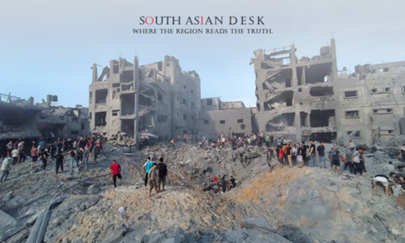
The ongoing conflict has worsened Gaza’s humanitarian situation, with over 61,700 Palestinian deaths reported since October 2023, according to Gaza health authorities. The UN Human Rights Office noted 46 deaths in 11 attacks on aid convoys between early August and mid-August 2025, highlighting the dangers faced by civilians seeking aid. Pakistan’s Foreign Office condemned Israel’s actions as “genocidal,” aligning with the OIC’s May 2024 resolution, which rejected forced displacement and starvation policies as war crimes.
Background
Pakistan has consistently opposed Israel’s actions in Palestine, reflecting its historical stance since voting against the 1947 UN Partition Plan for Palestine. As a founding OIC member, Pakistan has used the platform to advocate for Palestinian self-determination and statehood based on pre-1967 borders with East Jerusalem as the capital. The current Gaza conflict, intensified by Hamas’s October 7, 2023, attack and Israel’s subsequent offensive, has prompted global outrage, with Pakistan spearheading resolutions at the UN Human Rights Council in April 2024 to halt arms transfers to Israel.
Israel’s plan, announced earlier this month, involves full military control over Gaza City, prompting objections even within Israel. Israeli Army Chief Eyal Zamir opposed the occupation, citing risks of deepening the humanitarian crisis and endangering Israeli hostages held by Hamas. The OIC’s Jeddah meeting follows a series of emergency sessions, including one on November 11, 2023, in Riyadh, which demanded a UN Security Council resolution to halt Israel’s aggression.
What’s Next
The OIC meeting’s outcomes will shape the Islamic world’s coordinated response to Israel’s Gaza plan, with Pakistan pushing for stronger international action. Continued diplomatic efforts by Pakistan and the OIC could influence global pressure for a ceasefire and humanitarian aid, reinforcing the collective stance against Israel’s policies.
Published in SouthAsianDesk, August 25th, 2025
Follow SouthAsianDesk on X, Instagram, and Facebook for insights on business and current affairs from across South Asia.