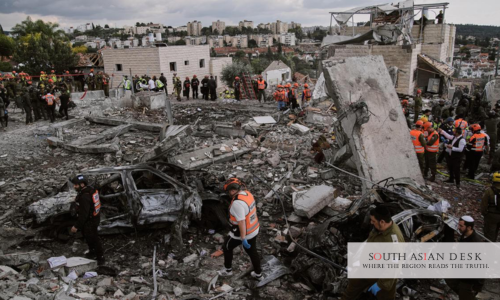
On March 6, 2026, Israeli airstrikes intensified across Iran and Lebanon, marking a significant escalation in the ongoing conflict. The strikes targeted Tehran and Beirut, with the U.S. warning of an expected surge in military actions.
The Israeli military announced a ‘broad-scale wave of strikes’ on Iran’s capital, Tehran. Witnesses reported intense explosions, shaking homes and causing widespread alarm. In Lebanon, Israeli forces targeted Hezbollah strongholds in the southern suburbs of Beirut, prompting civilians to flee the area.
The conflict has seen Iran retaliate with missile and drone attacks across West Asia, targeting U.S. allies including Kuwait, Qatar, Saudi Arabia, and Bahrain. These attacks have disrupted oil supplies and global air travel, raising concerns about broader regional instability.
The U.S. military has been actively involved, striking an Iranian drone carrier at sea. Adm. Brad Cooper of U.S. Central Command confirmed the attack, describing the carrier as ‘roughly the size of a World War II aircraft carrier.’
As the conflict continues to escalate, U.S. officials have urged caution, advising Iranian civilians to stay safe amidst the ongoing hostilities. The geopolitical implications are vast, with potential for further international involvement.
Published in SouthAsianDesk, February 23rd, 2026
Follow SouthAsianDesk on X, Instagram and Facebook for insights on business and current affairs from across South Asia.