Japan aid to Bangladesh for the Rohingya received a fresh $1.5 million infusion on 10 March 2025 for solid waste management in the Cox’s Bazar camps. The Government of Japan signed the deal with UNDP to launch the Sustainable Solid Waste Management project. Partners include the Refugee Relief and Repatriation Commissioner (RRRC). The initiative targets environmental risks and health threats from 140 tons of daily waste. The inauguration took place at Camp 20 Extension in Ukhiya on 10 December 2025. This support builds on Japan’s $240 million contributions since 2017. Officials hailed it as a step toward self-reliance for refugees and host communities.
Japan’s Rohingya aid to Bangladesh underscores the need for long-term solutions in South Asia’s protracted crises. With nearly one million Rohingya in Bangladesh since 2017, waste overloads strain resources and heighten disease risks. Similar burdens test hosts in Pakistan and India, as well as Afghan and other inflows. Sustainable projects like this landfill help curb pollution that spills into the Bay of Bengal, thereby protecting fisheries vital to regional economies. As Myanmar’s conflict persists, such aid eases Bangladesh’s load and promotes stability, potentially guiding models for cross-border refugee management in the subcontinent.
Japan Sustainable Rohingya Support: $1.5m for Waste Project
Japan’s sustainable Rohingya support focuses on the $1.5 million Sustainable Solid Waste Management project, signed on March 10, 2025, between the Government of Japan and UNDP Bangladesh. The initiative enhances waste handling across 26 camps and host areas in Teknaf and Ukhiya. It introduces sorting facilities, composting units, and waste-to-energy pilots. Community awareness drives circular economy practices, creating jobs for refugees and locals.
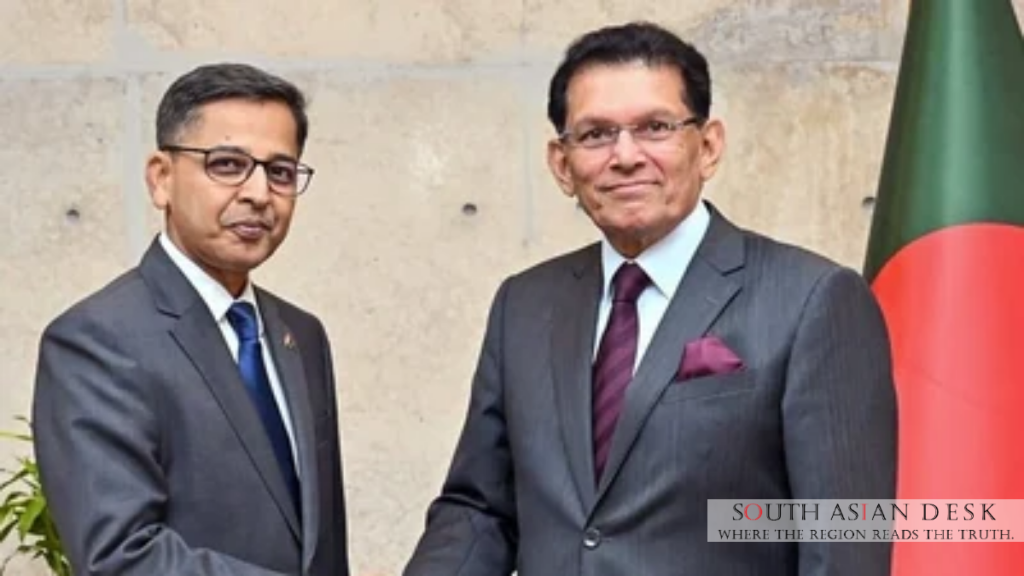
Since 2017, Japan has channelled over $240 million to the Rohingya response via UNDP and other UN agencies. This pledge aligns with the humanitarian-development shifts, as stated by the UNDP. Charge d’Affaires ad interim Takahashi Naoki attended the 10 December 2025 inauguration. He stressed collaboration. “Working closely with international partners such as UNDP, Japan remains committed to making contributions towards a sustainable solution to the Rohingya response.”
The project addresses gaps in prior efforts. UNDP has managed over 100 tons of waste daily since 2019. Daily camp generation hits 140 tons, with non-recyclables posing landfill pressures. No tree removal or shelter shifts occurred during expansion, minimising impacts.
Rohingya Waste Management Cox’s Bazar: Landfill Handles 60,000 m³
Rohingya waste management in Cox’s Bazar advanced with the expansion of the sanitary landfill at Camp 20 Extension. The facility now processes an extra 60,000 cubic metres of non-recyclable waste. It ensures disposal for 7-8 years without interruptions. Leachate treatment and hygiene campaigns form part of the system, benefiting over 900,000 people.
RRRC and UNDP led the inauguration on 10 December 2025. Partners included the Department of Public Health Engineering (DPHE), BRAC as implementer, and ManTech for construction. The WASH Sector coordinated inputs. Local government bodies joined development partners.
Additional Refugee Relief and Repatriation Commissioner Abu Saleh Mohammad Obaidullah praised the upgrade. “This expanded landfill will greatly benefit both Rohingya refugees and local host communities. We appreciate Japan and UNDP for their continued cooperation and hope this support will further strengthen public health protection in the camps.” He noted waste control prevents outbreaks and improves safety.
UNDP Bangladesh Resident Representative Stefan Liller highlighted the importance of resilience. “Managing over 100 tons of waste every day in the camps is not just about disposal, it is about safeguarding health, protecting the environment, and preserving dignity. This expanded facility helps ensure that the communities here can live in cleaner, safer conditions today, while building a system that remains resilient for the years ahead.” He called it a model of humanitarian-development ties.
The project integrates segregated collection and community drives. It targets 2,000 host community members, as well as refugees. Environmental safeguards include no hill cutting and preserving biodiversity in the fragile ecosystem.
Japan UNDP Rohingya Pledge 2025: Ties to Broader Aid
Japan’s UNDP pledge of $1.5 million in 2025 for the Rohingya forms one strand of multifaceted support. It complements Japan’s $1.6 million UNHCR agreement for shelters, healthcare, and refugee empowerment in Cox’s Bazar. That deal funds safer shelters, essential medicines, and community health workers.
Japan for UNHCR mobilised $34.7 million in 2025 from private sources, part of a total of $54.8 million in 2024. The government drives the humanitarian-development-peace nexus, according to UNHCR reports. Pledges at the 2023 Global Refugee Forum advanced self-reliance, resulting in a reduction in boat journeys.
The 2025-26 Joint Response Plan seeks $934.5 million for 1.5 million Rohingya and hosts. It covers food, shelter, health, water, protection, education, and livelihoods. UNHCR and IOM lead under Bangladesh’s guidance. Filippo Grandi, UN High Commissioner for Refugees, presented it in Geneva on 24 March 2025. Priorities include gender-based violence prevention, with 50% of the camp population being women and girls.
Japan’s role spans agencies. Contributions bolster Bangladesh’s hosting of 1 million refugees, mostly in Kutupalong. Youth, at one in three aged 10-24, gain skills via projects.
Background: Rohingya Influx and Aid Evolution
The Rohingya crisis erupted in August 2017, driving 650,000 across the border in weeks. The total number of refugees now exceeds 1 million in Cox’s Bazar and Bhasan Char. Myanmar’s Rakhine violence persists, with 2023 surges displacing more internally.
Early aid focused on emergencies. Donors pledged $344 million in October 2017 for basics. Shifts now emphasise sustainability. The 2023 Global Refugee Forum yielded 1,700 pledges, including those specific to the Rohingya.
UNHCR monitors misinformation targeting Rohingya routes. Partnerships with NGOs and faith-based groups deliver relief to 620,000 people, including 23,000 shelter kits. Quick-impact projects aid 100,000 people with services and coexistence.
Japan’s steady funding since 2017 supports this pivot. The waste project exemplifies scalable solutions amid funding shortfalls.
What’s Next for Japan Aid
The Joint Response Plan will launch fully in 2025, with partners such as Japan advancing Forum pledges. UNDP eyes waste-to-energy expansions by mid-2026. RRRC pushes repatriation dialogues with Myanmar.
UNHCR advocates regional solutions, including safe returns. Bangladesh seeks burden-sharing via the Global Compact on Refugees.
Japan’s aid to Bangladesh for the Rohingya sets a benchmark for enduring partnerships in crisis zones.
Published in SouthAsianDesk, December 10th, 2025
Follow SouthAsianDesk on X, Instagram, and Facebook for insights on business and current affairs from across South Asia.