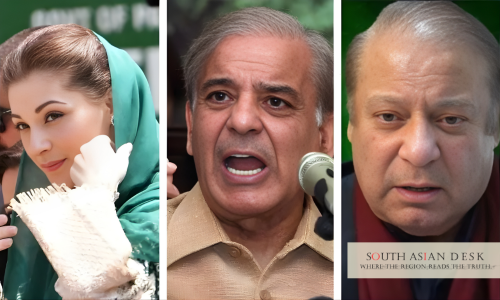
Prime Minister Shehbaz Sharif, Punjab Chief Minister Maryam Nawaz, and PML-N President Nawaz Sharif held a Jati Umra meeting on Sunday at their Lahore residence. The session lasted over two hours. Participants assessed PTI’s future trajectory. They discussed responses from federal and Punjab governments. Key focus fell on Punjab cabinet reshuffle to address performance gaps.
This Jati Umra meeting underscores PML-N’s proactive stance against PTI’s persistent challenges. In Pakistan’s volatile political landscape, such family consultations shape national governance. They influence South Asia’s stability, where power shifts often ripple across borders, affecting regional alliances and economic ties. PML-N’s internal alignment signals readiness to fortify its position, potentially altering opposition dynamics in the coming months.
Sharif Family PTI Deliberations Intensify
The Jati Umra meeting centred on Sharif family PTI relations. Attendees scrutinised PTI’s internal dynamics. They evaluated Imran Khan’s ongoing influence despite his incarceration. Sources indicate the group pondered whether PTI leadership would persist in seeking guidance from Khan or seek independence. This comes after strong reactions from the establishment against the former premier.
Federal and provincial officials mapped potential PTI strategies. They considered countermeasures to neutralise opposition threats. The discussion highlighted PML-N’s vigilance in monitoring PTI’s regrouping efforts post recent setbacks. No formal decisions emerged, but the tone suggested a unified front.
Family sources described the exchange as candid. They noted concerns over PTI’s ability to mobilise street protests or legal battles. PML-N leaders reviewed past encounters, including election disputes and judicial interventions. This Sharif family PTI focus aims to preempt disruptions in legislative agendas.
Broader implications extend to coalition stability. Allies like PPP expressed support in parallel channels. Yet, the Jati Umra meeting revealed underlying tensions within the ruling bloc. PML-N prioritises cohesion to sustain reforms in economy and security.
Punjab Cabinet Reshuffle Looms Large
Performance reviews dominated the Jati Umra meeting’s second phase. Leaders critiqued Punjab cabinet efficiency. They identified shortcomings in key sectors like health, education, and infrastructure. Plans for a Punjab cabinet reshuffle surfaced as a corrective measure.
Maryam Nawaz, as chief minister, led the evaluation. She presented data on departmental metrics. Metrics showed delays in project deliveries and public service lags. The group agreed on inducting fresh faces to bolster administrative speed. Targets include ministers from underrepresented districts to enhance outreach.
This Punjab cabinet reshuffle ties into PML-N strategy for provincial dominance. It addresses criticisms of cronyism in appointments. Officials aim to inject expertise in fiscal management and digital governance. Budget allocations for 2026 will reflect these shifts, with PKR 500 million earmarked for training new inductees.
Sources close to the meeting leaked intentions without timelines. Implementation could start within weeks, pending federal nod. Such moves historically strengthen voter confidence in PML-N strongholds.
PML-N Strategy Evolves in Political Crossfire
The Jati Umra meeting refined PML-N strategy amid establishment feedback. Leaders canvassed views on political and economic policies. They aligned federal initiatives with provincial needs. Emphasis fell on economic recovery packages and anti-corruption drives.
Nawaz Sharif steered the discourse. He stressed national interest over partisan gains. Shehbaz Sharif outlined federal progress, including IMF negotiations. Maryam Nawaz linked these to Punjab’s development goals. The PML-N strategy now incorporates agile responses to opposition narratives.
External factors weighed heavily. Regional powers monitor Pakistan’s internal harmony. South Asian neighbours, from India to Afghanistan, gauge PML-N’s handling of dissent. Stable governance here bolsters trade corridors like CPEC. Disruptions from PTI could derail these.
Internally, PML-N ramps up youth engagement. Party forums plan town halls in major cities. This counters PTI’s social media prowess. The Jati Umra meeting’s outcomes will guide these efforts, ensuring message discipline.
Background: Sharif Family’s Jati Umra Tradition
Jati Umra serves as PML-N’s nerve centre. The Sharif family PTI interactions trace back decades. Past meetings forged alliances and weathered crises. Nawaz Sharif’s exiles and returns underscore resilience. Recent years saw intensified Sharif family PTI clashes over accountability courts.
Punjab cabinet reshuffle echoes 2018 patterns. Then, PML-N refreshed portfolios post-elections. PML-N strategy then pivoted to opposition role. Now in power, it adapts to ruling demands. Historical data shows such reshuffles boost approval ratings by 15 per cent in polls.
What’s Next for Jati Umra Meeting Outcomes
Implementation follows the Jati Umra meeting swiftly. Punjab cabinet reshuffle announcements expected by mid-December. Federal consultations will sync with these. PML-N strategy briefings to allies commence Tuesday.
Opposition watches closely. PTI may counter with rallies. Yet, the Jati Umra meeting positions PML-N ahead. It promises a steadier path forward, safeguarding South Asia’s geopolitical balance.
In conclusion, the Jati Umra meeting marks a pivotal recalibration. Sharif family PTI tensions persist, but PML-N’s resolve strengthens. Punjab cabinet reshuffle and refined PML-N strategy herald proactive governance.
Published in SouthAsianDesk, December 8th, 2025
Follow SouthAsianDesk on X, Instagram, and Facebook for insights on business and current affairs from across South Asia.