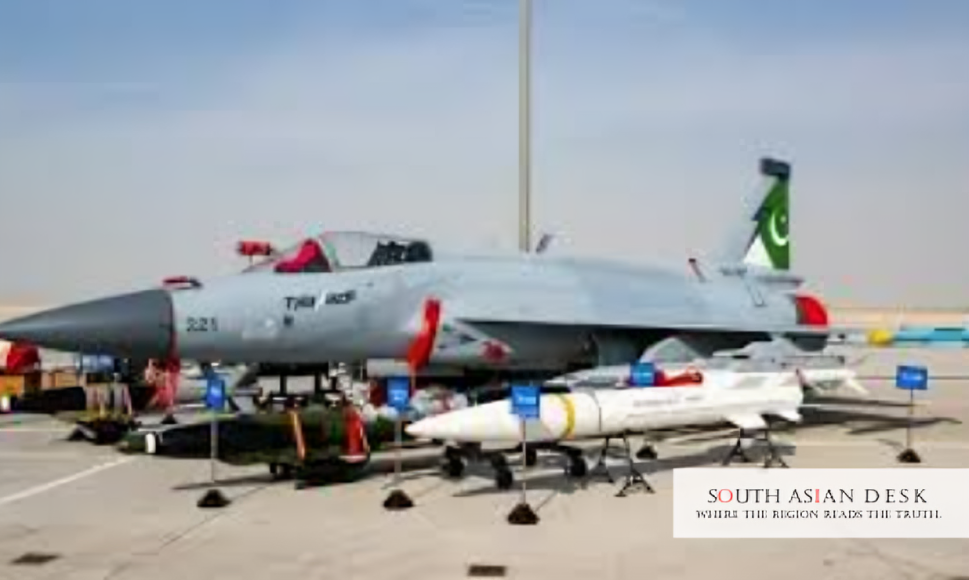
Pakistan’s JF-17 Thunder fighter jets have surged in demand, with Prime Minister Shehbaz Sharif confirming active talks with multiple nations for exports.
Prime Minister Shehbaz Sharif confirmed on Wednesday, January 14, 2026, that several countries are actively engaged in discussions with Pakistan to acquire its fighter jets. The announcement came during a federal cabinet meeting in Islamabad, where the premier highlighted increased international interest following Pakistan’s performance in the May 2025 conflict with India.
This development underscores Pakistan’s growing role in regional defence exports, potentially strengthening economic ties across South Asia and beyond amid shifting geopolitical alliances.
PM Shehbaz Fighter Jets Announcement Highlights Export Potential
In his address, Sharif stated that demand for Pakistan’s fighter jets has risen sharply since the four-day military engagement with India last year. He noted that the jets’ proven capabilities in combat have attracted attention from air forces worldwide.
“There are several countries that are actively engaged in talks with Pakistan on this, and this will boost our defence production and benefit our economy,” Sharif said.
The JF-17 Thunder, a multi-role combat aircraft, forms the core of these negotiations. Jointly developed by Pakistan Aeronautical Complex and China’s Chengdu Aircraft Corporation, the jet offers advanced avionics, radar systems, and weapon integration at a competitive price point of USD 40-50 million per unit, compared to global averages of USD 250-350 million.
Defence Production Minister Raza Hayat Harraj echoed the premier’s remarks in a separate interview, confirming ongoing talks with multiple states. Harraj emphasised that any Pakistan JF-17 export would require China’s approval and be limited to friendly nations to avoid strategic risks.
Countries Buying JF-17: Key Players in Talks
Sources indicate interest from at least six countries, with discussions at various stages. Bangladesh explored procurement options during a recent meeting between air chiefs from both nations. Iraq’s air force chief expressed keen interest in the JF-17 Thunder following a visit by Pakistan Air Force chief Zaheer Ahmed Babar Sidhu.
Saudi Arabia stands out with reports of negotiations to convert approximately USD 2 billion in loans into a JF-17 deal, building on a mutual defence pact signed in September 2025. Indonesia’s defence minister visited Pakistan last week, signalling intent to expand ties, potentially including fighter jet acquisitions.
Other nations mentioned in reports include Libya and Sudan, though details remain limited. Turkiye has shown interest in joining the Pak-Saudi defence agreement, which could open avenues for JF-17 Thunder sales. Azerbaijan, already operating the jets since 2024, serves as a model for successful integration.
These talks align with broader South Asian dynamics, where affordable, reliable aircraft like the JF-17 Thunder address budget constraints for developing air forces. Pakistan’s strategy focuses on strategic partners, ensuring exports enhance regional stability rather than escalate tensions.
Background on JF-17 Thunder Development
The JF-17 Thunder programme began in the late 1990s as a collaboration to replace ageing fleets in Pakistan’s air force. Production occurs primarily at the Pakistan Aeronautical Complex in Kamra, with components sourced from China. The Block-III variant, showcased at the Dubai Airshow in November 2025, features upgraded active electronically scanned array radar and enhanced electronic warfare capabilities.
Battle-tested during the 2025 India-Pakistan conflict, the jets received praise for agility and performance against superior numbers. This real-world validation has been pivotal in driving Pakistan JF-17 export interest.
Pakistan’s defence industry has exported the JF-17 Thunder to Myanmar and Nigeria in the past, generating revenues that support domestic manufacturing. Current capacity remains a classified defence secret, but officials assert readiness to scale up for new orders.
Analysts note China’s role as the senior partner, controlling key technologies. Any deal would involve revenue sharing, with Pakistan benefiting from assembly and maintenance expertise.
Economic implications are significant for Pakistan, facing fiscal challenges. Successful exports could inject billions into the economy, create jobs in the aerospace sector, and reduce reliance on imports. In South Asia, this positions Pakistan as a counterbalance to India’s indigenous Tejas programme, fostering competition in affordable fighter jet markets.
What’s Next for Pakistan JF-17 Export Efforts
Negotiations are expected to progress in the coming months, with potential announcements at international defence exhibitions. Officials have not disclosed timelines, citing sensitivity, but Harraj indicated that deals could materialise once technical and financial terms are finalised.
Pakistan aims to leverage platforms like the International Defence Exhibition and Seminar in Karachi later this year to showcase the JF-17 Thunder. Integration of advanced munitions and customisation options may appeal to more buyers.
Challenges include geopolitical hurdles, such as U.S. sanctions on Chinese components, which could complicate sales to certain nations.
JF-17 Thunder’s Role in Future Defence Strategies
As talks advance, the JF-17 Thunder remains central to Pakistan’s ambition of becoming a key defence exporter in South Asia. With confirmed interest from countries buying JF-17 variants, these developments could mark a new era for PM Shehbaz fighter jets initiative, enhancing national security and economic resilience.
Published in SouthAsianDesk, January 15th, 2026
Follow SouthAsianDesk on X, Instagram and Facebook for insights on business and current affairs from across South Asia.