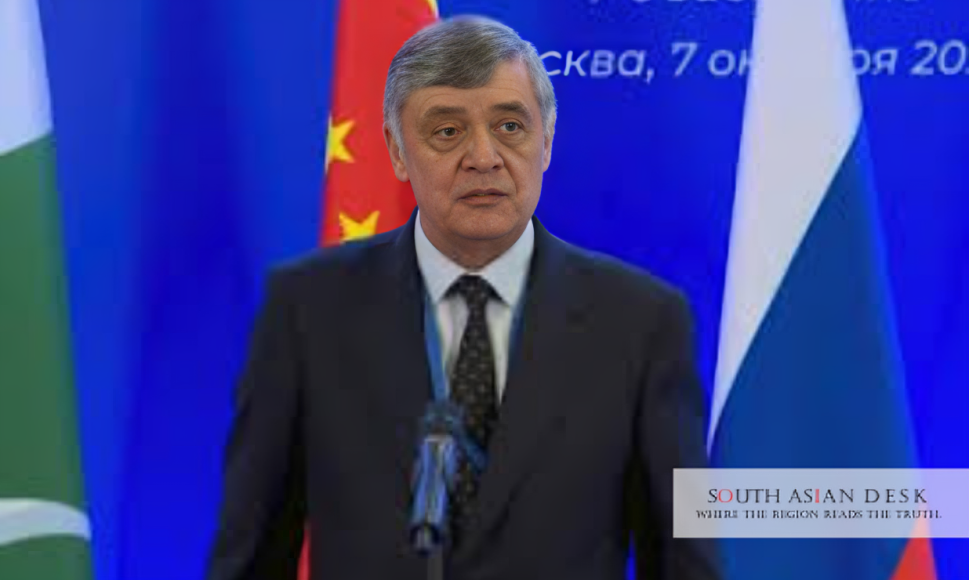
Zamir Kabulov hails Afghanistan ties expansion with Russia’s special envoy for Afghanistan, declared on Monday that regional nations stand ready. This commitment emerged from the Seventh Moscow Format Consultations held in Moscow on October 7. The gathering included representatives from 10 countries focused on fostering peace and prosperity. How will this shape South Asia’s security landscape?
Why This Matters for South Asia
The Kabulov Afghanistan ties expansion 2025 initiative promises to reshape regional dynamics. Afghanistan sits at the crossroads of South Asia and Central Asia, making its stability vital for trade routes like the Chabahar port and the Wakhan corridor. Enhanced cooperation could reduce cross-border militancy affecting Pakistan and India. It also counters external influences, promoting self-reliance among neighbours. For South Asia, this means fewer refugee flows and stronger energy links from Central Asia. The move aligns with India’s push for connectivity via the International North-South Transport Corridor.
Zamir Kabulov Moscow Format Regional Cooperation Gains Momentum
Zamir Kabulov Moscow Format regional cooperation took centre stage during the two-day event. Kabulov, speaking at a press conference, emphasised the consensus among participants. “The Moscow Format meeting showed that all regional countries are determined to actively expand their relations with the Afghan government in all areas of mutual interest,” he said. This reflects a shift from security-focused dialogues to comprehensive partnerships.
The consultations brought together special envoys from Afghanistan, China, India, Iran, Kazakhstan, Kyrgyzstan, Pakistan, Russia, Tajikistan, and Uzbekistan. Belarus joined as a guest. Russian Foreign Minister Sergey Lavrov opened the session, stressing opposition to foreign military presence. “We firmly oppose the deployment, under any pretext, of any third-country military infrastructure on Afghan territory or in neighbouring countries,” Lavrov stated.
Afghan Foreign Minister Amir Khan Muttaqi led his delegation, marking the first official participation since Russia’s delisting of the Taliban in April 2025. Muttaqi reiterated Kabul’s stance against bases, echoing regional concerns over US interest in Bagram airbase.
Joint Statement Outlines Path Forward
The joint statement from the Moscow Format participants reaffirmed support for Afghanistan as an independent, united, and peaceful state free from terrorism and narcotics. It highlighted the need to strengthen economic and trade ties. Countries expressed readiness for joint investments in healthcare, agriculture, poverty alleviation, and disaster management.
Specific measures include integrating Afghanistan into regional connectivity projects. This involves cross-border corridors linking South Asia to Eurasia. Participants called attempts to establish foreign military infrastructure “unacceptable,” as they undermine peace. The document urges lifting sanctions to enable humanitarian aid and development funding.
Zamir Kabulov Moscow Format regional cooperation extends to counter-terrorism. Delegates condemned ISIS-Khorasan attacks and pledged intelligence sharing. Russia, having removed the Taliban from its terrorist list earlier this year, positions itself as a key partner in stabilisation efforts.
Background: Evolution of Moscow Format
The Moscow Format began in 2018 as a platform for Afghan peace talks. Russia initiated it to fill gaps left by stalled US-led processes. Over seven rounds, it has evolved into a hub for regional coordination. Previous meetings addressed intra-Afghan dialogues and humanitarian crises.
In 2025, the format gained urgency amid Afghanistan’s economic woes. The UN reports 22 million Afghans need aid, with GDP contracting 20% since 2021. Russia’s engagement deepened after delisting the Taliban, enabling direct talks. Bilateral trade hit USD 100 million in the first half of 2025, up 30% from 2024, per Russian customs data.
Iran’s representative, Mohammad Reza Bahrami, voiced strong opposition to foreign troops. “As the Islamic Republic of Iran, we oppose the presence of foreign countries, especially military, in Afghanistan and its neighbouring countries,” he told Russian media. Pakistan and India, often at odds, found common ground on non-interference.
China committed to Belt and Road extensions through Afghanistan, promising USD 500 million in infrastructure loans. This aligns with the Kabulov Afghanistan ties expansion 2025 vision of inclusive growth.
Zamir Kabulov Hails Afghanistan on Economic Integration
Kabulov highlighted practical steps for Zamir Kabulov Moscow Format regional cooperation. “All our partners within this format agreed that we must assist the suffering people of Afghanistan in overcoming the consequences of 20 years of foreign occupation and support its development,” he added.
Focus areas include agriculture revival, with joint ventures in wheat production. Russia plans to supply 50,000 tonnes of fertilisers by year-end. Healthcare initiatives target maternal mortality, reduced by 15% through Iranian-Russian aid programmes.
Trade corridors feature prominently. The Trans-Afghan railway could link Chabahar to Uzbekistan, cutting shipping times by 40%. India eyes USD 1 billion investments in mining, per recent pledges.
Challenges persist. Sanctions limit banking access, stalling remittances worth USD 800 million annually. Participants urged the UN to ease restrictions for non-military goods.
Security Assurances Amid Tensions
The Kabulov Afghanistan ties expansion 2025 comes against reports of US-Taliban talks on embassy reopening. Kabulov welcomed this but stressed it must aid normalisation without strings. “This is a good and positive development if the United States is in talks with the Islamic Emirate officials to resume embassy operations,” he noted.
Regional powers rejected Bagram revival, viewing it as destabilising. Lavrov warned of historical precedents, citing past occupations.
What’s Next for Regional Ties
Upcoming, Muttaqi visits New Delhi from October 9-16, his first since 2021. Discussions will cover trade pacts and counter-terrorism. Russia hosts a follow-up economic forum in December.
These steps signal sustained momentum. The Kabulov Afghanistan ties expansion 2025 framework positions Moscow as a mediator, fostering trust among rivals.
Zamir Kabulov Moscow Format regional cooperation will test commitments in coming months. Success could unlock USD 2 billion in annual trade, per World Bank estimates. Failure risks renewed instability spilling into South Asia.
Published in SouthAsianDesk, October 9th, 2025
Follow SouthAsianDesk on X, Instagram, and Facebook for insights on business and current affairs from across South Asia.