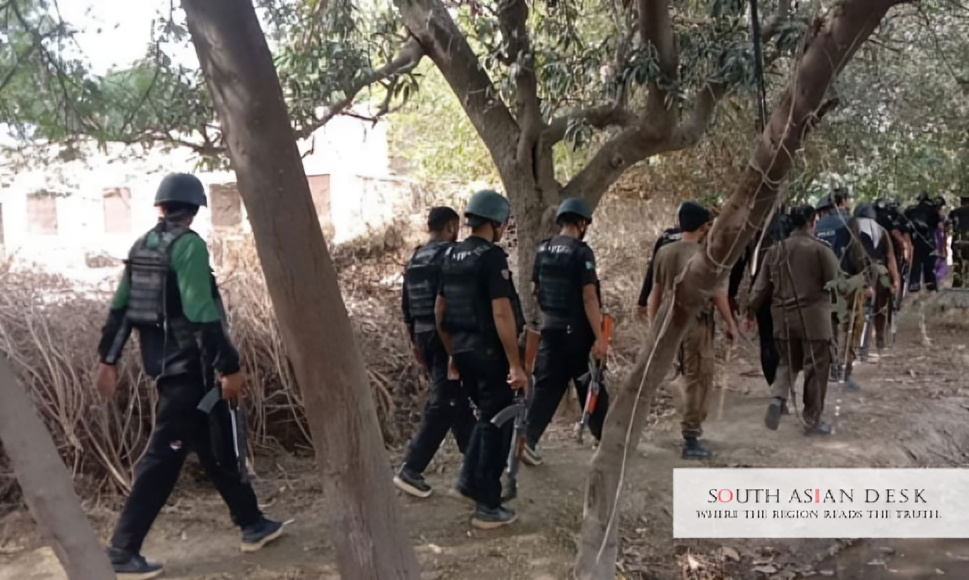
Rahim Yar Khan, January 19, 2026: Punjab and Sindh police forces initiated a large-scale katcha operation today. They deployed around 1,700 personnel equipped with drones and armoured personnel carriers to target bandits in riverine areas. The action focuses on Rahim Yar Khan district, including Machka, Kacha Rajwani and Ronti. Officials aim to restore government control through coordinated efforts.
This katcha operation tackles a persistent security challenge in Pakistan’s border regions. Banditry in these riverine zones disrupts local communities and trade routes. It affects thousands in southern Punjab and northern Sindh. Success here could stabilise cross-province law enforcement and reduce kidnappings that plague the area.
Joint Katcha Operation Deployment
Authorities mobilised heavy contingents for the joint katcha operation. Punjab police from Rahim Yar Khan and Rajanpur joined Sindh forces from Ghotki. Sindh Rangers support the effort in adjoining areas. Eight drone teams provide surveillance. Six bulletproof vehicles and three armoured personnel carriers enhance mobility.
Regional Police Officer Bahawalpur Ghazi Muhammad Salahuddin stated: “Modern technology was being used to ensure effective progress and restore law and order in the area.” He added that criminals received strict warnings to surrender. The operation uses a cordon-and-search strategy with full combat gear.
District Police Officer Rahim Yar Khan Irfan Ali Samo confirmed ongoing actions. “Ensuring the safety of the lives and property of the public remained the top priority,” he said. Forces cordoned off key zones early today.
Drones Target Katcha Bandits
Drones play a key role in tracking katcha bandits. These unmanned vehicles monitor dense vegetation and rugged terrain. The technology aids in locating hideouts without risking personnel. Officials report that drones katcha bandits surveillance improves operation precision.
Sindh Home Minister Ziaul Hassan Lanjar highlighted the approach during a recent meeting. “We will use whatever resources we have, with specific targets and take ruthless action against the infamous dacoits,” he said. He warned that persistent criminals face elimination through state force.
The joint katcha operation builds on prior collaborations. A recent effort vacated a no-go area in Punjab. It led to recoveries of kidnapped individuals from Sindh. Rangers and security agencies assisted in those rescues.
Punjab Sindh Police Operation Coordination
The punjab sindh police operation emphasises inter-province teamwork. Sindh forces handle riverine zones in Sukkur and Larkana ranges. Punjab contingents secure southern borders. This setup prevents bandits from fleeing across provinces.
Lanjar noted coordination with Punjab counterparts. He directed the Sindh inspector general to liaise with Bahawalpur’s regional police officer. “This will surely happen only after a joint effort,” he said. The strategy includes targeting facilitators who aid criminals.
Data shows banditry spiked in recent years. Kidnappings reached over 100 cases in 2025 across katcha areas. Extortion and assaults on travellers persist. The katcha operation aims to dismantle these networks.
Background on Katcha Challenges
Katcha regions span the Indus River belt. Dense forests and floods create ideal hideouts. Gangs operate for decades, involved in ransom demands and highway robberies. Past operations yielded mixed results. A 2023 joint effort purged some elements but failed to eradicate threats.
In 2024, Sindh intensified actions with 729 intelligence-based raids. Over 261 search operations occurred. These led to arrests and weapon seizures. Punjab supported by offering bounties up to PKR 10 million on key dacoits.
The current katcha operation incorporates lessons from those. It prioritises voluntary surrenders. Suspects who lay down arms avoid encounters and face courts. This policy encourages defections. Lanjar stated: “Dacoits would be given a chance to lay down their arms and join the national mainstream.”
Communities welcome the move. Local residents report improved safety during prior crackdowns. However, challenges remain. Terrain limits access. Bandits use boats and local knowledge to evade capture.
Impact on South Asian Security
The joint katcha operation holds broader implications. Riverine banditry affects trade with neighbouring countries. Secure borders enhance economic ties in South Asia. Pakistan’s efforts could serve as a model for regional cooperation against transboundary crime.
Experts note that success depends on sustained action. Short-term raids often allow regrouping. This operation’s scale suggests long-term commitment. Resources include modern equipment and trained units.
Public safety measures accompany the push. Police advise avoiding katcha zones during actions. Hotlines for tips operate 24/7.
What’s Next in the Katcha Operation
Authorities plan to expand the joint katcha operation if needed. Additional drones and personnel may deploy. Monitoring continues via high-level reviews. Lanjar’s meetings in Sukkur signal ongoing oversight.
The punjab sindh police operation seeks full writ establishment. Surrenders could accelerate progress. If resistance persists, intensified strikes follow.
Drones katcha bandits tracking will guide future phases. Officials aim for zero tolerance on crime.
The katcha operation will persist until riverine areas are secure. This ensures lasting peace for affected populations.
Published in SouthAsianDesk, January 19th, 2026
Follow SouthAsianDesk on X, Instagram and Facebook for insights on business and current affairs from across South Asia.