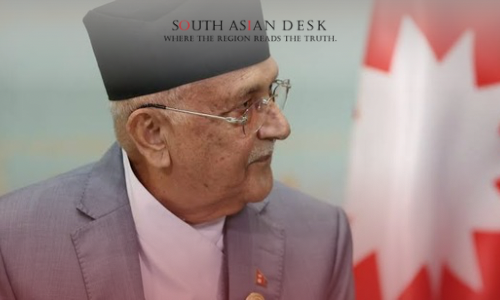
On Tuesday, September 9, 2025, Nepal’s Prime Minister KP Sharma Oli resignation, following deadly anti-corruption protests in Kathmandu, sparked by a controversial social media ban, leaving 19 dead and plunging the nation into political uncertainty.
The resignation of KP Sharma Oli amid Nepal protests 2025 highlights deep-seated public frustration with corruption and governance in the Himalayan nation, potentially reshaping South Asia’s political landscape as Nepal faces instability and demands for systemic reform.
Deadly Protests Erupt Over Social Media Ban
On Monday, September 8, 2025, protests erupted in Kathmandu after the government imposed a ban on 26 social media platforms, including Facebook, X, and YouTube, citing their failure to register with the Ministry of Communication and Information Technology. The ban, perceived as an attempt to curb free speech, ignited widespread anger, particularly among Gen Z protesters, who took to the streets demanding accountability and an end to corruption. Clashes with security forces turned violent, with police using tear gas, rubber bullets, and live ammunition, resulting in 19 deaths and over 200 injuries.
The government lifted the social media ban late on Monday, September 8, 2025, after an emergency cabinet meeting, but the move failed to quell public outrage. Protesters, undeterred by an indefinite curfew imposed in Kathmandu, continued their demonstrations on Tuesday, targeting government buildings and residences of political leaders.
KP Sharma Oli’s Resignation
Facing mounting pressure, Prime Minister KP Sharma Oli resigned on Tuesday, September 9, 2025, submitting his letter to President Ramchandra Paudel. In his resignation letter, Oli stated, “In view of the adverse situation in the country, I have resigned effective today to facilitate the solution to the problem and to help resolve it politically in accordance with the constitution.” His aide, Prakash Silwal, confirmed the resignation to Reuters at approximately 2:00 PM.
The resignation followed the departure of several cabinet ministers, including Home Minister Ramesh Lekhak and Agriculture Minister Ram Nath Adhikari, who stepped down on Monday, September 8, 2025, citing moral responsibility for the violent crackdown. Health Minister Pradeep Paudel also resigned on Tuesday, further weakening Oli’s coalition government.
Escalating Violence and Vandalism
On Tuesday, September 9, 2025, protesters defied the curfew, setting fire to Oli’s private residence in Balkot, Bhaktapur, and vandalising the homes of other prominent leaders, including former Prime Minister Sher Bahadur Deuba and Maoist Centre Chairman Pushpa Kamal Dahal. The Nepali Congress headquarters and Communist Party offices were also targeted, with demonstrators storming the Singha Durbar administrative complex. Witnesses reported the use of petrol bombs and widespread arson, with thick smoke enveloping Kathmandu.
The unrest led to the closure of Tribhuvan International Airport, disrupting flights operated by Air India and IndiGo. India Today reports that the Nepal Army deployed helicopters to evacuate government officials, and that former Prime Minister KP Sharma Oli reportedly sought safe passage to Dubai under the pretext of medical treatment, with Himalaya Airlines kept on standby for his departure. Formal confirmation of his actual departure remains pending.
Broader Context of Nepal Protests 2025
The protests, dubbed the “Gen Z movement,” reflect deep public frustration with corruption, nepotism, and economic challenges in Nepal. Young protesters, including students and professionals, have accused the government of shielding corrupt politicians and failing to address unemployment and poverty. The social media ban, imposed on Thursday, September 4, 2025, was seen as an authoritarian move to suppress criticism of the government’s inaction on these issues.
Nepal’s political instability is not new. Since the abolition of the monarchy in 2008, the country has seen 14 prime ministers, with Oli serving his fourth term since July 2024. The current coalition between the Nepali Congress and Oli’s Communist Party of Nepal (Unified Marxist-Leninist) has faced criticism for capturing state institutions, leaving little room for opposition.
Regional Implications
The KP Sharma Oli resignation Nepal protests 2025 could have ripple effects across South Asia, where youth-led movements are increasingly challenging governance failures. Nepal’s strategic position between India and China makes its stability crucial for regional dynamics. India issued an advisory on Tuesday, September 9, 2025, urging its nationals in Nepal to exercise caution and follow local guidelines.
What’s Next for Nepal?
With Oli’s resignation accepted by President Paudel, discussions for a new leader have begun. The Rastriya Swatantra Party has called for early elections, arguing that the current government has lost legitimacy. However, the ongoing unrest and curfews suggest that restoring order will be a priority. The Nepal Army has urged restraint and dialogue, while an inquiry panel is expected to investigate the violence and recommend measures within 15 days.
The KP Sharma Oli resignation Nepal protests 2025 mark a critical juncture for the nation, as young Nepalis demand systemic change amid a deepening political crisis.
Published in SouthAsianDesk, September 9th, 2025
Follow SouthAsianDesk on X, Instagram, and Facebook for insights on business and current affairs from across South Asia.