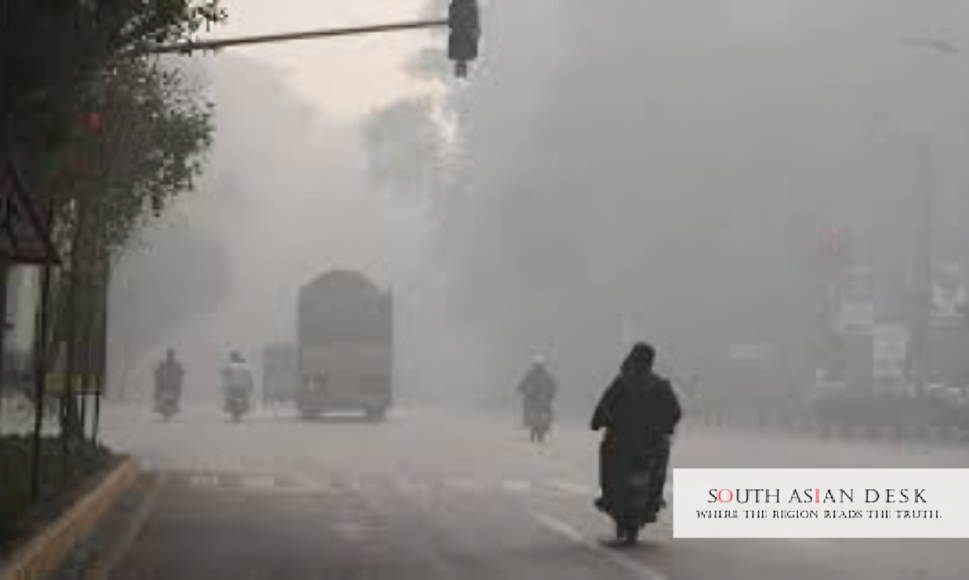
Lahore, Pakistan – Air quality in Lahore worsened significantly on December 20, 2025, with the AQI peaking at 504 at 5 PM, according to IQAir data. This placed the city among the world’s most polluted, affecting residents through high levels of Lahore pollution and Lahore smog. Officials from the Punjab Environment Protection Department responded with enforcement measures.
The ongoing decline in Lahore air quality underscores a regional challenge in South Asia. Transboundary pollution from neighbouring India, including Delhi’s AQI at 343, combines with local sources to heighten risks. This impacts public health, agriculture, and economic productivity across Punjab and beyond.
Current Lahore AQI Levels
Monitoring stations across Lahore reported varying AQI readings on December 20, 2025. The Punjab EPA dashboard showed an overall AQI of 360 at 5 AM, classified as very unhealthy. Specific stations like Multan Road, Safari Park, and GT Road registered 500, hazardous, with PM2.5 at 450.3 micrograms per cubic metre and PM10 at 654.7 micrograms per cubic metre at Multan Road.
IQAir data at 8 AM indicated an AQI of 484, with PM10 as the main pollutant at 590.3 micrograms per cubic metre and PM2.5 at 90.6 micrograms per cubic metre. This is 18.1 times the WHO annual guideline for PM2.5. Other areas, such as Punjab University at 395 and Egerton Road at 327, remained very unhealthy.
The Punjab EPA forecast an average Lahore AQI of 320 to 360 for the day, urging residents to limit outdoor activities. Health experts link such high Lahore AQI to respiratory issues, eye irritation, and increased risks for children and seniors.
Causes of Lahore Pollution
Lahore pollution stems from multiple sources. Vehicle emissions and industrial activities contribute heavily, alongside brick kiln smoke and construction dust. Crop residue burning in surrounding areas adds to the mix, especially during winter.
Weather plays a key role in worsening Lahore smog. Low wind speeds of 0.4 metres per second and high humidity at 94 percent trap pollutants, creating inversion layers. Northwesterly winds carry transboundary pollution, pushing PM levels higher.
Environment department officials note that these factors have kept Lahore air quality poor despite recent efforts. Data from the Punjab EPA shows PM10 as a dominant pollutant, with concentrations far exceeding safe limits.
Government Actions Against Lahore Smog
The Punjab government has implemented strict measures to combat Lahore pollution. In November 2025, the EPA reported a 56 percent drop in daily PM2.5 peaks to 237 micrograms per cubic metre, down from 539 in 2024. The monthly average fell 37 percent, with zero hazardous AQI days recorded.
Enforcement included demolishing 2575 illegal polluting units, sealing 2500 premises, and registering 4000 FIRs, with fines totalling PKR 711 million. For brick kilns, 485 were demolished, 3178 sealed, and fines reached PKR 276 million.
Anti-smog operations covered 55000 kilometres with fog cannons and water sprinklers. The EPA also launched vehicle emissions testing, covering 100000 vehicles in Lahore.
Punjab EPA Director General Imran Hamid Sheikh said the approach is evidence-based, with numbers reflecting proactive regulation. Senior Provincial Minister Maryam Aurangzeb highlighted short, medium, and long-term strategies, stressing public cooperation.
The department introduced the e-FOAS digital platform for environmental approvals and orders, enforcing a zero-tolerance policy on polluting vehicles, including potential confiscation.
Fog cannons have reduced smog levels by nearly 70 percent in targeted areas, according to EPA updates.
Health Impacts of Poor Lahore Air Quality
Exposure to high Lahore AQI levels poses serious health threats. PM2.5 and PM10 particles cause respiratory strain, asthma exacerbations, and cardiovascular issues. Vulnerable groups, including children and the elderly, face higher risks of hospitalisation.
The Punjab EPA advises staying indoors, using N95 masks outdoors, and monitoring health vitals. COPD and CVD patients should consult doctors. General public should avoid strenuous outdoor activities when Lahore smog intensifies.
Studies link prolonged exposure to Lahore pollution with over 100000 annual deaths in Pakistan from air-related illnesses.
Background
Lahore has battled poor air quality for years, ranking consistently among global hotspots. In 2024, the city saw frequent hazardous days during winter smog seasons. Efforts began intensifying under the current administration, focusing on data-driven interventions.
The Punjab EPA’s AQI platform, with 41 monitoring stations across 18 districts, provides real-time data on six pollutants. This transparency aids in tracking Lahore air quality trends.
Regional factors, including shared borders with India, amplify the issue. Delhi’s pollution often influences Lahore AQI through wind patterns.
What’s Next
Authorities plan sustained enforcement and modernisation of air quality systems. Public participation remains crucial for long-term gains in Lahore air quality. With winter ongoing, monitoring will continue to address Lahore pollution and prevent further spikes in Lahore smog.
Lahore air quality demands urgent, collective action to safeguard health and environment.
Published in SouthAsianDesk, December 20th, 2025
Follow SouthAsianDesk on X, Instagram, and Facebook for insights on business and current affairs from across South Asia.