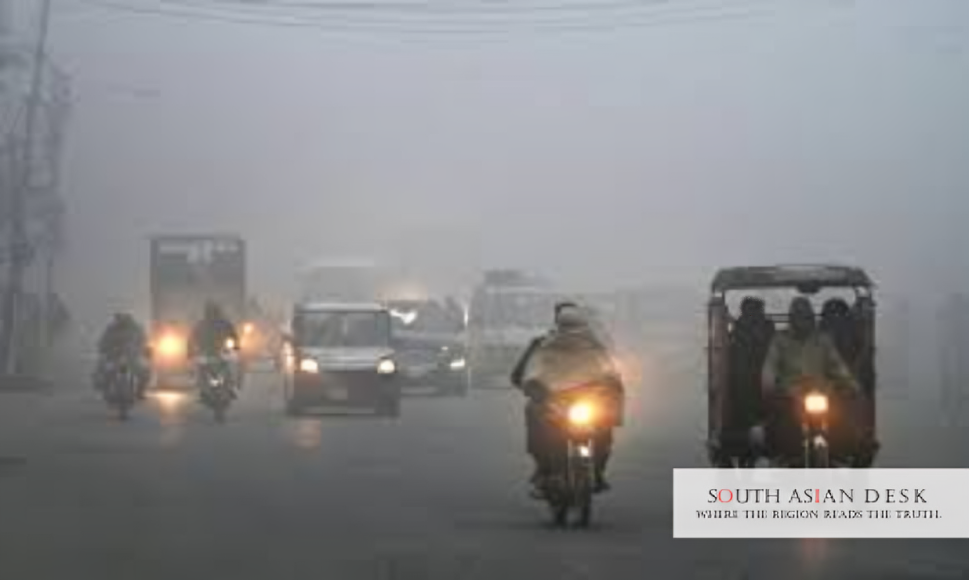
Lahore, Punjab – Punjab authorities released a report on Tuesday, January 13, 2026, claiming Lahore AQI showed marked progress compared to the previous year, even with reduced rainfall. The Environment Protection and Climate Change Department highlighted a 58-point overall drop in average AQI from October 2025 to January 10, 2026.
This development underscores ongoing efforts to combat pollution in one of South Asia’s most affected cities. Lahore’s persistent smog issues have impacted public health and economy across Punjab, prompting regional calls for sustainable environmental policies.
Lahore Air Quality Improvement Data
The report details a 20% overall Lahore air quality improvement across 102 days from October 1, 2025, to January 10, 2026. Air quality was better on 60 days compared to the same period last year.
Month-wise breakdowns show varied progress. In October 2025, average Lahore AQI stood at 205, down from 213 in 2024, with 16 days of better air. November 2025 saw a sharp drop to 261 from 453, a 192-point reduction, and 23 improved days. December 2025 averaged 247, up slightly from 235, with 14 better days. For the first 10 days of January 2026, Lahore AQI averaged 192, down from 220, with seven out of nine days showing gains and a 33-point improvement.
Hazardous AQI days, where levels exceed safe thresholds, decreased notably in the 2025-2026 smog season. Punjab Information Minister Azma Bokhari noted this Punjab smog reduction as evidence of effective interventions.
Punjab Smog Reduction Initiatives
Government actions focused on Lahore pollution control include crackdowns on smoke-emitting vehicles, substandard fuel, and industrial emissions. Officials implemented data-driven policies, enhanced monitoring, and penalty systems.
Smog squads deployed at hotspots used modern equipment for enforcement. Traffic controls and industrial regulations formed key parts of the strategy. Inter-departmental coordination ensured consistent application of environmental laws.
Senior Minister for Environment Protection and Climate Change Marriyum Aurangzeb stated: “Protecting public health is the government’s top priority, with reforms and modern monitoring systems introduced to ensure clean air for citizens.”
These measures align with broader Punjab smog reduction goals, targeting sources like vehicular exhaust and factory output. Despite less rain, which typically aids pollutant dispersion, Lahore air quality improvement persisted.
Lahore Pollution Control Challenges
Dry weather posed hurdles, as reduced precipitation limited natural cleansing of the atmosphere. The report attributes success to proactive steps rather than climatic factors.
Real-time data from monitors, such as IQAir readings on January 12, 2026, showed Lahore AQI at 234, classified as very unhealthy. This aligns with forecasts from the Environment Protection and Climate Change Department, predicting levels between 240-280 for January 8 and higher ranges later.
Background
Lahore has faced severe air pollution for years, driven by urban growth, industrial activity, and crop burning in Punjab. Past seasons saw AQI peaks over 500, leading to health crises and school closures. The 2024-2025 period marked initial reforms, setting the stage for current Lahore air quality improvement.
South Asia’s air quality woes extend beyond Pakistan, affecting India and Bangladesh. Lahore AQI often ranks among the world’s worst, prompting international attention and calls for cross-border cooperation.
What’s Next
Authorities plan continued enforcement and potential expansion of monitoring networks. Future Lahore pollution control may include greener transport and stricter emission standards. With winter ongoing, sustained Punjab smog reduction efforts remain crucial for maintaining Lahore AQI gains.
Lahore AQI trends will be monitored closely as the season progresses.
Published in SouthAsianDesk, January 13th, 2026
Follow SouthAsianDesk on X, Instagram and Facebook for insights on business and current affairs from across South Asia.