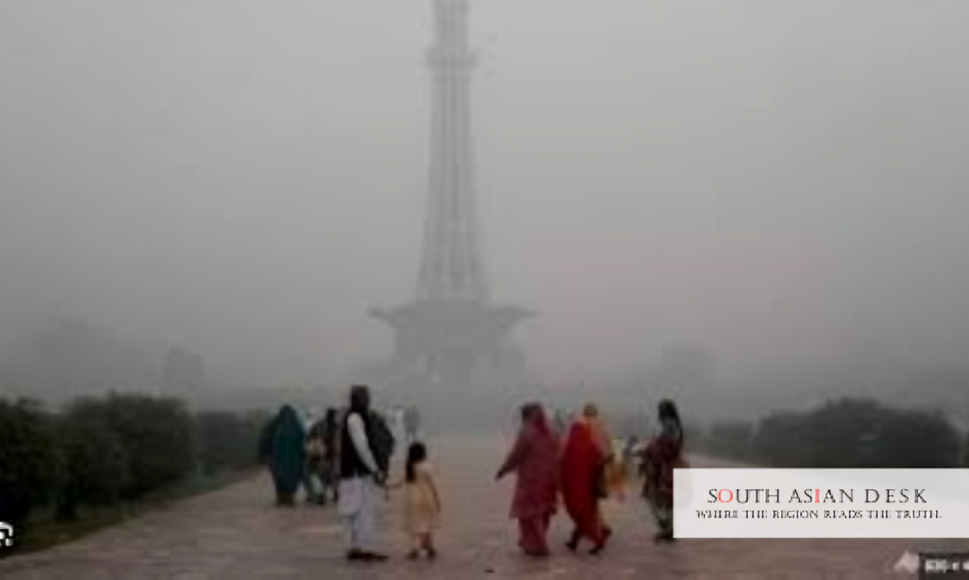
Lahore has reclaimed its spot as the world’s most polluted city, with an AQI of 452 recorded on Wednesday morning, according to IQAir data. This hazardous level poses immediate health threats to residents amid escalating Lahore smog and Punjab air pollution.
Lahore emerged as the Lahore most polluted city on January 22, 2026, surpassing other global urban centres in air quality degradation. The Swiss monitoring platform IQAir placed the city at the top of its live rankings, with Lahore AQI readings fluctuating between 452 and peaks of 507 the previous day. Karachi followed at ninth position with an AQI of 179. This spike highlights the persistent environmental challenges in Punjab, where winter conditions trap pollutants, affecting over 10 million people in Lahore alone.
The crisis extends beyond Pakistan, influencing air quality patterns across South Asia. Neighbouring regions like northern India face similar issues from shared sources such as crop residue burning, amplifying health and economic burdens. Annual reports indicate that poor air quality contributes to thousands of premature deaths and lost productivity in the region.
Lahore AQI Reaches Hazardous Thresholds
IQAir classified Lahore AQI at 452 as hazardous, a category starting at 301 where everyone experiences health effects. Sensitive groups, including children and the elderly, risk serious complications like respiratory distress. Data from multiple stations in Lahore showed PM2.5 concentrations at 119 micrograms per cubic metre, 23.8 times the World Health Organization’s annual guideline.
On January 20, 2026, IQAir issued an alert for Pakistan, noting major cities with unhealthy to hazardous pollution. Lahore topped the global major city rankings that day, while Karachi ranked sixth at AQI 178. The platform’s real-time data, drawn from 59 stations across Punjab, underscored the urgency. Punjab Environment Protection Department (EPD) reported an average provincial AQI of 233 on a recent monitoring period, with Lahore at 367, deemed very unhealthy.
Causes Behind Lahore Smog and Punjab Air Pollution
Lahore smog intensifies during winter months from October to February due to temperature inversions that prevent pollutant dispersion. Key contributors include vehicular emissions from over 5 million registered vehicles in Punjab, industrial discharges from factories in Lahore’s outskirts, and brick kiln smoke. Construction dust and deforestation for urban expansion add to the mix.
Crop stubble burning in rural Punjab remains a major factor. Farmers in districts like Faisalabad and Multan burn residue post-harvest, releasing particulate matter that drifts to urban areas. A 2024 IQAir report ranked Pakistan as the third most polluted country globally, with annual PM2.5 averages at 74.3 micrograms per cubic metre. EPD data from December 2025 showed similar trends, with monthly AQI indexes reflecting spikes in smog-prone periods.
Government efforts have included rapid response teams to curb stubble burning, with over 2000 cases registered in 2025. Water sprinkling on roads and temporary construction bans aim to reduce dust. However, enforcement gaps persist, as noted in official EPD dashboards.
Health Impacts and Public Advisories
Exposure to such Punjab air pollution levels triggers immediate symptoms like eye irritation, coughing, and aggravated asthma. Long-term risks include cardiovascular diseases and lung cancer. IQAir’s alert stated: “Residents are advised to limit outdoor activity, keep windows closed, wear masks when outside, and use air purifiers indoors.”
Local hospitals in Lahore reported a 15 percent rise in respiratory cases during smog peaks, according to health department records. Children and outdoor workers face heightened vulnerability. EPD advisories echo these, urging schools to shift to online modes when Lahore AQI exceeds 300.
Background on Lahore’s Pollution Crisis
Lahore’s air quality woes trace back to rapid urbanisation since the 1990s. The city’s population doubled to 13 million by 2025, straining infrastructure. Historical data from IQAir’s 2018 World Air Quality Report ranked Lahore 10th globally, with improvements claimed in subsequent years through anti-smog campaigns.
In 2017, a Lahore High Court order mandated a Smog Action Plan, leading to EPD’s adoption of an AQI system. Citizen-led monitoring via sensors revealed discrepancies, prompting legal challenges. A 2019 petition by children argued the Punjab AQI underreported severity compared to US standards. Despite progress, like installing 150 monitors nationwide by 2024, Lahore most polluted city episodes recur annually.
Cross-border factors complicate matters. Winds carry pollutants from Indian Punjab, where similar agricultural practices prevail. Regional cooperation under frameworks like the South Asian Association for Regional Cooperation has been limited, with no binding agreements on transboundary pollution.
What’s Next for Combating Punjab Air Pollution
Authorities plan stricter vehicle emission standards by mid-2026, including phasing out two-stroke engines. EPD forecasts for January 2026 predict AQI between 270 and 330 in Lahore, urging sustained action. Investments in green public transport, such as expanding Lahore’s metro system, could reduce emissions by 20 percent, per government estimates.
International aid, including World Bank funding for clean energy, supports brick kiln upgrades to zigzag technology, cutting smoke by 60 percent. Public awareness campaigns aim to promote mask usage and reduced waste burning. However, without addressing root causes like agricultural reforms, Lahore most polluted city risks may endure.
As Lahore most polluted city status draws global attention, coordinated efforts between federal and provincial bodies remain essential to mitigate Lahore AQI spikes and Lahore smog.
Published in SouthAsianDesk, January 22nd, 2026
Follow SouthAsianDesk on X, Instagram and Facebook for insights on business and current affairs from across South Asia.