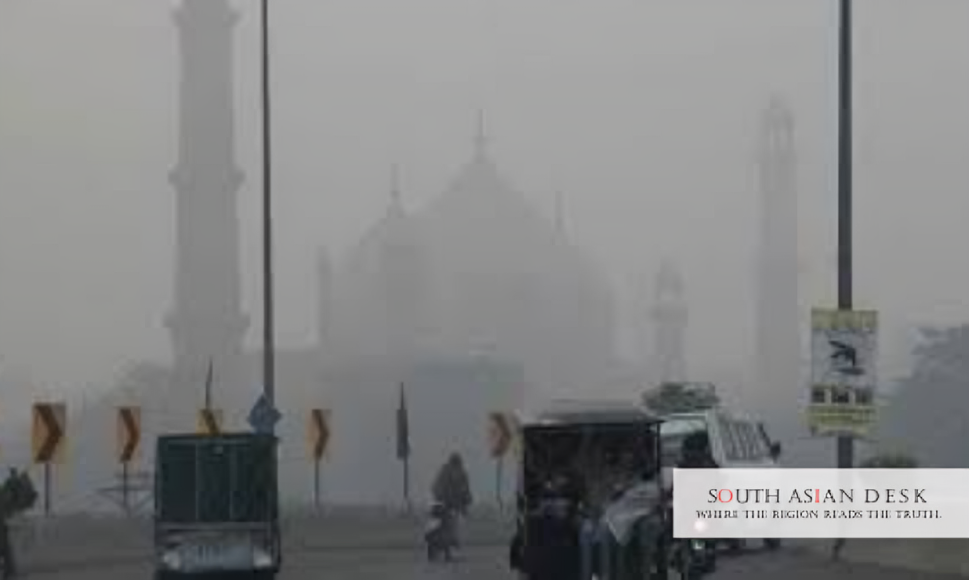
Lahore, Pakistan – Lahore most polluted city emerged worldwide for the second consecutive day on Monday, December 23, 2025, as air quality deteriorated sharply amid persistent Punjab smog. Residents faced hazardous conditions, with Lahore AQI peaking at 549 around noon, prompting official advisories to limit outdoor activities. The crisis affected multiple Punjab cities, highlighting broader Pakistan air pollution challenges.
This escalation underscores the urgent environmental threat in South Asia, where seasonal smog disrupts daily life, strains healthcare systems, and reduces economic productivity in densely populated regions like Punjab.
Current Lahore AQI Levels
Air quality monitoring by IQAir on December 23, 2025, revealed extreme pollution across Punjab. At 7 PM, Sialkot recorded an AQI of 603, Gujrat 429, Lahore 362, Kahna Nau 360, Hundal 294, Bahawalpur 234, Gujranwala 213, Faisalabad 189, and Jhelum 177. Within Lahore, readings at 7:30 PM showed CERP Office at 599, Iqbal Town 577, Model Town 447, Barki 402, DHA 388, Civil Secretariat 352, Bedian Road 350, Johar Town 330, and Askari-X 294.
These figures classify the air as hazardous, far exceeding safe limits. Lahore AQI fluctuations throughout the day exposed millions to harmful particulate matter, intensifying calls for immediate interventions in Pakistan air pollution hotspots.
Causes of Punjab Smog
Transportation, industry, and brick kilns contribute over 75% to Lahore’s PM2.5 pollution, according to a Pakistan Air Quality Initiative (PAQI) report. Lahore receives 26.68 kilotons of PM2.5, 39.81 kilotons of sulphur dioxide, 52.65 kilotons of nitrogen oxides, and 207.08 kilotons of carbon monoxide annually.
Seasonal factors exacerbate Punjab smog, including crop residue burning and vehicular emissions. Cold, dry weather traps pollutants, creating dense fog that worsens visibility and air quality. The PAQI report noted no clean air days in 2024 under WHO standards, with 218 days failing Punjab’s Environmental Quality Standards. Annual PM2.5 averaged 104.6 micrograms per cubic metre, well above guidelines.
In broader Pakistan air pollution context, cross-border winds from neighbouring regions add to local emissions, complicating mitigation in urban centres like Lahore.
Health and Economic Impacts
Hazardous Lahore AQI levels pose severe risks, including respiratory issues, cardiovascular diseases, and reduced life expectancy by an estimated seven years due to chronic exposure. Over 11 million children under five in Punjab’s worst-affected districts face acute dangers from smog, as per a UNICEF statement.
Economic fallout includes disrupted transportation and increased healthcare costs. On December 23, 2025, Motorway Police closed the Lahore-Sialkot Motorway (M-11) due to low visibility from dense fog, advising drivers to use fog lights and maintain safe distances.
Pakistan air pollution, particularly Punjab smog, strains public resources, with hospitals reporting surges in pollution-related cases during winter months.
Government Responses to Pakistan Air Pollution
Senior Provincial Minister Marriyum Aurangzeb stated on December 4, 2025, via official channels: “We have studied examples from other countries, learning from their best practices… Those countries took nearly 20–25 years to overcome this challenge, while we have only just begun.” Efforts include actions against violators and fines by the environment department.
Chief Minister Maryam Nawaz Sharif announced a 42% improvement in Lahore’s air quality on December 7, 2025, Crediting aggressive initiatives. Punjab EPA’s November 2025 report highlighted mitigation delivering significant AQI reductions through measures like super seeders for farmers, reducing stubble burning by 65% in Lahore Division.
The Pakistan Meteorological Department (PMD) forecasted cold, dry weather persisting in Punjab, with moderate to dense fog in districts including Gujranwala, Gujrat, Sialkot, Narowal, Lahore, Sheikhupura, Multan, Kot Addu, Jhang, Dera Ghazi Khan, Bahawalnagar, Okara, Sahiwal, Kasur, Khanewal, Khanpur, Bahawalpur, and Rahim Yar Khan during morning and night hours on December 23, 2025.
Anti-smog cannons, imported from China, have been deployed in Lahore to disperse pollutants. The government provided 5000 super seeders on subsidy last year, with 4900 active this season. Over 11000 brick kilns are QR-coded and shifting to zig-zag technology, while 8000 industries undergo real-time emission monitoring.
Vehicle fitness checks, fuel testing, and dust control at construction sites are enforced. Plastic bags under 75 microns are banned. A Smog War Room uses AI for monitoring, with 41 air quality monitors installed across Punjab, expanding to 100 by June 2026.
School timings adjusted to minimize exposure, and citizens can access real-time data via the AQI Punjab App, portal, and WhatsApp chatbot. Minister Aurangzeb emphasized: “Every citizen of Lahore is a partner in the fight against smog. The government can make policies, legislate, monitor, and enforce but real change depends on citizens.”
Background
Pakistan air pollution has worsened over decades due to rapid urbanization, industrial growth, and agricultural practices. Lahore, as Punjab’s capital, has frequently topped global pollution rankings during winter. In 2024, the city saw no days meeting WHO clean air standards, per PAQI.
Historical efforts were reactive, but recent initiatives under Chief Minister Sharif focus on multi-sectoral strategies, including a Smog Cell in the Planning Department. Cross-border pollution from easterly corridors affects cities like Faisalabad and Sialkot, with AQI reaching 2200 last year per NASA and IQ Air data.
Punjab’s budget for smog mitigation rose from zero to PKR 123 billion, supported by a Climate Endowment Fund. Youth engagement through internships, carbon Credits, and tree plantations aims for long-term sustainability.
Lahore Most Polluted City
Authorities plan further expansions in monitoring and enforcement, with AI-driven forecasting to predict AQI trends. Collaborative regional efforts may address transboundary pollution. Citizens are urged to adopt cleaner habits, as collective action remains key to combating Punjab smog.
As cold weather persists, ongoing vigilance is essential to prevent Lahore most polluted city status from recurring.
Published in SouthAsianDesk, December 23rd, 2025
Follow SouthAsianDesk on X, Instagram and Facebook for insights on business and current affairs from across South Asia.