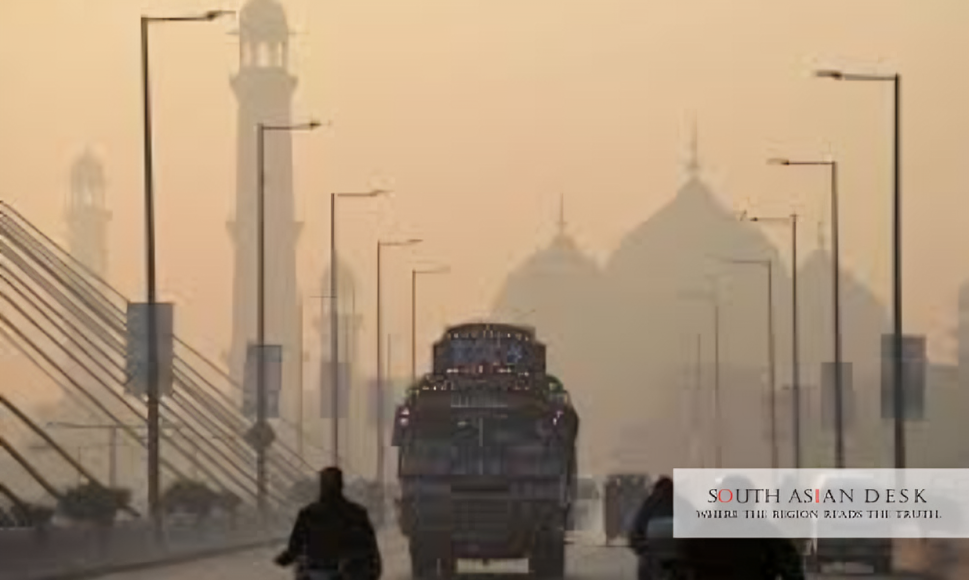
Lahore smog levels fell 15.6% in the first eight months of 2025 compared to 2024, officials announced Monday. The Environment Protection Department (EPD) Punjab Credits aggressive enforcement for the drop. No days hit hazardous Air Quality Index (AQI) thresholds this year. Residents report fewer respiratory issues. The shift stems from a multi-pronged strategy launched early in the year.
This progress underscores a vital win for South Asia’s urban hubs. Cities like Delhi and Dhaka face similar pollution spikes that claim lives and stall economies. Lahore’s model, backed by international funding, offers a blueprint. It could cut regional premature deaths from fine particulate matter by thousands annually if scaled. Success here bolsters Pakistan’s climate commitments and eases cross-border haze flows.
Lahore Air Quality 2025 Registers Steady Gains
EPD Punjab monitors 16 stations across Lahore. Data shows average PM2.5 concentrations at 83.7 micrograms per cubic metre year-to-date, down from 99.2 last year. July readings hovered between 96 and 153 AQI, in the unhealthy range but far from 2024’s peaks above 300. Winds and rain aided dispersion, but experts attribute core improvements to policy.
Imran Hāmid Sheikh, EPD director general, stated: “Our zero-tolerance approach targets industrial, vehicular, and agricultural emissions head-on.” His team registered over 4,000 First Information Reports (FIRs) against violators by mid-year. Fines topped PKR 711 million. These steps align with the Punjab Clean Air Program (PCAP), funded by a USD 300 million World Bank loan approved in March.
Najy Benhassine, World Bank Country Director for Pakistan, noted: “Cleaner air will reduce respiratory and cardiovascular diseases, fostering a healthier environment for millions.” The loan supports super seeders for farmers to replace stubble burning, a major smog contributor.
Key Metrics Highlight Shift
Lahore air quality 2025 metrics reveal targeted wins. Monthly averages stayed below 200 PM2.5 in summer months, versus 2024’s frequent surges. Satellite data confirms a 65% drop in crop residue fires province-wide. Vehicle emissions testing, rolled out in August, screens heavy transports at Lahore checkpoints. Over 1,000 trolleys faced inspections in early trials; 27 non-compliant units turned back.
Hospitals logged 12% fewer smog-related admissions from January to July. Children and the elderly benefited most. Public transport upgrades, including 600 electric buses planned under PCAP, aim to slash road emissions by 20% by year-end.
Smog Reduction Lahore: Enforcement Takes Centre Stage
Smog reduction Lahore initiatives ramped up post-monsoon. EPD teams demolished 2,575 illegal polluting units by August. They sealed 2,500 premises emitting unchecked fumes. Anti-smog guns sprayed mist over 55,000 kilometres of roads, settling dust particles. Hundreds of sprinklers now operate at traffic hotspots.
Construction sites enforce dust controls strictly. Brick kilns converted to zigzag technology under threat of closure. Over 100 units upgraded since January, cutting smoke output by 40%.
Sheikh added: “Structural emissions demand ongoing focus, but favourable enforcement yields results.” Police supported with 22 cases and PKR 3 million in fines for violations. This crackdown extends to sand trolleys; 109 rejected for lacking covers.
Residents notice the change. Street vendors in Anarkali Bazaar report clearer skies. Cyclists resume routes without masks. Yet challenges persist. Industrial clusters in Ferozepur Road still exceed limits occasionally.
Punjab Anti-Smog Measures: A Comprehensive Push
Punjab anti-smog measures form the backbone of recovery. The Smog Mitigation Action Plan (SMAP) integrates AI for forecasting. One hundred monitoring stations feed a 24-hour war room. Drones patrol farmlands, spotting fires early.
Marriyum Aurangzeb, Punjab’s environment minister, oversees expansions. A 40-kilometre green corridor in Lahore plants trees to filter pollutants. Fuel labs test adulterated diesel, a hidden smog driver.
World Bank Task Team Leader Shyam Srinivasan said: “PCAP creates jobs in e-buses and equips officials with skills for sustained impact.” The programme targets a 35% PM2.5 cut over a decade, with 35.6 million metric tonnes of CO2 savings.
Schools receive tailored advisories. Hospitals stock extra inhalers. Farmers access subsidised super seeders, reducing burn incidents.
Sector-Wise Breakdown
Agriculture: 5,000 super seeders distributed, curbing 65% of fires. Transport: Emissions regime bans smoky buses; 15 mist sprayers reduce pollution 70% in trials. Industry: Kiln conversions and fines enforce compliance.
These efforts position Punjab as a leader. Neighbouring Sindh eyes similar AI tools.
Background: From Crisis to Control
Lahore smog gripped the city in November 2024, with PM2.5 hitting 539 micrograms per cubic metre. Schools closed. Flights grounded. Hospitals overflowed. That winter saw consecutive hazardous days, a pattern absent in 2025 so far. EPD’s response evolved from reactive shutdowns to proactive tech. The 2025 State of Environment Report details 16 monitoring sites’ role in real-time tracking. International aid amplified local resolve.
What’s Next: Bracing for Winter
As autumn approaches, EPD forecasts potential AQI rises to 300-370 by December. Teams prepare 41 new monitoring stations. Green Credit incentives reward compliant firms. Public campaigns urge mask use and carpooling. Officials vow sustained vigilance. Lahore smog demands it. Punjab’s strides offer hope, but sustained action will define the winter ahead.
Published in SouthAsianDesk, December 4th, 2025
Follow SouthAsianDesk on X, Instagram, and Facebook for insights on business and current affairs from across South Asia.