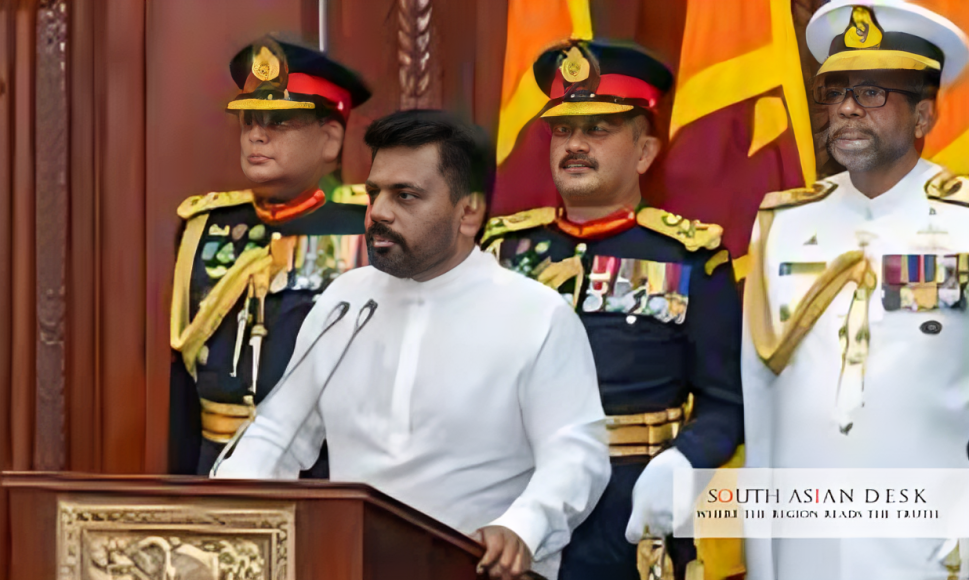
Sri Lanka set to regain economic output lost in the 2022 financial crisis by December, President Anura Kumara Dissanake stated during his budget speech for 2026 on Friday. The announcement highlights progress under the IMF programme, with debt ratios falling and growth accelerating. Officials project 4.8% GDP expansion for 2025.
This development underscores a turning point for South Asia, where Sri Lanka’s stabilisation eases pressures on regional trade and remittances. As the fourth-largest economy in the subcontinent, its rebound bolsters investor sentiment across India, Bangladesh and Pakistan, which rely on Colombo’s ports and tourism links. The recovery mitigates spillover risks from the 2022 default, which disrupted supply chains and heightened food insecurity in neighbouring nations.
Dissanayake Budget Speech Signals Economic Recovery Milestone
President Dissanayake, serving as finance minister, delivered the budget address in Parliament on November 7. He emphasised fiscal discipline and reform adherence to secure international support. “By the end of this year, Sri Lanka will regain the economic output lost from the crisis,” Dissanayake said. The statement marks a pivotal IMF Sri Lanka recovery milestone, as the nation approaches full restitution of pre-crisis production levels.
The speech outlined targets aligned with the $2.9 billion Extended Fund Facility (EFF) from the IMF. Authorities aim for a primary surplus of 2.5% of GDP in 2026, alongside government revenue at 15.4% of GDP and a deficit of 5.1%. These figures support the sixth tranche disbursement of $347 million by year-end, contingent on legislative approvals for tax reforms to attract foreign direct investment.
Dissanayake highlighted debt sustainability as a cornerstone. The debt-to-GDP ratio, which peaked at 114% during the meltdown, now stands at 96% for 2025. Projections indicate a further drop to 87% by 2030 through restructuring and revenue enhancements. Central bank data confirms gross official reserves reached US$6.1 billion by end-September 2025, up from crisis lows, enabling import coverage and currency stabilisation.
Sri Lanka GDP Rebound 2025: Data and Projections
Economic indicators point to a robust Sri Lanka GDP rebound 2025. Real GDP grew 4.8% year-on-year in the first half of 2025, outpacing initial forecasts. The IMF’s fifth review in October noted this momentum, with inflation ticking up to 1.5% in September – a sign of normalised demand rather than overheating. World Bank estimates peg full-year growth at 4.6%, moderating to 3.5% in 2026 as base effects fade.
| Indicator | 2022 Crisis Level | 2025 Projection | Change |
| GDP Growth (%) | -7.8 | 4.6 | +12.4 |
| Debt-to-GDP (%) | 114 | 96 | -18 |
| Reserves (US$ billion) | 1.9 | 6.1 | +4.2 |
| Inflation (%) | 70.2 | 1.5 | -68.7 |
This table draws from IMF and Central Bank of Sri Lanka reports. The rebound reflects diversified exports, tourism revival and agricultural output gains post-floods. Vehicle import taxes boosted first-half revenues by 20%, exceeding targets and funding social programmes.
Dissanayake stressed medium-term ambitions. “Our target is 7% growth,” he added, contingent on infrastructure investments and private sector incentives. The budget allocates LKR 1.2 trillion (US$4 billion) to capital expenditure, focusing on highways and renewable energy. These measures address bottlenecks that hampered 4% potential output during the crisis.
IMF Sri Lanka Recovery Milestones Achieved
Sri Lanka’s path aligns closely with IMF Sri Lanka recovery milestones. The fifth staff-level agreement in October praised fiscal outturns and external buffers. By end-2024, the economy had recouped 40% of losses from 2018-2023, per the third review. Current trajectories suggest full closure of that gap by December 2025.
Debt restructuring nears finality, with bilateral agreements covering 90% of obligations. The IMF commended progress on central bank independence and public financial management, enacted via 2024 legislation. These reforms unlock concessional financing and Credit rating upgrades, with Moody’s affirming B3 stable in September.
Challenges persist. Global uncertainties, including US tariffs, could shave 0.5% off growth, as noted in April consultations. Dissanayake directed diversification into digital services and vocational training, targeting EU and German partnerships. Health and transport reviews under the 2025 budget ensure equitable gains, with rural roads prioritised for 20% allocation.
Background: From 2022 Meltdown to Regain Economic Output
The 2022 crisis stemmed from dollar shortages, fuel rationing and 70% inflation, forcing a sovereign default. Protests ousted the prior government, paving Dissanayake’s 2024 election on anti-corruption pledges. The IMF EFF, approved in March 2023, catalysed US$3 billion in aid. Early tranches stabilised reserves, while 2024 reforms curbed money printing.
By mid-2025, tourism inflows hit 2.5 million visitors, generating US$2.2 billion – 80% of pre-crisis norms. Exports rose 12%, led by apparel and tea. Yet, poverty lingers at 22%, prompting budget hikes in subsidies and cash transfers totalling LKR 300 billion.
What’s Next: Locking in Growth Post-Rebound
Authorities eye 2026 legislative pushes for investor protections. The seventh IMF review in early 2026 will assess surplus delivery. Dissanayake’s administration plans a national export council to hit US$20 billion in trade by 2030. Regional forums, including SAARC, could amplify these gains through tariff reductions.
Sri Lanka set to regain economic output positions the nation as a recovery model for South Asia, fostering inclusive prosperity if reforms endure.
Published in SouthAsianDesk, November 8th, 2025
Follow SouthAsianDesk on X, Instagram, and Facebook for insights on business and current affairs from across South Asia.