A total lunar eclipse will captivate Pakistan on Sunday, September 7, 2025, turning the moon a striking red.
Lunar Eclipse Pakistan: A Celestial Spectacle
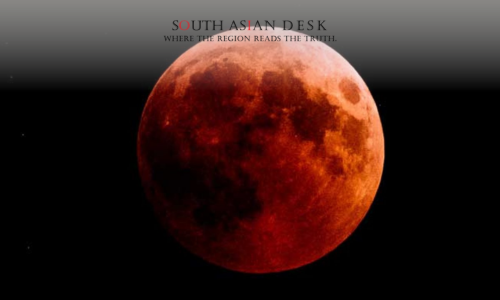
On Sunday, September 7, 2025, Pakistan will witness a total eclipse, a celestial event where the Earth aligns between the Sun and the Moon, casting a shadow that transforms the lunar surface into a vivid red hue, often called a “blood moon.” The event, visible from 8:30 PM to 1:55 AM, will be observable across Asia, Africa, and parts of Europe, weather permitting, according to the Space and Upper Atmosphere Research Commission (Suparco).
This eclipse offers a unique opportunity for Pakistan’s students, astronomy enthusiasts, and the public to engage with science and explore the cosmos. Such events foster curiosity and inspire scientific inquiry in a region where access to advanced astronomical resources can be limited.
Timing and Visibility of the Eclipse
The eclipse will commence at 8:30 PM on Sunday, September 7, 2025, reaching its peak at 11:57 PM when the moon is fully engulfed in Earth’s shadow. The event will conclude at 1:55 AM on Monday, September 8, 2025. Suparco confirms that the eclipse will last nearly five and a half hours, with the total red phase, or “blood moon,” spanning 1 hour and 22 minutes. Unlike solar eclipses, this event is safe to view with the naked eye, binoculars, or telescopes. Clear visibility is expected in most parts of Pakistan, provided weather conditions are favourable.
Blood Moon Phenomenon Explained
The striking red hue of the “blood moon” occurs when sunlight passes through Earth’s atmosphere, filtering out shorter wavelengths and leaving red light to illuminate the moon. Ryan Milligan, an astronomer at Queen’s University Belfast, explains, “The red glow appears as sunlight passing through the Earth’s atmosphere is refracted and scattered onto the Moon’s surface.” This phenomenon, combined with the eclipse’s duration, makes it one of the longest total eclipses in decades, lasting over 80 minutes during its total phase.
Observation Opportunities in Pakistan
Suparco encourages the public to observe the lunar eclipse, highlighting its accessibility and educational value. The Institute of Space Science and Technology (ISST) at Karachi University will host a viewing event on the night of September 7–8, using telescopes to offer skywatchers a closer look at the blood moon. “It’s an exceptionally lengthy total eclipse, one of the longest in decades,” said ISST Director Prof Javed Iqbal. Astronomy clubs and educational groups across Pakistan are also expected to organise observation sessions.
Historical and Cultural Significance
Lunar eclipses have long held cultural and historical significance. In South Asia, they are often steeped in myth and tradition, with some communities attributing astrological importance to the event. For instance, historical accounts suggest that a blood moon in 1453 influenced the fall of Constantinople, acting as a psychological omen for both defenders and attackers. The eclipse provides a chance to connect modern science with cultural curiosity, bridging traditional beliefs with astronomical understanding.
Background
This will be Pakistan’s second total lunar eclipse of 2025, following one in March. The last total eclipse occurred in 2022, making this a rare opportunity for skywatchers. Suparco will share live images and updates on its social media platforms to enhance public engagement. The next significant celestial event will be a total solar eclipse on August 12, 2026, visible in parts of Europe but not in South Asia.
What’s Next
The lunar eclipse in Pakistan on September 7, 2025, promises to be a memorable event for skywatchers, offering a chance to witness the awe-inspiring blood moon. Suparco and educational institutions urge the public to participate in organised viewing events or observe safely from home, fostering a deeper appreciation for the wonders of the universe.
Published in SouthAsianDesk, September 7th, 2025
Follow SouthAsianDesk on X, Instagram, and Facebook for insights on business and current affairs from across South Asia.