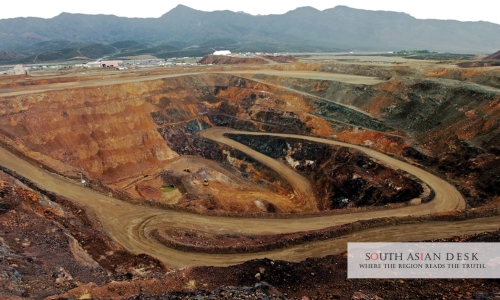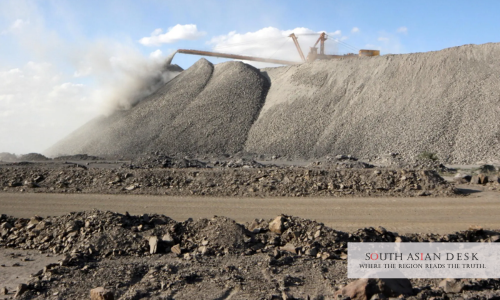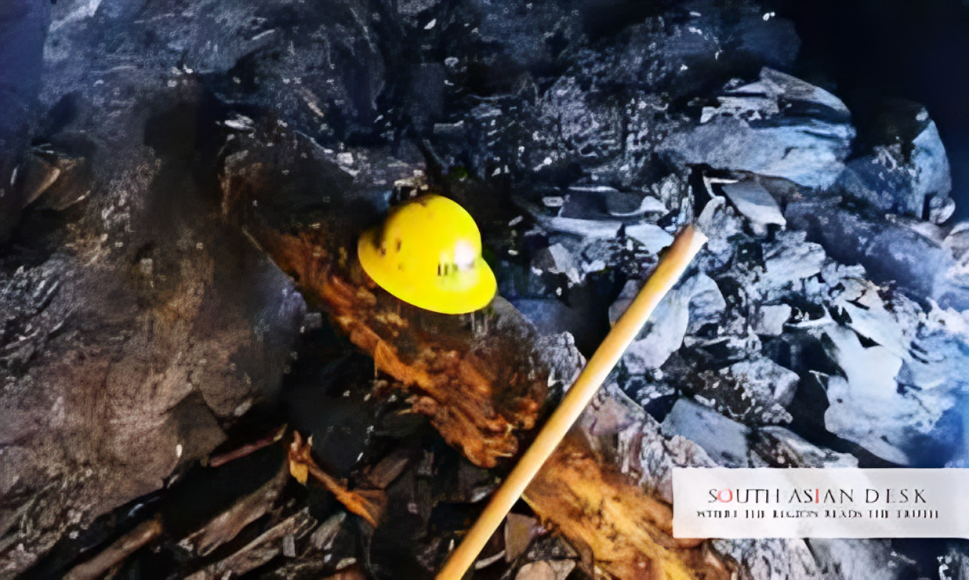
At least 18 workers died in a Meghalaya coal mine blast on Thursday, with several feared trapped in an illegal rat-hole mine in East Jaintia Hills district. Rescue teams recovered bodies amid ongoing operations.
Shillong: An explosion tore through an illegal coal mine in Meghalaya’s East Jaintia Hills district on 5 February 2026, killing at least 18 workers and leaving others potentially trapped underground. The blast occurred around 11:00 local time in the Thangsku area of Mynsngat village, about 30 km from Khliehriat town. Police and disaster response teams rushed to the site, recovering 18 bodies by evening. One survivor sustained critical injuries and received treatment at a hospital in Shillong.
The incident highlights persistent risks in unregulated mining across India’s northeast, where illegal operations evade bans and safety norms. In South Asia, such accidents underscore broader concerns over labour safety and environmental regulations, especially in border regions like Meghalaya, which shares boundaries with Bangladesh and supplies coal to neighbouring markets.
Illegal Rat-Hole Mine Explosion Details
The Meghalaya coal mine blast stemmed from a suspected dynamite detonation in an illegal rat-hole mine, a banned practice involving narrow shafts where workers extract coal under hazardous conditions. East Jaintia Hills Superintendent of Police Vikash Kumar stated that the explosion caused shafts to collapse, trapping workers deep below. “Preliminary reports indicate that the blast was caused by a high-intensity dynamite explosion used for mining activities,” he said.
Rescue efforts involved local police, State Disaster Response Force, and National Disaster Response Force teams. One NDRF team arrived on site, with a second en route, as announced by Union Home Minister Amit Shah. He assured full central support after speaking with Meghalaya Chief Minister Conrad Sangma.
Victims included daily wage labourers from Meghalaya, Assam, and Nepal. The mine operated in a remote forested area, complicating access. Thick smoke billowed from three shafts, halting operations after sunset on Thursday. Rescuers resumed work on Friday, 6 February 2026, but difficult terrain slowed progress.
East Jaintia Hills Mining Accident Response
Authorities registered a case under the Bharatiya Nyaya Sanhita, Mines and Minerals (Development and Regulation) Act, and Explosive Substances Act at Khliehriat police station. Two mine owners faced arrest on Friday, as police vowed to pursue all responsible for the illegal operation.
Prime Minister Narendra Modi expressed grief over the Meghalaya mine disaster 2026. In a social media post, he described the incident as “extremely saddening” and announced ex-gratia payments of INR 200,000 (2 lakh rupees) from the Prime Minister’s National Relief Fund to the next of kin of each deceased worker. Injured persons would receive 50,000 rupees.
Meghalaya Chief Minister Conrad Sangma conveyed deep sorrow and ordered a comprehensive inquiry. “Accountability will be fixed, and those responsible will face strict legal action,” his office stated. “There will be no compromise when it comes to the safety of lives.” He deputed two cabinet ministers to assess the site for rescue, relief, and law enforcement. The state government announced additional ex-gratia of 300,000 rupees (3 lakh rupees) per deceased family.
Union Minister for Coal and Mines G. Kishan Reddy expressed grief and confirmed his ministry’s coordination with Meghalaya authorities for swift rescue. He instructed a full report to ensure accountability.
President Droupadi Murmu termed the loss “painful” and offered condolences to families, with prayers for the injured. Vice-President C.P. Radhakrishnan echoed similar sentiments, calling the event deeply saddening.
The Meghalaya High Court took suo motu cognisance, directing arrests of mine owners and operators, seizure of materials, and immediate aid to affected families. It summoned the East Jaintia Hills SP and Deputy Commissioner for a hearing on 9 February 2026.
Background on Meghalaya Mine Disaster 2026
Rat-hole mining has plagued Meghalaya since a 2014 ban by the National Green Tribunal over pollution and safety risks. Despite enforcement, illegal pits persist in the east and northeast, drawing low-wage workers earning 1,500 to 2,000 rupees daily. A 2018 accident in East Jaintia Hills killed 15 miners, prompting scrutiny but limited change.
Anti-mining activist Agnes Kharshiing labelled the Meghalaya coal mine blast a “homicide,” accusing authorities of ignoring warnings. Over 1,000 cases against illegal mining have been filed in Meghalaya, with arrests, yet operations continue due to demand from cement factories and power plants in South Asia.
The region’s coal reserves fuel economies in India, Bangladesh, and beyond, but accidents like this East Jaintia Hills mining accident expose regulatory gaps.
What’s Next
Investigations into the illegal rat-hole mine explosion will focus on explosives sourcing and ownership. The Meghalaya government plans stricter crackdowns, while central aid supports recovery. The High Court hearing on 9 February may mandate further reforms to prevent future Meghalaya coal mine blasts.
As operations conclude, families await closure amid the Meghalaya mine disaster 2026.
Published in SouthAsianDesk, February 6th, 2026
Follow SouthAsianDesk on X, Instagram and Facebook for insights on business and current affairs from across South Asia.