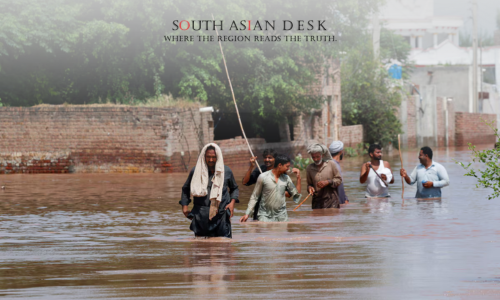
On Thursday, August 28, 2025, Pakistani authorities alerted and over a million people evacuated from Punjab province as torrential monsoon rains and India’s dam water releases caused the worst floods in four decades, submerging over 1,400 villages and critical grain crops.
Floods Cripple Punjab’s Farming Belt
The Punjab Provincial Disaster Management Authority (PDMA) reported that heavy monsoon rains, coupled with India’s release of excess water from the Thein and Madhopur dams, swelled the Chenab, Ravi, and Sutlej rivers, flooding 1,400 villages. According to the PDMA, the Chenab River at Qadirabad reached near-critical levels, peaking at 947,000 cusecs on Wednesday, August 27, 2025, against a capacity of 800,000 cusecs. To prevent a catastrophic breach of the 3,300-foot Qadirabad barrage, authorities deliberately breached riverbanks at two locations, diverting water to nearby lands.
Residents in villages like Qadirabad waded through chest-deep water, with many losing homes and livestock. Marriyum Aurangzeb, a senior Punjab minister, confirmed 12 deaths in the province this week, contributing to a national toll of 819 since late June 2025.
Impact on Agriculture and Communities
Punjab, known as Pakistan’s breadbasket, faces severe losses as floods submerged vital grain crops, including wheat and rice. The NDMA estimates that 1,780,000 acres of farmland were inundated, threatening food supplies. In Sialkot, 395 villages were affected, while 127 villages in Jhang and 124 in Multan reported significant damage. Over 73,000 animals were relocated, with 72 veterinary camps established to support livestock, according to Dawn.
Nadeem Iqbal, a 26-year-old labourer from Qadirabad, described the ordeal: “We spent the whole night awake and frightened.” Rescue operations, aided by the army and Rescue 1122, evacuated families, including eight-month-old Noor Fatima and her mother, from Qadirabad on Thursday, August 28, 2025, at 9:00 AM.
India’s Role and Regional Dynamics
India issued three flood warnings to Pakistan this week, citing humanitarian grounds, as it released water from overflowing dams in Jammu and Kashmir. According to Pakistan’s Ministry of Foreign Affairs, these releases exacerbated flooding in Punjab, though India’s actions followed heavy monsoon rains in both nations. At least 60 people died in Indian-administered Kashmir this month. The Indus Waters Treaty, which governs shared river management, has been strained since India suspended it in May 2025 after a deadly attack in Kashmir, which it blamed on Pakistan.
Background
Pakistan has faced recurring floods, with the 2022 monsoon killing over 1,000 people and causing PKR 3.2 trillion in damages. The 2025 floods reflect a pattern of extreme weather, with the NDMA’s Inam Haider Malik noting a convergence of weather systems from the east, south, and west, a first in Pakistan’s monsoon history. Planning Minister Ahsan Iqbal called climate change “the new normal,” linking it to intensified rainfall patterns.
What’s Next After People Evacuated from Their Areas
With forecasts of more rain until Monday, September 2, 2025, the NDMA warns of continued flood risks in Punjab and beyond. Over a million people evacuated face uncertain futures as authorities prioritise relief and infrastructure repairs, bracing for further challenges from this devastating flood season.
Published in SouthAsianDesk, August 27th, 2025
Follow SouthAsianDesk on X, Instagram, and Facebook for insights on business and current affairs from across South Asia.