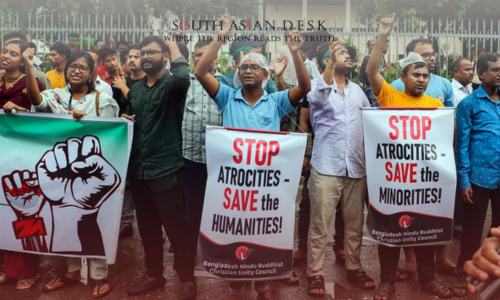
India allows persecuted minorities from Afghanistan, Pakistan, and Bangladesh to stay without passports if they entered before 31 December 2024, under new rules.
On Monday, 1 September 2025, in New Delhi, India’s Home Ministry exempted minorities from Afghanistan, Pakistan, and Bangladesh, Hindus, Sikhs, Buddhists, Jains, Parsis, and Christians, entering before 31 December 2024, from passport requirements, citing religious persecution under the Immigration and Foreigners Act, 2025.
The policy on minorities from Afghanistan, Pakistan, and Bangladesh for India visa relief strengthens South Asia’s humanitarian framework, offering refuge to persecuted communities and potentially influencing regional migration policies in countries like Nepal and Bhutan.
Minorities Afghanistan Pakistan Bangladesh India Visa: Policy Details
The Union Home Ministry’s order, issued under the Immigration and Foreigners Act, 2025, effective from Monday, 1 September, 2025, allows non-Muslim minorities: Hindus, Sikhs, Buddhists, Jains, Parsis, and Christiansfrom Afghanistan, Pakistan, and Bangladesh to stay in India without valid passports or visas if they entered on or before 31 December, 2024, due to religious persecution or fear thereof. According to the Home Ministry, “This is a landmark decision for justice and humanity, allowing persecuted minorities to stay without valid documents.” The order extends to those with expired documents, protecting them from penalties like imprisonment up to 5 years or fines of INR 5 lakh under Section 21 of the Act.
The exemption applies to approximately 200,000 refugees, particularly Hindus from Pakistan and Bangladesh, residing in states like Rajasthan, Gujarat, Punjab, and West Bengal. These individuals gain access to services such as ration cards, school admissions, and healthcare. The policy also covers registered Tibetan refugees entering between 1959 and 30 May 2003, and Nepalese and Bhutanese citizens entering by land or air, except via China, Hong Kong, Macau, or Pakistan.
Relation to Citizenship Amendment Act (CAA)
The Citizenship Amendment Act (CAA), enacted in December 2019, fast-tracks citizenship for non-Muslim minorities from these countries who entered before 31 December 2014. The 2025 order extends stay protections to those arriving up to 2024 but does not automatically grant citizenship. Critics argue the exclusion of Muslims undermines inclusivity, while supporters emphasize the focus on persecuted minorities, citing 25,782 long-term visas granted to such groups between 2015 and 2019.
Regional and Social Impact
The policy alleviates deportation fears for thousands, notably Pakistani Hindus in Rajasthan and Gujarat, enabling long-term planning. NGOs report enhanced stability for refugee families. However, Bangladesh’s foreign ministry has flagged India’s visa policies as discriminatory, citing stricter penalties for Muslim overstays. India’s Ministry of External Affairs, on Tuesday, 2 September 2025, reaffirmed its commitment to regional stability but avoided addressing Muslim exclusions.
The policy aligns with India’s support for Tibetan and Sri Lankan Tamil refugees, extending exemptions to registered Tamils arriving before 9 January 2015. Military personnel on government transport and diplomatic passport holders are also exempt.
Challenges and Criticisms
Critics, including leftist media, argue that the exclusion of Muslims fuels religious bias, particularly amid Bangladesh’s 2024 political turmoil. The Immigration Act imposes fines up to INR 3 lakh for non-exempted overstays, raising concerns about selective enforcement. Supporters, including BJP leaders, defend the policy as humanitarian, highlighting India’s role as a refuge for persecuted minorities.
Background
India’s refugee policies, shaped by the 1971 Bangladesh war and subsequent migrations, balance humanitarian goals with security. The CAA, passed in 2019, faced protests for excluding Muslims. The 2025 Act addresses post-2014 migrations, reflecting India’s response to regional instability, including Bangladesh’s 2024 uprising and Pakistan’s minority persecution.
What’s Next
As India implements the policy, attention will focus on integrating minorities from Afghanistan, Pakistan, and Bangladesh under the India visa relief framework, with potential expansions to citizenship pathways and regional diplomatic responses by mid-2026.
Published in SouthAsianDesk, September 4th, 2025
Follow SouthAsianDesk on X, Instagram, and Facebook for insights on business and current affairs from across South Asia.