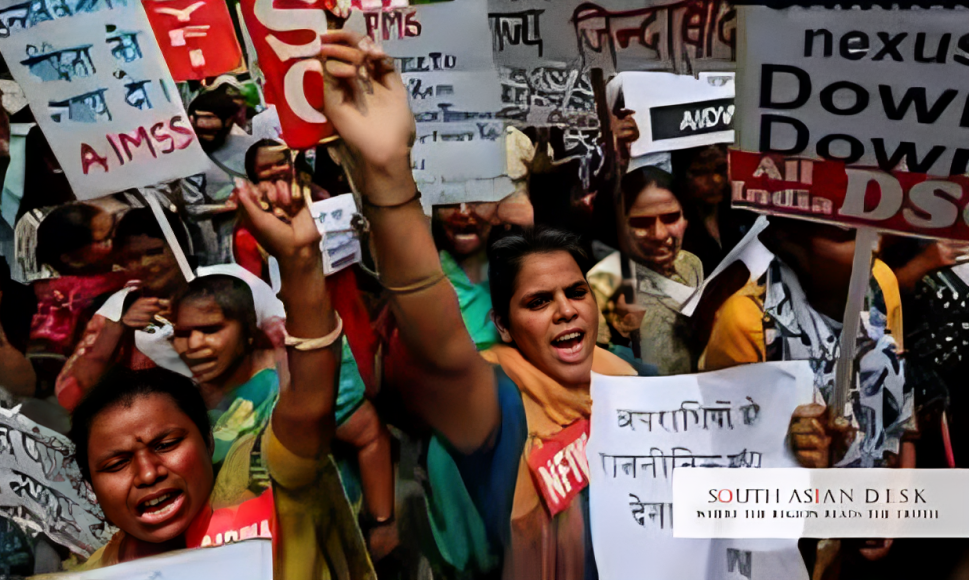
Members of the Indian Youth Congress staged protests in New Delhi on 10 February 2026 after Prime Minister Narendra Modi’s name appeared in documents linked to Jeffrey Epstein. Police intervened as demonstrators tried to breach barricades near Jantar Mantar.
The emergence of Narendra Modi‘s name in the Modi Epstein files has triggered public outrage in India. As a key South Asian nation, this development raises questions about international political networks and their potential influence on regional diplomacy, particularly ties with Israel and the US.
Protests New Delhi Modi Epstein Erupt Amid Revelations
Protests broke out in New Delhi on 10 February 2026. Indian Youth Congress members gathered at Jantar Mantar to demand clarity on the Indian PM Epstein mentions. Demonstrators carried banners and chanted slogans calling for an investigation into the Modi Epstein connection.
Police deployed barricades to contain the crowd. Several protesters attempted to push through, leading to brief confrontations. No arrests were reported in initial accounts. The protest lasted approximately two hours, starting around 11:00 AM.
The Indian Youth Congress organised the event. It focused on the recent release of Epstein documents that reference Modi. Participants expressed concern over potential implications for national leadership.
Details of Modi Epstein Connection in Released Files
The Modi Epstein files stem from US court documents released on 30 January 2026. These files include emails and messages from Jeffrey Epstein, a convicted sex offender who died in 2019.
One email from Epstein to Indian businessman Anil Ambani dated 29 March 2017 mentions “discussions re israel strategy dominating modi dates.” Another message on 31 March 2017 notes Modi’s planned visit to Israel in July and asks about “track 2” contacts.
A follow-up email from Epstein on 6 July 2017 claims “The Indian Prime minister modi took advice.” These references link to Modi’s official visit to Israel from 4 to 6 July 2017, the first by an Indian prime minister.
The files also include correspondence involving Union Minister Hardeep Puri and Epstein. However, no direct meetings or interactions between Modi and Epstein are documented.
India’s Ministry of External Affairs responded on 31 January 2026. Spokesperson Randhir Jaiswal stated: “We have seen reports of an email message from the so-called Epstein files that has a reference to the prime minister and his visit to Israel. Beyond the fact of the prime minister’s official visit to Israel in July 2017, the rest of the allusions in the email are little more than trashy ruminations by a convicted criminal, which deserve to be dismissed with the utmost contempt.”
The Bharatiya Janata Party echoed this dismissal. It asserted no direct contact between Modi and Epstein.
Background on Epstein Files and South Asian Implications
Jeffrey Epstein faced charges of sex trafficking in 2019. US authorities released thousands of documents in batches, including the latest on 30 January 2026. These reveal Epstein’s communications with global figures.
The Modi Epstein files mention draws attention to South Asia’s political landscape. India maintains strong ties with Israel since Modi’s 2017 visit. That trip included agreements on defence and agriculture.
Epstein’s emails suggest he positioned himself as an intermediary in international affairs. Analysts note his claims often exaggerated influence.
In South Asia, this fuels domestic debates. Opposition parties like Congress question transparency. The Indian PM Epstein references could impact public trust in foreign policy.
No evidence in the files indicates wrongdoing by Modi. The mentions remain indirect through third-party emails.
Indian Government Response to Modi Epstein Files
The government rejected the claims swiftly. The MEA statement on 31 January 2026 labelled the references unreliable.
Prime Minister’s Office sources reiterated Modi’s Israel visit was official state business. It involved meetings with Israeli Prime Minister Benjamin Netanyahu.
No US officials confirmed Epstein’s alleged role in the visit. The files do not include witness testimonies linking Modi to Epstein’s activities.
Congress leaders used the protests to demand a probe. They called for scrutiny of any “Indian connection” in the Modi Epstein files.
Police managed the New Delhi demonstration without major incidents. Traffic disruptions occurred near Jantar Mantar.
Protests New Delhi Modi Epstein Highlight Political Tensions
The event underscores divisions in Indian politics. Youth Congress President Uday Bhanu Chib led the protest. Demonstrators linked the Epstein files to broader concerns like national security.
Similar protests occurred in other cities, though smaller in scale. In Mumbai, around 50 activists gathered on 10 February 2026.
Media coverage amplified the issue. Outlets reported on the Modi Epstein connection, citing the released documents.
Public reaction varies. Social media shows mixed responses, with some dismissing the claims as baseless.
The Indian PM Epstein mentions add to ongoing discussions about global elite networks. In South Asia, this intersects with India’s foreign relations.
What’s Next in Modi Epstein Files Saga
Investigations into Epstein’s files continue in the US. More documents may emerge, potentially clarifying the Modi Epstein connection.
In India, opposition parties plan further actions. Parliament sessions could address the issue.
The government maintains its stance of dismissal. No official inquiry has been announced.
As South Asia watches, the Modi Epstein files remain a point of contention in regional news.
Published in SouthAsianDesk, February 11th, 2026
Follow SouthAsianDesk on X, Instagram and Facebook for insights on business and current affairs from across South Asia.