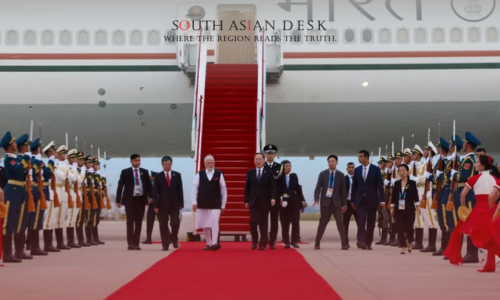
Indian PM Narendra Modi pledged to bolster ties with China during talks with President Xi Jinping at the SCO summit in Tianjin on Sunday, August 31, 2025.
Indian Prime Minister Narendra Modi met Chinese President Xi Jinping on Sunday, August 31, 2025, in Tianjin, China, pledging India’s commitment to improving ties with China through mutual trust to advance trade and border peace amid global economic tensions.
Why It Matters
This diplomatic push strengthens India’s position in South Asia, potentially reshaping trade and security dynamics for neighbours like Pakistan and Bangladesh, who monitor India-China ties closely due to their strategic and economic implications.
Modi-Xi Summit: Key Agreements
At the SCO summit, Modi reaffirmed India’s commitment to improving ties with China, focusing on mutual respect and trust. According to the Indian Ministry of External Affairs on X, “PM Modi reiterated India’s resolve to deepen bilateral ties for mutual benefit and regional stability.” The 40-minute meeting addressed trade imbalances, border management, and resuming direct flights.
Xi emphasized partnership over rivalry, stating that stable India-China ties could benefit their 2.8 billion citizens. According to Xinhua on X, Xi said, “Our relationship should be a force for global peace, not defined by disputes.” Both leaders highlighted the need for cooperation to counter external pressures, including new U.S. tariffs.
Committed to Improving Ties China 2025: Trade and Border Focus
Modi noted a “stable atmosphere” along the 3,800 km Himalayan border, citing a recent management agreement following the 2024 patrol deal that eased tensions post the 2020 Galwan clash, which killed 20 Indian and 4 Chinese soldiers.
Trade and Connectivity Gains
The leaders tackled India’s USD 99.2 billion trade deficit with China, with imports at USD 113.45 billion for the fiscal year ending March 2025. China lifted export restrictions on rare earths and fertilisers during Foreign Minister Wang Yi’s visit to India on Monday, August 18, 2025, and direct flights, halted since 2020, are set to resume.
Global Pressures and Strategic Alignment
The talks followed U.S. imposition of 50% tariffs on Indian goods on Tuesday, August 26, 2025, over India’s Russian oil imports, pushing New Delhi to deepen non-Western ties. According to Chinese Ambassador Xu Fe Manhong on X, “China stands with India against U.S. tariffs, advocating fair trade.” Modi stressed that India-China relations should remain independent of third-country influences, aligning with calls for Global South unity at the SCO.
Background
India-China ties have been strained since the 2020 Galwan Valley clash, which disrupted trade and travel. A 2024 BRICS summit agreement in Kazan sparked disengagement efforts, followed by eased visa rules and China allowing Indian pilgrims to Tibetan sites. Bilateral trade hit USD 127.7 billion in 2024–25, though India relies on China for 70% of its pharmaceutical ingredients.
What’s Next
As India remains committed to improving ties with China in 2025, upcoming trade talks and potential high-level visits could further stabilize relations, influencing South Asia’s economic and geopolitical landscape.
Published in SouthAsianDesk, August 31st, 2025
Follow SouthAsianDesk on X, Instagram, and Facebook for insights on business and current affairs from across South Asia.