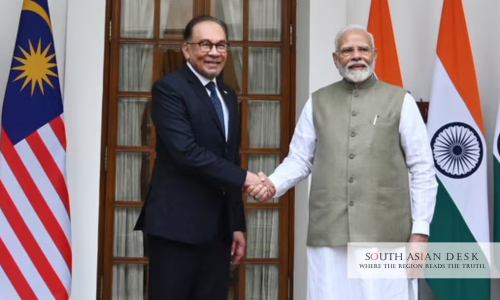
Kuala Lumpur, October 23, 2025, 4:35 PM – Prime Minister Narendra Modi to skip ASEAN Summit in Malaysia, opting for virtual participation due to Diwali celebrations, Malaysian Prime Minister Anwar Ibrahim announced Thursday. The decision follows a phone call between the leaders, highlighting ongoing bilateral commitments despite the physical absence.
This move underscores India’s strategic engagement with Southeast Asia as it navigates domestic festivities and global dynamics. For South Asia, it signals continuity in regional partnerships that bolster trade, security, and connectivity, even as in-person interactions with key players, such as the US, remain limited. The virtual format ensures that Modi’s decision to skip the ASEAN Summit in Malaysia does not derail progress on the ASEAN-India Comprehensive Strategic Partnership.
Anwar Ibrahim on Modi’s ASEAN Absence
Anwar Ibrahim addressed Modi’s choice directly during a statement on bilateral ties. “We touched on the organisation of the 47th ASEAN Summit in Kuala Lumpur at the end of this month,” Anwar said. “He informed me that he will attend virtually due to the ongoing Deepavali celebrations in India at that time.” He added, “I respect his decision and extended my greetings for a happy Deepavali to him and the entire people of India.”
The Malaysian leader emphasised the strength of India-Malaysia relations. “Last night, I received a phone call from a colleague of the Prime Minister of the Republic of India, Narendra Modi, to discuss efforts to strengthen Malaysia-India bilateral relations to a more strategic and comprehensive level,” Anwar noted. “India remains an important partner for Malaysia in the fields of trade and investment, in addition to close cooperation in the sectors of technology, education, and regional security.”
Anwar reiterated Malaysia’s dedication. “Malaysia will remain committed to strengthening Malaysia-India relations and further enhancing ASEAN-India cooperation towards a more peaceful and prosperous region.” This stance from Anwar Ibrahim on Modi’s absence from ASEAN reassures observers of uninterrupted momentum.
In response, Modi shared his outlook on social media. “Had a warm conversation with my dear friend, Prime Minister Anwar Ibrahim of Malaysia,” he posted. “Congratulated him on Malaysia’s ASEAN Chairmanship and conveyed best wishes for the success of the upcoming Summits.
Look forward to joining the ASEAN-India Summit virtually, and to further deepening the ASEAN-India Comprehensive Strategic Partnership.”
The exchange occurred on October 23, 2025, ahead of the summit scheduled for October 26-28. Trade between India and Malaysia reached USD 16.6 billion in 2024-25, with projections for growth in the digital economy and green energy sectors. Investments from Indian firms in Malaysia exceed MYR 40 billion (approximately USD 9.5 billion), with a focus on manufacturing and services.
Modi to Skip ASEAN Summit 2025, Virtual Join
Modi’s participation in the virtual ASEAN Summit 2025 aligns with precedents set in recent years. India has leveraged hybrid formats for increased efficiency, especially since the pandemic. The 21st ASEAN-India Summit in Vientiane last October saw Modi attend in person, reviewing progress on connectivity initiatives worth USD 1 billion.
For the Kuala Lumpur event, virtual attendance allows Modi to engage without travel disruptions. The agenda includes reviews of the ASEAN-India Plan of Action 2026-2030, with an emphasis on supply chain resilience and digital public infrastructure. India contributes 15 percent of ASEAN’s total FDI inflows, according to official data.
External Affairs Minister S Jaishankar echoed support. In a recent briefing, he highlighted India’s role as ASEAN’s fourth-largest trading partner, with bilateral trade exceeding USD 130 billion annually. “Our partnership with ASEAN is pivotal for an open Indo-Pacific,” Jaishankar stated.
Critics, including Congress leader Jairam Ramesh, questioned the optics. Ramesh posted on X, suggesting the absence avoids direct engagement with Trump. “Posting messages in praise of President Trump on social media is one thing. But to be seen hobnobbing physically with the man… is another matter,” he wrote. However, official channels dismiss such views, focusing on substantive outcomes.
Data from the Ministry of External Affairs indicate that ASEAN-India trade increased by 10.5 percent year-over-year in the first half of 2025, driven by growth in electronics and pharmaceuticals. Virtual sessions will cover these metrics, ensuring the Modi virtual ASEAN Summit 2025 delivers concrete commitments.
Modi Trump Meeting in Kuala Lumpur
Malaysia has invited US President Donald Trump to the summit, confirming his two-day visit, which is scheduled to start on October 26. This raises the prospect of a Modi-Trump meeting in Kuala Lumpur, although Modi’s virtual mode complicates it.
Past India-US interactions at ASEAN forums have advanced Quad cooperation and defence pacts. During his tenure, Trump hosted Modi for the “Howdy Modi” event in 2019, attended by 50,000 diaspora members. The recent US-India trade reached USD 190 billion in 2024.
Anwar confirmed Trump’s attendance, noting the absences of other leaders, such as China’s Xi Jinping. For India, the virtual route prioritises Diwali, observed October 20-21, 2025, with nationwide festivities impacting schedules.
Analysts view this as pragmatic. “Physical presence matters for side-lines, but virtual ensures voice in plenary,” said a Delhi-based diplomat. Yet, the Modi-Trump meeting in Kuala Lumpur could have yielded photo-ops on counter-terrorism, given their shared interests.
India’s MEA data indicates 2.5 million Indian tourists visited ASEAN in 2024, with projections for 3 million in 2025. Enhanced air links, like new routes to Kuala Lumpur, support people-to-people ties.
Background
ASEAN-India relations date back to 1992, with a sectoral partnership that evolved into a comprehensive dialogue in 1995 and summit-level ties in 2002. The strategic partnership was launched in 2012 and subsequently upgraded to a comprehensive one in 2022. Key milestones include the USD 1 billion line of credit for infrastructure and the establishment of the ASEAN-India Fund.
Malaysia, as the 2025 chair, themes the summit “Inclusivity and Sustainability.” India aligns itself through its Act East Policy, investing approximately USD 1.8 million (PKR 500 million) in skill development for ASEAN youth.
Deepavali’s timing overlaps summit dates, a factor in scheduling. Modi greeted the community virtually last year, blending tradition with governance.
What’s Next
Following the summit, India will host the next East Asia Summit virtually in November 2025. Bilateral talks with Malaysia aim to reach a USD 20 billion trade target by 2027. Modi’s decision to skip the ASEAN Summit in Malaysia sets a precedent for hybrid diplomacy, striking a balance between cultural imperatives and geopolitical needs.
As Anwar Ibrahim’s absence from Modi’s ASEAN meeting shows respect, the focus shifts to outcomes. Virtual platforms will drive agreements on maritime security and climate resilience, vital for South Asian stability.
Published in SouthAsianDesk, October 23rd, 2025
Follow SouthAsianDesk on X, Instagram, and Facebook for insights on business and current affairs from across South Asia.